

BS BRIEF:
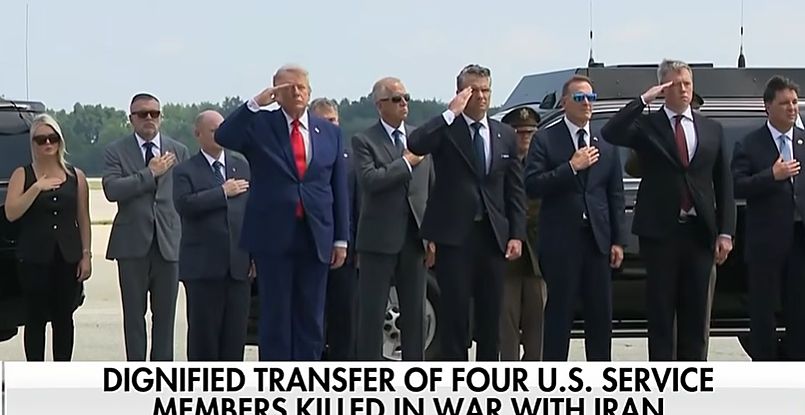
- President Donald Trump attended a dignified transfer ceremony Wednesday at Dover Air Force Base to honor four U.S. soldiers killed during recent operations in the Middle East, marking the third such ceremony he has attended since the conflict with Iran escalated.
- Fox News national security correspondent Jennifer Griffin devoted much of the network’s coverage to telling the personal stories of the four fallen soldiers, highlighting the lives and families behind the headlines.
- The deaths bring the number of American service members killed during the current conflict to 18, underscoring the human cost of the ongoing military campaign.
JENNIFER GRIFFIN PAYS TRIBUTE TO FALLEN U.S. SOLDIERS DURING SOMBER DOVER CEREMONY
The return of America’s fallen is among the military’s most solemn traditions, and Wednesday’s dignified transfer at Dover Air Force Base served as a powerful reminder that every casualty represents a life of service, a grieving family and an unfinished future.
President Donald Trump joined Defense Secretary Pete Hegseth, Chairman of the Joint Chiefs Gen. Dan Caine and military leaders as four flag-draped transfer cases were carried from a C-17 transport aircraft after the service members were killed during recent operations in Jordan and Iraq. Before the ceremony, Trump met privately with each family, calling the event “one of the hardest things to do” as commander in chief.
During Fox News’ live coverage, chief national security correspondent Jennifer Griffin shifted the focus from military strategy to the lives of the soldiers themselves.
“Every president says that this is the most difficult thing that they have to do during their presidency — to go to Dover to meet the families and to greet the caskets of the fallen,” Griffin said.
She then shared the stories behind each name.
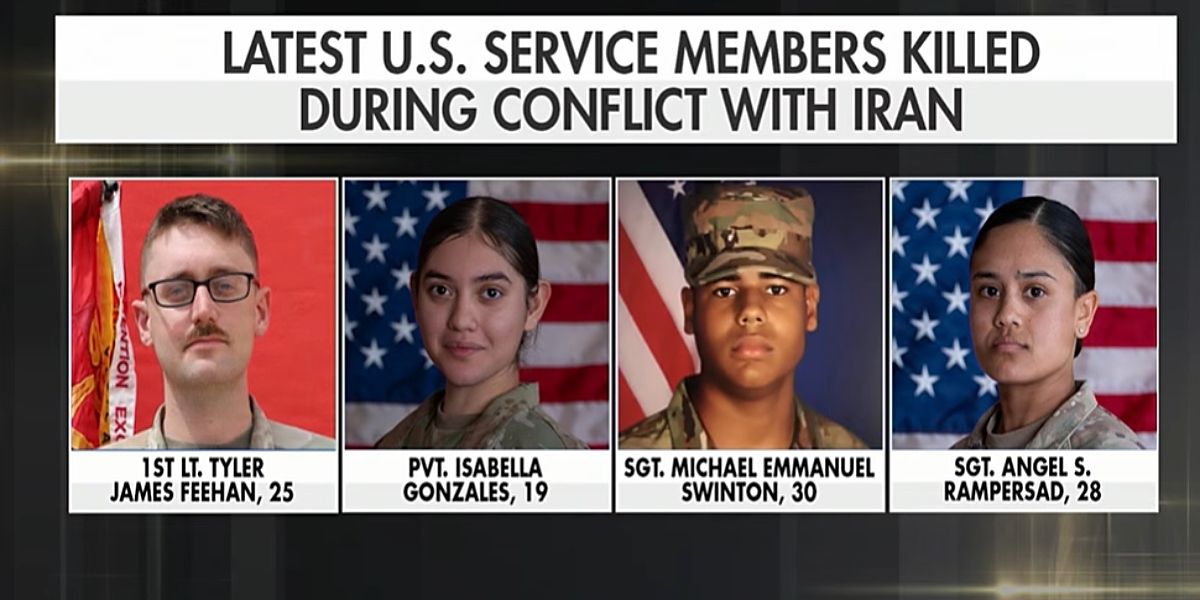
First Lt. Tyler James Feehan, 25, had planned to return home, marry his fiancée and attend law school. Griffin noted that his family is using the military death gratuity to establish an ROTC scholarship at his alma mater, the University of Southern Utah, in hopes of helping future generations serve their country.
Pvt. Isabella Gonzales, just 19 years old, had graduated from high school last year and enlisted with the goal of earning money for college. Griffin recounted how Gonzales told one of her teachers before graduation that military service would help her pursue her education.
Sgt. Michael Emmanuel Swinton, 30, left behind a wife and two young children. Griffin described a heartbreaking Facebook post from his wife showing Swinton embracing his four-year-old daughter before deploying—a final photograph that has since become a cherished family memory. Swinton was killed during a controlled detonation of a downed Iranian drone at Erbil Air Base in Iraq.
Sgt. Angel S. Rampersad, 28, of Ozone Park, New York, was remembered by family and friends as compassionate, adventurous and deeply committed to military service. Initially listed as missing after the attack in Jordan, she was later confirmed to have been killed.
Griffin noted that before the public ever sees the transfer cases carried across the tarmac, military leaders and the president spend hours privately with each family.
“They spent about three hours with the family members… They spend time individually with those family members. So, a heartbreaking moment today at Dover Air Force Base.”
The dignified transfer is not a ceremonial event but a solemn military process in which the remains of fallen service members are returned to the United States before being prepared for burial. The Department of War describes it as one of the military’s highest honors for those who die while serving the nation.
MY TAKE:
Some stories simply don’t need political spin.
Jennifer Griffin understood that Wednesday. Rather than making herself the story, she reminded viewers that four families had lost sons and daughters, husbands and wives, future mothers and fathers. She gave audiences something increasingly rare in television news: time to remember the people instead of racing to the next talking point.
No matter where Americans stand on the conflict itself, moments like these deserve dignity. Behind every flag-draped transfer case is a family whose life has been changed forever.
Sometimes the most powerful reporting isn’t about strategy or politics. It’s about making sure the country remembers the names of those who never made it home.
DBS WIRE SOURCES:
- Mediaite – Fox’s Jennifer Griffin Details the Lives of Fallen US Soldiers In Somber Tribute After Dignified Transfer
- Associated Press – Trump pays respects to 4 US service members killed in the Middle East
- U.S. Department of War – Nation’s Leaders Honor the Fallen During Dignified Transfer
- The Wall Street Journal – Trump Attends Dignified Transfer for U.S. Servicemembers Killed in Middle East









Big difference as to how President Trump handles these matters and how Bide and the DemocRATs handle it.