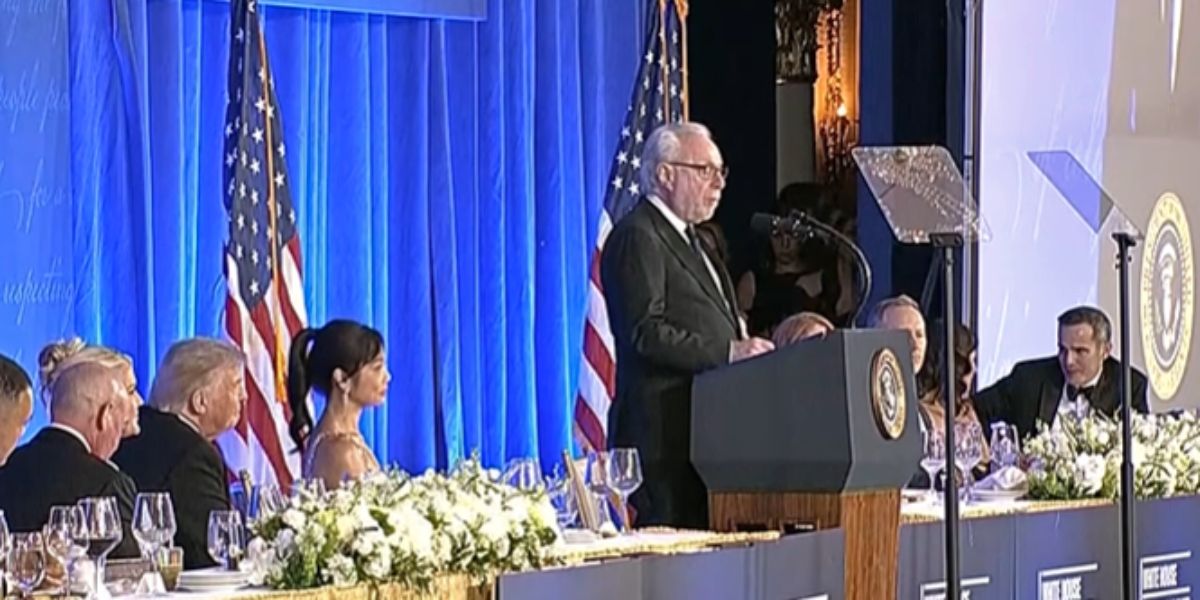
The rescheduled White House Correspondents’ Association dinner became more than a celebration of journalism Friday night, evolving into another forum for debating why public confidence in the American news media has fallen to historic lows.
During MSNBC’s coverage of the event, contributor Molly Jong-Fast argued that President Donald Trump had persuaded many Americans to distrust journalists.
Her comments came during an ironic conversation about the changing relationship between political leaders, the press and the public.
CNN’s Brian Stelter made similar observations during his network’s coverage, arguing that sustained criticism of journalists has damaged public confidence in news organizations and made reporting more difficult.
Covering the WHCA, Brian Stelter laments the “damage” has done to trust in the media.
Brian was a prime purveyor of the “Cheap Fakes” hoax for Joe Biden during the 2024 campaign. pic.twitter.com/A3RE5NE3dq
— Western Lensman (@WesternLensman) July 25, 2026
The remarks immediately generated responses across social media and opinion websites, where critics rejected the idea that distrust stemmed primarily from Trump’s rhetoric. Many argued that public confidence had declined because of dissatisfaction with news coverage itself, pointing to reporting controversies over the past decade as reasons viewers have become more skeptical.
🚨 LOL! CNN IS MELTING DOWN!
Brian Stelter just went on air to call Trump’s WHCA speech a “flop,” “boring,” “tiresome,” and a “snooze fest.”
The same media that spent years calling him a fascist threat is now clutching their pearls because he wasn’t funny enough for them.
They… pic.twitter.com/bFiG6inH1L
— Gunther Eagleman™ (@GuntherEagleman) July 25, 2026
Gallup has reported that Americans’ confidence in newspapers, television news and mass media generally remains near record lows. The decline has occurred over many years and has affected audiences across the political spectrum, though Republicans consistently report substantially lower levels of trust than Democrats.
The White House Correspondents’ Association dinner itself had been postponed earlier this year following a security incident, making this year’s gathering markedly different from previous events.
Public trust in mass media has plummeted to an all-time low.
From Gallup
▪️70% express little to no trust
▪️28% of Americans maintain a “great deal” or “fair amount” of confidence. pic.twitter.com/uJuCdjZymN— Jim DaBink (@JimDaBink) July 19, 2026
Alongside the dinner, journalists, commentators and media analysts discussed the changing role of traditional news organizations as audiences increasingly obtain information from podcasts, independent digital outlets, streaming platforms and social media.
Supporters of legacy news organizations argue that professional reporting remains essential for holding government accountable and verifying information. Critics contend that many national outlets have completely lost credibility by allowing opinion, advocacy and news reporting to become increasingly intertwined.