

BS BULLETIN
- CNN’s Tom Foreman spent $70.54 buying full packages of every ingredient needed for RFK Jr.’s salmon-cake recipe, which HHS prices at about $5 per serving.
- There’s a legitimate affordability debate — but HHS is using standard recipe costing, charging only for the amount of mayo, onion, oil and other ingredients actually consumed in the meal.
- Even a Washington Post critic acknowledged that this method is “perfectly standard” — while arguing it can still mislead families who don’t already own the ingredients.
CNN correspondent Tom Foreman went grocery shopping this week to test one of Health and Human Services Secretary Robert F. Kennedy Jr.’s biggest promises on his new cooking program: healthy, real food for roughly $5 per serving.
Foreman returned with a receipt for $70.54. Case closed? Not quite.
Kennedy’s new Real Food Show features chefs preparing whole-food meals while HHS publishes recipes intended to cost under $5 per serving whenever possible. The first episode features chef Andrew Gruel making crispy salmon cakes with white beans, apple and greens. HHS says the recipe serves four for approximately $5 each using frozen wild salmon — and can cost even less with canned salmon.
CNN decided to check the claim. Foreman went to a major grocery chain and bought the ingredients. The salmon alone caused sticker shock: the show priced the salmon used in the recipe at $8.99, while CNN said the closest comparable frozen wild sockeye it could find cost more than $24.
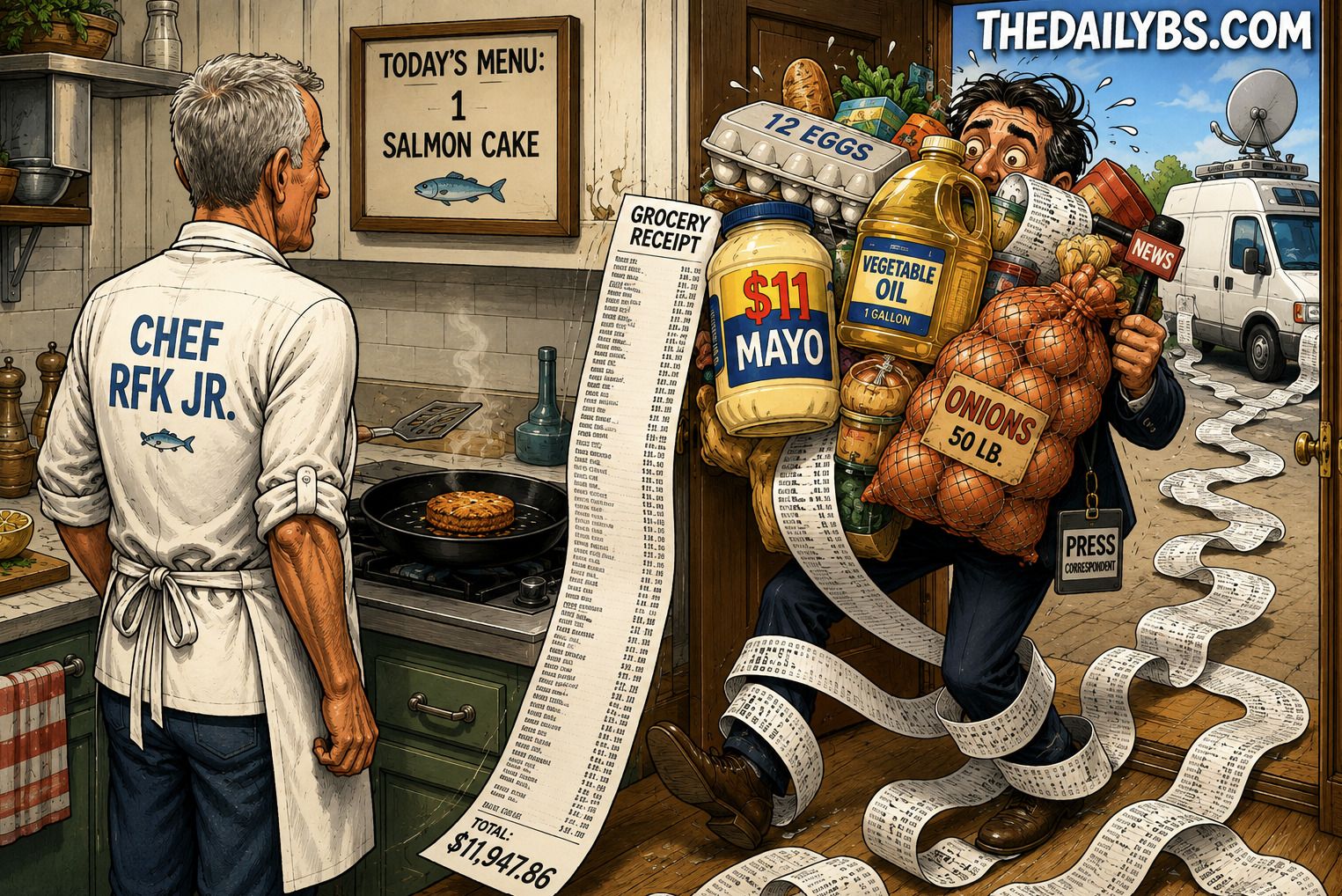
Then Foreman noticed something else. HHS wasn’t charging the recipe for an entire onion. It charged only for the onion actually used. The same went for mayonnaise. HHS calculated the cost of the tablespoons going into the salmon cakes. CNN bought the whole container — which Foreman said cost more than $11.
“They’re only pricing parts of it,” Foreman complained. “And grocery stores don’t sell things that way.”
True.
But grocery stores also don’t require you to throw away the remaining mayonnaise after dinner.
And that is where CNN’s “$70 meal” becomes a considerably more complicated fact-check. HHS told CNN it was using standard recipe-costing methodology — calculating the actual amount of each ingredient consumed by the recipe rather than pretending the entire bottle of olive oil, jar of mustard or carton of eggs disappears into one dinner.
That isn’t some clever accounting method invented at MAHA headquarters. It is how recipes are routinely costed.
Even Washington Post columnist Monica Hesse, who was highly critical of Kennedy’s affordability pitch after ringing up a $73.46 grocery cart of her own, conceded that pricing ingredients according to the amount actually used is “a perfectly standard practice in pricing out a recipe.”
So RFK Jr. has a point. If a recipe uses one egg from a dozen, assigning the entire price of the carton to that particular dinner makes about as much sense as adding the purchase price of the frying pan.
The salmon price may be the stronger criticism.
HHS promotes the dish as an inexpensive way to serve healthy protein, but wild salmon can vary dramatically in price depending on geography, store, brand and package size. A recipe can legitimately calculate only the amount consumed without making a $24 salmon package magically affordable to someone with $20 available for dinner.
HHS itself provides one obvious workaround: use canned salmon, which it says can bring the per-serving price below the frozen-salmon version.
Kennedy has since pushed back on the coverage, arguing that critics are inflating the meal’s cost by assigning entire packages of reusable ingredients to one recipe.
Meanwhile, the larger purpose of The Real Food Show is straightforward. HHS says it wants Americans cooking more meals at home from whole ingredients rather than relying so heavily on ultra-processed food. Each episode is supposed to translate the administration’s dietary guidance into basic meals ordinary families can prepare themselves.
Nutrition experts quoted by HHS have generally praised the first recipe’s nutritional composition, pointing to its protein, omega-3 fats, fiber, beans and vegetables, even when some have raised questions about execution or cost.
MY QUICK TAKE
I enjoyed this tremendously.
CNN set out to investigate whether RFK Jr. could feed four people for about twenty bucks.
And somewhere along the way they apparently decided: THE ENTIRE JAR OF MAYONNAISE HAS BEEN CONSUMED. Ladies and gentlemen, investigative journalism.
Pretending one dinner consumed an $11 jar of avocado mayonnaise so CNN can announce a $70 meal?
Come on.
If we’re going to price food that way, I made a $42 peanut-butter sandwich yesterday.
And I haven’t even depreciated the toaster.
DBS WIRE SOURCES:
- Mediaite — ‘I Couldn’t Make It Work!’ CNN correspondent price-checks RFK Jr.’s cooking show
- HHS — The Real Food Show: Crispy Salmon Cakes with Apple, White Bean & Greens Salad
- HHS — Secretary Kennedy launches The Real Food Show to inspire Americans to cook healthy, affordable meals at home
- The Washington Post — RFK Jr.’s cooking show is a rich person’s solution to a poor person’s problem
- The Washington Post — I tried the recipe from RFK Jr.’s cooking show. Here’s what I learned












mn
ds