Give Abdul El-Sayed credit for one thing: He showed up.
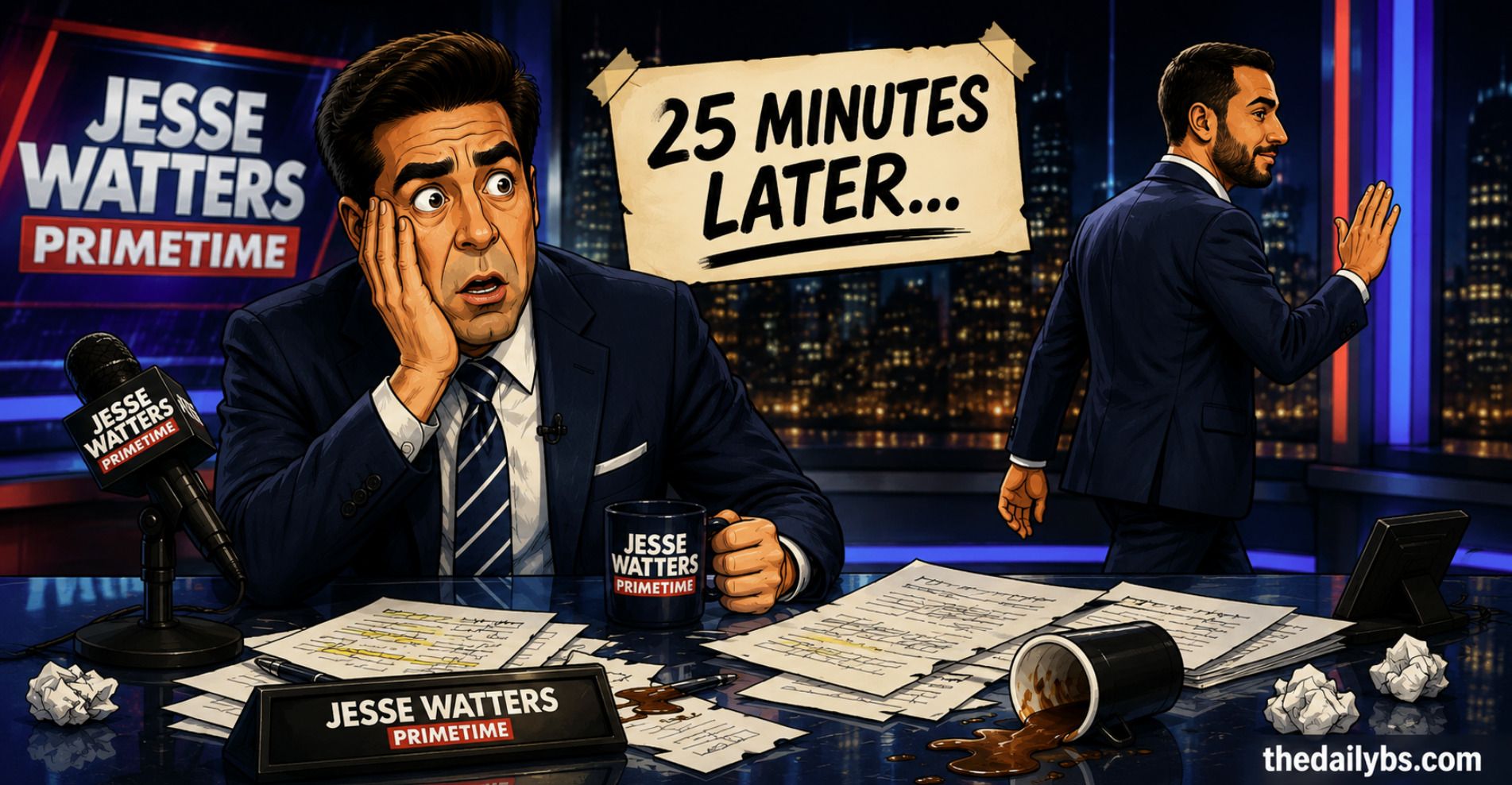
The Democratic nominee for U.S. Senate in Michigan walked into Jesse Watters’ studio Monday night knowing perfectly well what was coming and spent 25 minutes getting peppered about some of the more colorful positions and statements he has accumulated on his journey from progressive activist to Democratic Senate nominee.
El-Sayed opened by saying he was looking forward to a “good, wholesome conversation.”
Twenty-five minutes later, he had asked Jesse Watters whether he was circumcised.
So much for wholesome.
But that bizarre exchange—which we’ve covered separately—wasn’t even the most revealing thing about the interview.
What fascinated us was the dodge.
Again and again, Watters asked El-Sayed a fairly direct question about something El-Sayed has advocated, said or supported. Again and again, El-Sayed answered a somewhat different question, frequently steering the conversation toward Iran, gas prices, Donald Trump or Republican opponent Mike Rogers.
Sometimes Watters let him go.
Sometimes he didn’t.
So we watched the whole thing and pulled out ten moments worth knowing about—along with the part of the answer El-Sayed seemed considerably less interested in discussing.
1. Do you still want to abolish ICE?
This should have been easy.
Watters asked El-Sayed about his support for abolishing Immigration and Customs Enforcement.
Instead of beginning with yes or no, El-Sayed began with a complaint about how ICE operates.
“I think we have to have an immigration enforcement agency that actually works,” El-Sayed said, arguing that there are millions of illegal immigrants in the country and therefore “ICE isn’t working.”
That’s an interesting argument: ICE should be abolished because there are too many illegal immigrants for ICE to deal with.
Watters kept pushing.
Eventually El-Sayed suggested America could return to something resembling the old Immigration and Naturalization Service—the agency that existed before ICE was created after 9/11.
But El-Sayed also insisted the real concerns he hears from Michigan voters are gas prices, grocery prices and health care.
Those may very well be concerns. They just weren’t the question.
THE BS TRANSLATOR: Yes, he still wants ICE gone. He’d just prefer to call whatever replaces it something else—and talk about gasoline while you digest that.
2. Okay, then what about dangerous illegal immigrants?
Watters wasn’t finished.
If El-Sayed thinks ICE should go, Watters wanted to know what happens when an illegal immigrant commits a serious crime.
El-Sayed’s answer was more straightforward here: people who commit crimes should face consequences.
But when Watters pressed him on deportation and immigration enforcement, El-Sayed again broadened the argument into whether ICE as an institution is effective.
There is a considerable difference between saying a criminal should face consequences and saying an illegal immigrant who commits a crime should be removed from the United States.
Watters was trying to get at the second.
El-Sayed was much more comfortable talking about the first.
THE BS TRANSLATOR: “Criminals should be punished” sounds great. The missing word was deported.
3. What does Medicare for All actually cost?
This may have been the purest dodge of the night.
Watters asked El-Sayed about Medicare for All and wanted to know the price tag.
El-Sayed’s response was that he was “less interested in the broader national budget” than in what the policy would mean to a family’s budget.
That’s a politician’s answer worthy of framing.
El-Sayed argued that people already pay enormous amounts through premiums, deductibles, copays and other health costs, and that his plan would leave average Michigan families paying less.
That’s the sales pitch.
Watters wanted the receipt.
El-Sayed wanted to discuss whether the customer would like the product.
And when the conversation turned to the roughly $7 trillion federal budget, El-Sayed quickly brought the discussion back around to Iran and military spending.
THE BS TRANSLATOR: Watters: What does it cost? El-Sayed: Wouldn’t you rather hear what I say you’ll save?
We noticed.
4. How much of Beyoncé’s money would you like?
This was one of the funniest exchanges because Watters found a way to make “tax the rich” considerably less abstract.
El-Sayed argued that billionaires don’t earn their fortunes primarily from labor and said wealthy Americans should pay substantially more.
Watters essentially presented him with Beyoncé.
How much more should she pay?
El-Sayed defended a wealth tax and argued that someone sitting on a billion dollars could still do extraordinarily well even after paying a 7% tax on wealth.
At another point, El-Sayed asked what someone would even do with still more money.
Watters’ answer may have been the most concise economic philosophy offered all evening:
“Whatever I want!”
There you have it.
But notice what happened again. El-Sayed framed the issue around what a rich person needs.
That isn’t really the question underlying a wealth tax.
The question is who gets to decide how much of somebody else’s property is enough.
El-Sayed’s answer seems to be: people like Abdul El-Sayed.
THE BS TRANSLATOR: You have more money than Abdul thinks you need. Abdul has plans for the rest.
5. Wait—getting rid of Sharia law is WHITE SUPREMACY?
Now we were cooking.
Watters confronted El-Sayed with his previous rhetoric connecting efforts to eliminate Sharia law with white supremacy.
“Getting rid of Sharia law is White supremacy?” Watters asked. “Can you explain that one?”
El-Sayed’s answer was that “nobody is trying to push Sharia law on anyone else,” just as he hopes nobody is trying to impose Christian canon law on Americans. He said religious freedom means Muslims should be free to follow their faith and insisted, “I would never push my faith on anyone else.”
Fair enough.
But that still didn’t quite explain the original white supremacy accusation.
El-Sayed instead argued that efforts to preemptively ban Sharia are discriminatory because Muslims constitute a tiny percentage of the population and aren’t attempting to impose Islamic religious law on the country.
Then he took a swipe at Sen. Tommy Tuberville, saying, “The idea that you have somebody like Tommy Tuberville—who barely was good at coaching football—is out here trying to ban Sharia law when there’s less than 1% of the Muslim community in America, as if somehow Muslims are out here trying to push Sharia law, that seems to me to be deliberately targeting the Muslim community because they’re different.”
Interesting answer.
But Watters had asked why opposing Sharia amounted to white supremacy.
THE BS TRANSLATOR: We got religious liberty, statistics about Muslims, canon law and a drive-by shooting at Tommy Tuberville’s coaching record.
The “white supremacy” part somehow escaped.
6. Do you still want to replace the Second Amendment?
Watters also confronted El-Sayed about old comments involving the Second Amendment.
This wasn’t invented out of thin air. Previously surfaced video showed El-Sayed arguing that the Second Amendment did not establish an individual right to own firearms in the way Americans commonly understand it and discussing replacing that right with a right to health care.
So Watters asked him about it.
El-Sayed’s present-day answer was considerably more careful.
He talked about respecting hunters and gun owners and framed his position around gun safety rather than announcing that, yes, he’d like to take an eraser to Amendment Number Two.
That’s probably smart politics in Michigan.
But it leaves an obvious question:
If you once entertained replacing the Second Amendment, do you still believe that?
That’s the answer voters needed.
That’s not exactly the answer they got.
THE BS TRANSLATOR: Old Abdul had thoughts about replacing the Second Amendment. Senate-candidate Abdul would very much like Michigan hunters to know he respects their rifles.
Funny how elections clarify the mind.
7. Green New Deal? What Green New Deal?
Watters moved to another piece of El-Sayed’s progressive résumé: the Green New Deal and electric vehicles.
Again, El-Sayed didn’t exactly leap at the opportunity to embrace the label.
Instead he redirected the discussion toward energy costs, Trump’s policies and the war with Iran, repeatedly emphasizing what Michiganders are paying for gasoline.
This was actually one of El-Sayed’s most effective tactics throughout the interview.
Whenever Watters dragged him toward an old progressive position that might be uncomfortable in a statewide Michigan general election, El-Sayed tried to drag Watters back toward the price at the pump.
Politically, you can understand why.
But it also tells you something.
If these policies are terrific, why spend so much energy changing the subject when somebody asks about them?
THE BS TRANSLATOR: The Green New Deal apparently becomes much less green when you’re running statewide in the home of the American automobile industry.
8. Should biological males compete against women?
Then Watters reached transgender athletes.
He wanted to know whether biological men should compete in women’s sports.
El-Sayed argued that politicians shouldn’t be making these decisions and that sporting organizations should establish the rules.
Then he finally got fed up with the entire line of questioning.
El-Sayed complained that Watters had “not asked me one time about the issues that people actually care about in Michigan,” arguing that voters were concerned about gas, groceries, health care and other pocketbook issues rather than the culture-war subjects Watters kept raising.
There are two problems with that answer.
First, Watters had discussed economic issues with him.
Second, saying somebody else should decide whether biological males compete against women is not the same as telling voters what you believe.
El-Sayed is asking Michigan to make him one of 100 United States senators. It’s not particularly outrageous to ask what he thinks.
THE BS TRANSLATOR: Should biological males compete against women?
Please direct all inquiries to the appropriate sporting authority.
Next question.
9. Sex changes for minors? Somehow we arrived at Jesse Watters’ circumcision
And here we reach the moment destined to live forever on the Internet.
Watters asked El-Sayed directly: “Sex change for minors. Do you support that?”
El-Sayed invoked conservative support for Right to Try laws and argued that government shouldn’t dictate medical care. He said medical decisions involving minors should be made by the doctor, parents and patient.
Watters pressed him: “You want to try on kids?”
El-Sayed continued arguing that Watters wanted to put government “inside a clinic or a hospital.”
Then Watters made the question considerably less delicate, asking the physician whether he thought it was acceptable for a parent to “slash his kid’s ding-a-ling off.”
El-Sayed responded with the question absolutely nobody watching at home had on the bingo card:
“Are you circumcised?”
Watters looked stunned.
“Yeah, but I mean that’s a personal question, doctor!”
El-Sayed told him he should probably move on.
Watters wasn’t moving anywhere.
“Circumcision is different than castration!”
El-Sayed responded that circumcision is also “surgery on a kid’s ding-a-ling” and accused conservatives of being selective about government intervention.
Watters finally delivered his verdict: “Abdul, Michigan’s not going for that. That is sick stuff.”
We’ll leave Michigan to decide that one.
But once again, notice what never came.
Watters asked: Do you support sex-change procedures for minors?
The answer wasn’t yes.
It wasn’t no.
It was: Are you circumcised?
THE BS TRANSLATOR: If someone answers your question about sex-change procedures for minors by asking about your foreskin, you may safely assume the original question has not been answered.
10. And finally: El-Sayed wanted to talk about EVERYTHING except the questions
This was really the theme of the entire 25 minutes.
El-Sayed repeatedly brought the conversation back to Iran, gas prices and Mike Rogers.
On Iran, he told Watters, “I’m never going to defend the Iranian regime,” but said he would defend the proposition that America “probably shouldn’t be fighting wars we don’t know how to get out of.”
He mocked the length of Trump’s military operation and argued that Americans were paying for it at the pump.
He also kept working his Republican opponent into the conversation.
At one point El-Sayed said his goal was to win Michigan and took a wonderfully adolescent shot at Rogers, calling him a “beta.”
By the end, Watters acknowledged something worth acknowledging ourselves: El-Sayed actually came on the show.
“I respect the fact that you came on,” Watters told him.
Then came the rest.
“I don’t think you’ve really looked into some of the policies you’re pushing. You seem a little naive, Abdul. I give you credit for facing the music, but some of the stuff’s just straight up wacky. I don’t know if that’s going to fly in Michigan, but we’re going to find out.”
And that may be the best summary of the entire spectacle.
El-Sayed deserves credit for walking into an interview he knew wasn’t going to be friendly. Too many politicians of both parties hide inside media bubbles where nobody asks a question capable of raising their blood pressure.
But showing up and answering are two different things.
Over 25 minutes, we heard plenty about Donald Trump, Iran, gas prices, billionaires, Mike Rogers, Tommy Tuberville, health-care costs and even Jesse Watters’ anatomy.
What we didn’t hear were simple answers to some remarkably simple questions about El-Sayed’s own positions.
- Does he still want ICE abolished?
- Would he deport criminal illegal immigrants?
- What does Medicare for All cost?
- Does he stand by his old Second Amendment position?
- Should biological males compete in women’s sports?
- Does he support sex-change procedures for minors?
Those weren’t questions about Donald Trump.
They were questions about Abdul El-Sayed.
And the subject a politician desperately wants to change is the most revealing answer of all.
DBS WIRE SOURCES:
- Fox News — Watch the complete 25:17 El-Sayed-Watters interview
- Fox News — El-Sayed grilled on Sharia law, taxing the wealthy and other positions
- Mediaite — Transcript of the El-Sayed-Watters exchange over procedures for minors
- New York Post — El-Sayed-Watters interview and circumcision exchange
- Washington Examiner — El-Sayed on Sharia and Mike Rogers
- Breitbart — CNN reaction to Watters’ questioning of El-Sayed