BS BULLETIN:
- The State Department is reviewing up to 200,000 B-1/B-2 visas held by foreigners who later sought asylum.
- Officials are examining whether visa applications contained misrepresentations or other grounds for revocation.
- The move could become one of Trump’s largest visa-enforcement actions yet.
The Trump administration has apparently found another immigration pipeline it wants to shut down.
Come to America as a visitor.
Then ask to stay as an asylum seeker.
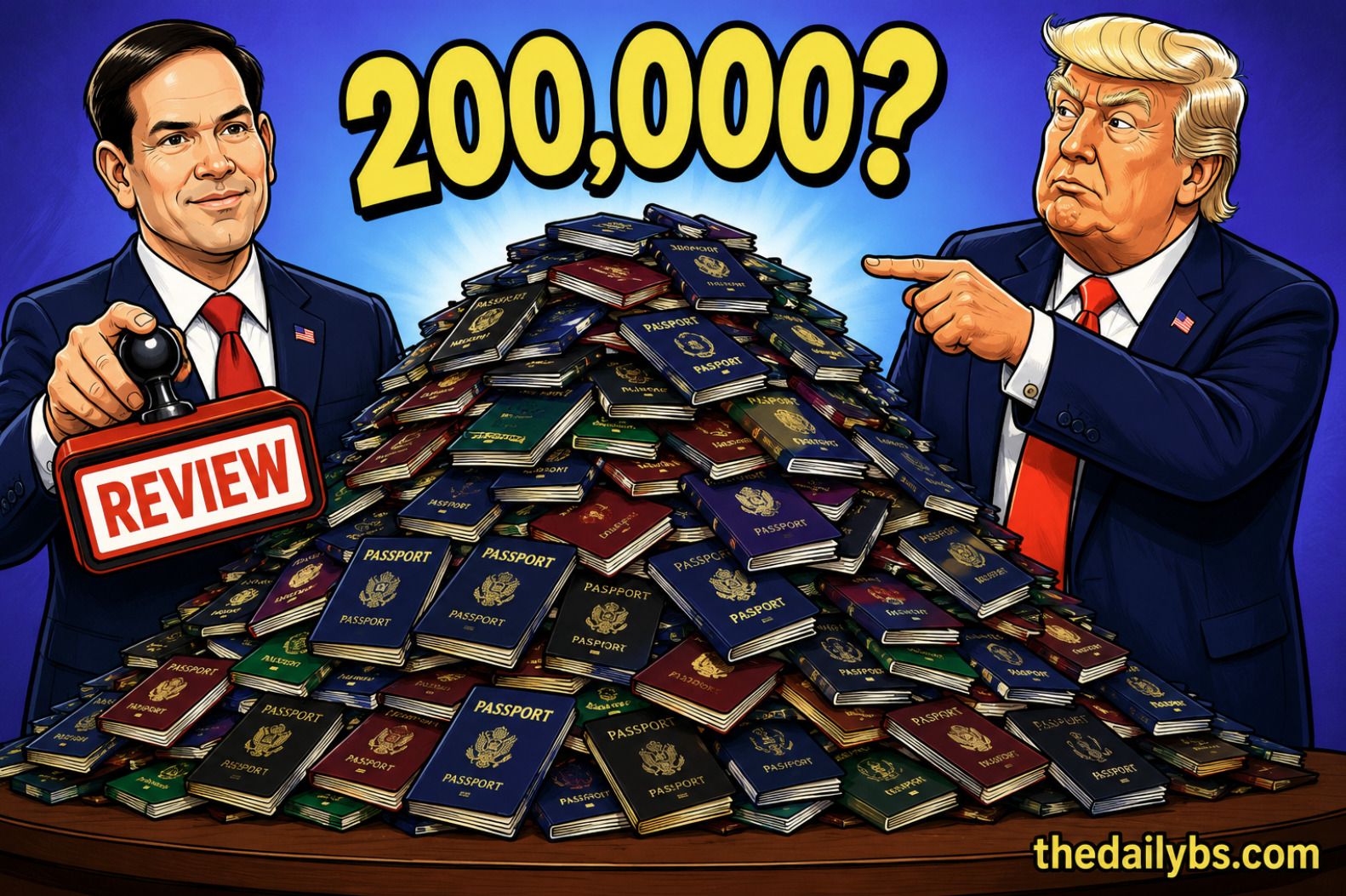
Now Secretary of State Marco Rubio’s State Department is reportedly reviewing as many as 200,000 visitor visas held by foreign nationals who entered the United States on temporary business or tourist visas and later filed asylum applications.
The Associated Press reported that the State Department has begun examining B-1/B-2 visa holders who subsequently sought asylum, looking for cases in which the original visa application may have contained false information or where other grounds exist to revoke the visa.
State Department spokesman Tommy Pigott made the administration’s position pretty clear.
“The Trump administration has no higher priority than protecting American citizens and upholding the highest standards of national security and public safety through our visa process,” Pigott said.
And then came the sentence that explains why this isn’t merely a paperwork exercise. “Every single visa decision is a national security decision.”
According to AP, the State Department is using data from U.S. Citizenship and Immigration Services to identify people who entered on B-1/B-2 visas and later applied for asylum.
That doesn’t automatically mean those people committed fraud. There are legitimate circumstances in which conditions in someone’s home country change after a visa is issued, potentially giving that person a valid reason to seek asylum. But the administration is looking for something more specific: whether some applicants already intended to seek asylum when they applied for a temporary visa but concealed that intention from American consular officers.
A B-1/B-2 visa is issued for temporary travel. Applicants generally have to satisfy a consular officer that they intend to leave the United States after their authorized stay.
If someone actually intended all along to enter the country and seek permanent refuge, the government could conclude that the original visa application involved a material misrepresentation.
And Rubio has made aggressive visa revocation a central feature of his State Department. Officials told AP the department has already revoked tens of thousands of visas since Trump returned to office, including visas connected to criminal activity, terrorism concerns and other violations.
The new asylum review could dramatically increase that number. An internal State Department communication cited by AP reportedly directs consular officers to review cases involving approximately 200,000 people who held valid visitor visas when they sought asylum.
The administration is also reportedly considering whether the visas of accompanying family members should be reviewed. That does not mean 200,000 people have already lost their visas. It means potentially 200,000 visa holders are under examination, with individual determinations still required.
The policy is nevertheless another sign that Trump and Rubio are trying to turn the visa system into an enforcement tool rather than treating a visa as something effectively untouchable once it has been issued.
Rubio has been blunt about that philosophy. “A visa is not a right,” the secretary of state has repeatedly argued while defending the administration’s broader revocation campaign.
A visa allows a foreign national to travel to a U.S. port of entry and seek admission. It is not citizenship, permanent residency or a guarantee that the visa can never be revoked.
Immigration advocates are already warning that the new review could punish legitimate asylum seekers. They argue that someone might travel to the United States lawfully and only later decide that returning home would expose them to persecution—or that circumstances in their country could deteriorate after their arrival.
If the administration can establish that applicants told the United States, essentially, “I’m only coming for a visit” while already planning to remain permanently through an asylum claim, that’s a very different case.
And the scale of the review suggests the administration believes there may be quite a few of those cases worth examining.
DBS WIRE SOURCES:
- Associated Press — Trump administration reviews up to 200,000 visitor visas connected to asylum claims
- Reuters — U.S. plans review that could revoke up to 200,000 tourism and business visas
- Fox News — Trump administration eyes historic mass visa revocation
- Daily BS — Coalition sues Trump over foreign student visa policy
- U.S. Department of State — Visitor visa information