BS BULLETIN:
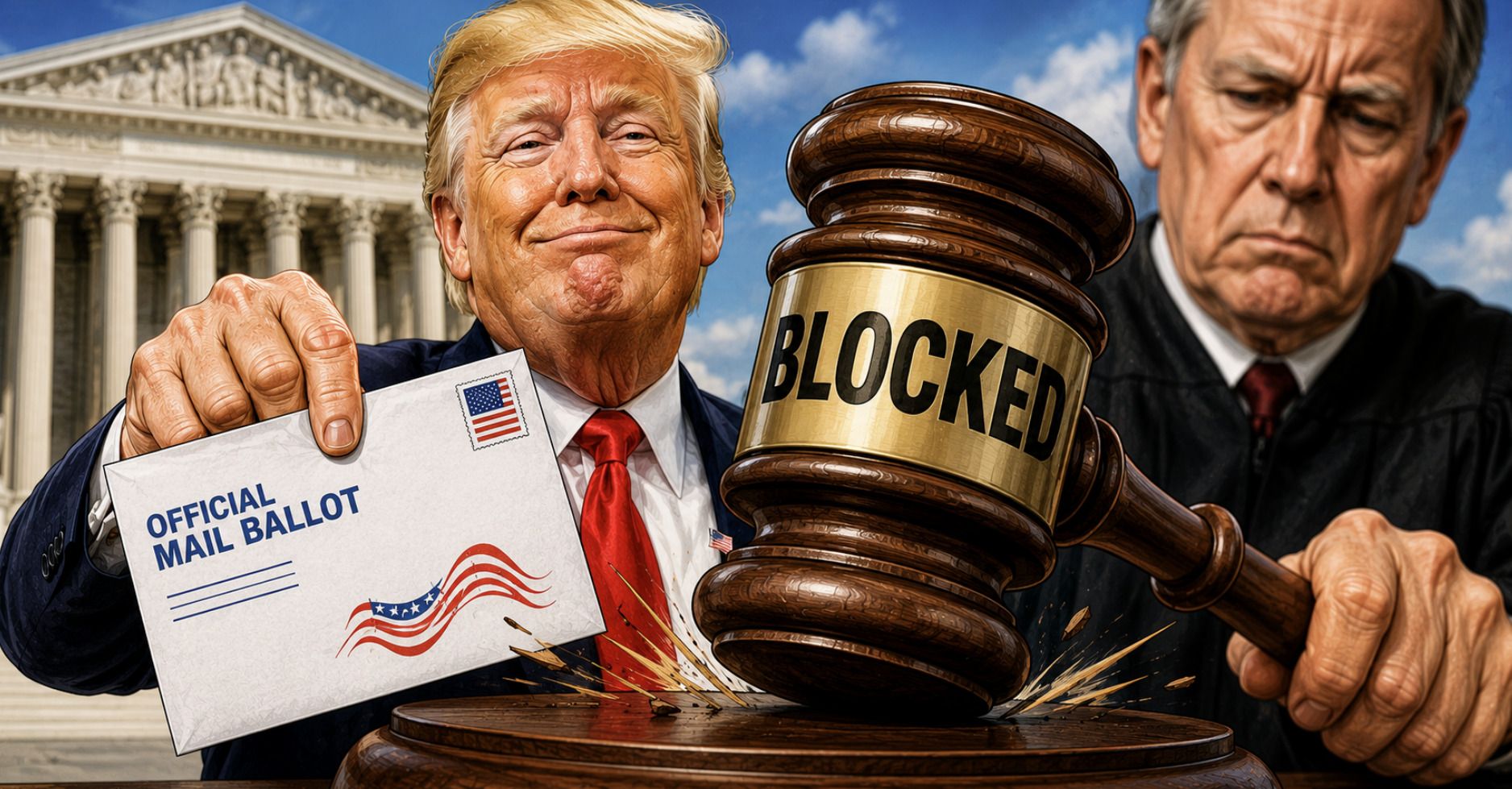
- The Supreme Court handed Trump a victory Monday, allowing his administration to move ahead with mail-voting restrictions.
- But the justices did not rule that Trump’s policy was legal — they said the states had challenged it too soon.
- Once USPS finalized the actual rules, opponents sued again. Thursday night, a federal judge blocked key provisions for 14 days.
If you’re having trouble keeping up with Trump’s mail-voting fight, join the club.
Monday: Trump wins at the Supreme Court.
Wednesday: A federal judge removes an injunction standing in his way.
Thursday: The same judge blocks key parts of the plan again.
Got it?
The latest came Thursday night when U.S. District Judge Indira Talwani issued a 14-day temporary restraining order stopping the U.S. Postal Service from enforcing several major provisions of its new mail-ballot rules.
And the timing is getting downright crazy. Some states are required to begin sending mail ballots as early as next week.
The confusion starts with what the Supreme Court actually did Monday.
Trump scored a legitimate victory when the justices lifted an earlier injunction against his executive order. But they did not decide whether the president’s mail-voting restrictions were constitutional. Instead, the Court concluded that the states challenging Trump lacked standing at that stage because they were essentially fighting an internal presidential directive before the Postal Service had implemented it.
And the justices included one rather important warning: “The Court’s disposition of this application does not mean that any measure taken by the Government to implement the Order will necessarily be lawful.”
Translation: Come back when there’s something concrete to challenge. Then something concrete arrived. USPS finalized rules implementing Trump’s directive, including requirements involving ballot envelopes, individualized barcodes and voter information submitted by states. The Postal Service said it would not accept outbound mail ballots from states that failed to comply with the new requirements.
So Trump’s opponents did exactly what the Supreme Court had left open for them to do.
They came back. Two dozen Democratic-led states and the District of Columbia filed a new lawsuit Wednesday challenging the finalized USPS rule. And Thursday night, Talwani stopped key provisions in their tracks. “Plaintiff States face irreparable harm where they are required to comply with a likely unconstitutional regulation for which compliance is practically impossible as to the 2026 midterm elections,” Talwani wrote.
She said many states have already ordered their mail ballots and simply don’t have enough time or money to redesign them, get new designs approved, produce them, rework election systems, train officials and upload the required voter information before voting begins.
That does not mean Trump’s entire election executive order has suddenly been wiped out.
The new ruling targets major provisions of the USPS rule implementing the mail-ballot portion of Trump’s plan.
And this isn’t over. Talwani’s order lasts 14 days. A hearing is scheduled for Sept. 3.
The Trump administration is expected to appeal. Which means the whole mess could land right back where it was Monday: The Supreme Court.