

BS BULLETIN:
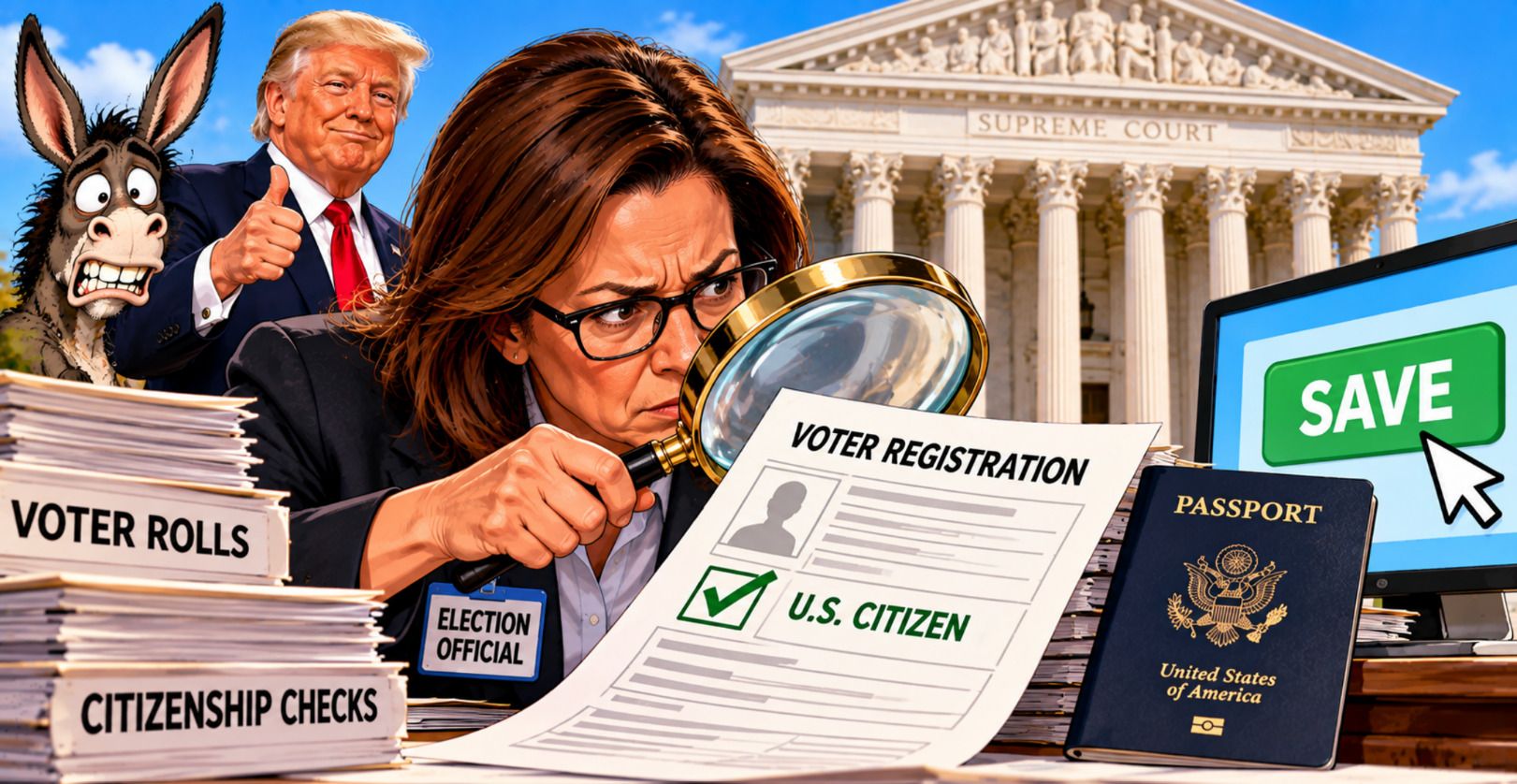
- The Supreme Court voted 6-3 to let the Trump administration resume its expanded SAVE citizenship-verification system while the legal fight continues.
- The revamped system lets state and local officials check voter information against Social Security records and submit bulk searches.
- The Court stressed that the ruling does not wipe away the federal 90-day restriction on systematic voter-roll removals before an election.
The Supreme Court handed the Trump administration a significant election-law victory Friday, allowing federal officials to resume an expanded system designed to help states verify whether people on their voter rolls are U.S. citizens.
In a 6-3 ruling, the Court stayed a lower-court order that had blocked the administration’s revamped Systematic Alien Verification for Entitlements program, better known as SAVE.
President Donald Trump ordered the expansion in March 2025. The administration subsequently connected SAVE with Social Security Administration records and added the ability for state and local officials to conduct bulk citizenship searches rather than checking people one at a time.
Under the expanded program, officials can submit information including a voter’s name, date of birth and full or partial Social Security number. If the system cannot confirm citizenship, election officials can seek additional proof from the voter.
The case was brought by the League of Women Voters and other groups that argued the system violated federal privacy laws and could incorrectly flag legitimate voters, particularly naturalized citizens whose Social Security records may not accurately reflect their current citizenship status.
A federal district judge agreed and struck down the expanded system. The D.C. Circuit then declined to pause that ruling while the administration appealed.
But the Supreme Court said the challengers’ legal claims are unlikely to ultimately succeed.
The majority pointed to a 1996 federal law requiring DHS to respond when state and local governments ask it to verify someone’s citizenship or immigration status. The Court said that provision likely authorizes the information-sharing arrangement underlying the new SAVE system despite the privacy-law objections raised by the challengers.
Justices Ketanji Brown Jackson, Sonia Sotomayor and Elena Kagan dissented.
Jackson argued that the administration’s use of Social Security information raises serious privacy concerns and warned that outdated citizenship records could force lawful voters to prove their citizenship or risk losing their registration.
There is an important limit to Friday’s ruling.
Federal law generally requires states to finish systematic programs removing ineligible voters from their rolls at least 90 days before a federal election. The Supreme Court specifically said Friday’s decision does not resolve a separate dispute over the scope of that restriction.
The Court did say, however, that individualized citizenship inquiries remain permissible during that period.
The decision comes as questions surrounding citizenship and voter rolls have become increasingly prominent ahead of the midterms. The Daily BS reported Friday on Sen. Mike Lee’s reaction after roughly 30,000 noncitizens were mistakenly placed on voter rolls.
DBS WIRE SOURCES:
- Supreme Court — Department of Homeland Security v. League of Women Voters
- Reuters — Supreme Court restores Trump’s expanded voter-verification system
- Associated Press — Supreme Court allows revamped voter eligibility database for now
- DHS — Supreme Court decision permitting voter citizenship verification
- League of Women Voters — Case background and response









15