BS BULLETIN:
- Former White House ethics lawyer Richard Painter says taxpayer-funded television ads featuring President Trump amount to illegal government propaganda.
- The White House says they’re public service announcements, not campaign ads — and points to similar federally funded advertising under Republican and Democratic presidents.
- There’s also decades of government watchdog precedent showing that taxpayer-funded messages can promote an administration’s policies without automatically crossing the legal line.
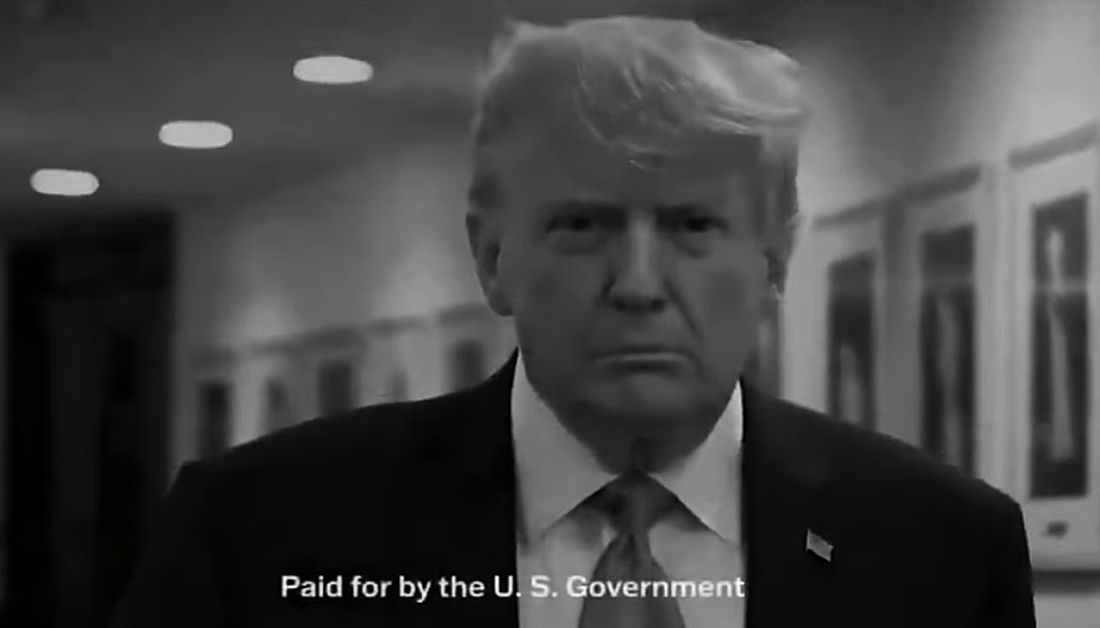
President Donald Trump’s face is appearing in taxpayer-funded television advertisements.
Richard Painter thinks that’s illegal.
The White House has a considerably different interpretation — and it came prepared with examples.
Painter, who served as chief White House ethics lawyer under President George W. Bush and later became a vocal Trump critic, has attacked the administration over television spots paid for by the federal government.
The ads praise Trump’s agenda and accomplishments, with at least one drawing heavily on rhetoric and imagery associated with his political campaigns.
Painter argues taxpayers are effectively being forced to finance political advertising. The White House says that leaves out an important distinction. Trump isn’t running for office in 2026.
This is a political ad, and it is ILLEGAL for the White House to pay for it with taxpayer funds. https://t.co/fEnhKVPx3x
— Richard W. Painter (@RWPUSA) September 24, 2026
The ads don’t tell anyone to vote Republican, defeat Democrats, or support a candidate. And they’re openly identified as government-funded. The White House calls them public service announcements.
“The announcements are very clearly not campaign ads; President Trump is not on the ballot and there is no call to action,” the White House said.
Instead, it said, the spots are intended to remind Americans “to love their country and know why it’s worth defending — at home, at the border, and abroad.”
Then the administration pulled out the history books.
George W. Bush’s administration used taxpayer money for a national television campaign promoting changes to Medicare and also bought Super Bowl airtime for anti-drug and anti-terrorism messages.
The Obama administration advertised Obamacare enrollment and subsidies and promoted its Waters of the United States rule. The Biden administration spent hundreds of millions of dollars on its “We Can Do This” COVID public-information campaign across television, radio, digital and print.
“Patriotism isn’t partisan,” the White House said.
Presidential Public Service Announcements Are Nothing Newhttps://t.co/v8Ld69O4ip
— Rapid Response 47 (@RapidResponse47) September 25, 2026
There’s also a potentially important piece of history from the Government Accountability Office.
In 2004, lawmakers challenged Bush administration television and print advertisements promoting its Medicare overhaul, arguing that taxpayer money was being used for political propaganda.
GAO rejected the challenge. The watchdog acknowledged that the advertising contained political overtones and promoted the administration’s view of the new law. But it concluded that wasn’t enough to make the campaign illegal.
“The publicity or propaganda prohibition,” GAO wrote, “does not bar materials that may have some political content or express support for a particular view.”
GAO has identified three types of government communications that can violate the prohibition: covert propaganda, purely partisan material and self-aggrandizement.
Trump’s ads are unusually personal. One spot features Trump himself and promotes his accomplishments. Another, titled “Final Battle,” reportedly uses imagery and language similar to Trump’s presidential campaign material.
That gives Painter and other critics an argument that these aren’t merely government explanations of a program like Medicare enrollment.
But another part of the case cuts the administration’s way. The advertisements disclose who is paying for them. “Paid for by the U.S. Government.”
That’s important because GAO says the defining feature of covert propaganda is concealing the government’s role in creating the message. And GAO has repeatedly said federal agencies don’t have to present government policies neutrally or give opposing viewpoints equal time.
In another decision, the watchdog said a government justification must be “so palpably erroneous as to be unreasonable” before certain public communications cross the statutory propaganda line.
So Painter’s claim that the ads are illegal isn’t the end of the legal argument. It may be the beginning of one.
The central question is whether Trump’s spots are legitimate government communications promoting administration policies — something previous presidents have done — or whether their focus on Trump himself pushes them over the line into prohibited partisan promotion or self-aggrandizement.
For now, the White House isn’t backing down.
“When prior Administrations utilized the airwaves, it was called ‘public education,’” it said. “When this Administration promotes pride in our country, many of those same voices call it ‘propaganda.’”
MY QUICK TAKE:
This is exactly why the history matters.
If the rule is “presidents can’t use taxpayer money to promote what their administrations are doing,” Washington is going to need a very large refund department.
That doesn’t automatically make these particular Trump ads legal. But before declaring them unprecedented government propaganda, somebody probably should have checked what the government has been doing with television commercials for the last few decades.
DBS WIRE SOURCES:
- The Hill — Richard Painter argues Trump taxpayer-funded TV ads are illegal
- White House — Presidential public service announcements are nothing new
- GAO — 2004 decision on Bush administration Medicare television advertisements
- GAO — Standards governing partisan, covert and self-aggrandizing government communications
- GAO — Publicity and propaganda rules for federal government communications
- Washington Post — White House expands taxpayer-paid Trump advertising campaign