BS BULLETIN:
- The State Department is assessing a plan to make passport information available for voter-citizenship verification.
- The move follows Friday’s Supreme Court decision allowing the Trump administration’s expanded SAVE database to be used by states checking their voter rolls.
- The proposal could add information from Americans’ passport records to an increasingly broad federal citizenship-verification system.
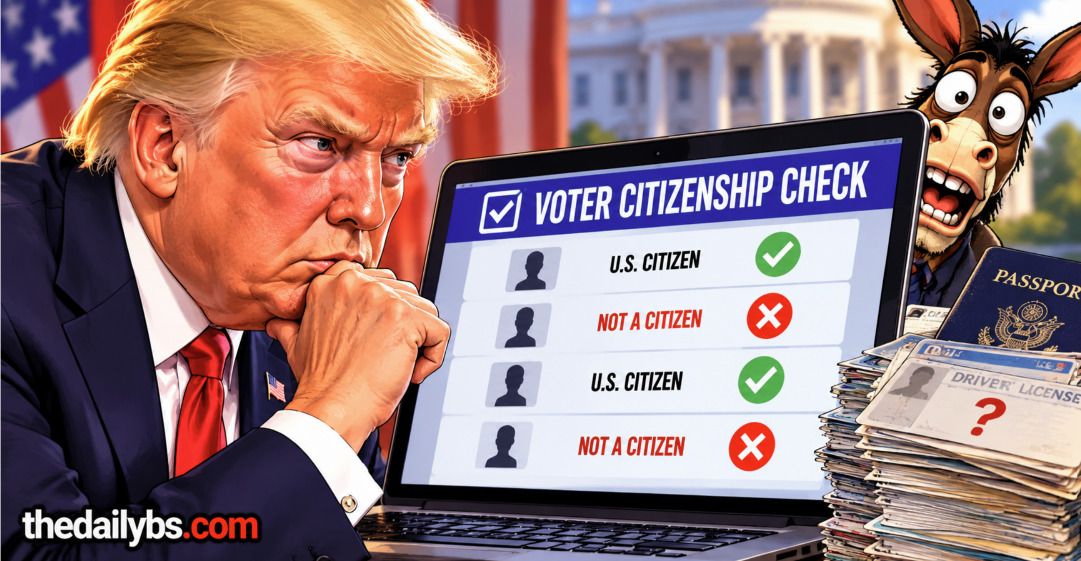
The Trump administration may be about to add another enormous federal database to its effort to determine whether people registered to vote are actually American citizens.
This time, it’s the State Department’s passport files.
The department is assessing ways to share passport information with state and local governments for citizenship checks, according to reporting on a proposal being developed ahead of the midterm elections.
And there’s a pretty obvious reason passport records would be useful.You have to establish U.S. citizenship to receive a U.S. passport.
The proposal would add “voter eligibility” to the authorized uses of the State Department’s passport-services records and potentially allow citizenship information to be checked through federal verification systems.
That doesn’t mean your local election office is suddenly getting a folder containing your passport application.
The administration is examining how information from the records could be used for verification while protecting Americans’ personal data. But it represents another significant expansion of the federal government’s role in checking voter citizenship. And the timing isn’t accidental.
On Friday, the Supreme Court handed the Trump administration a major victory by allowing the Department of Homeland Security to resume using its revamped Systematic Alien Verification for Entitlements system — better known as SAVE — for voter checks while litigation over the program continues.
The administration substantially expanded SAVE to combine immigration information with Social Security and other federal records.
State and local election officials can submit voter information to determine whether federal records identify that person as a U.S. citizen. Participation by states is voluntary.
Now passport data could become another piece of the puzzle.
The State Department says it is looking for a way to share information that “protects Americans’ data, deters fraud and supports the integrity of U.S. citizenship.”
The administration argues that government agencies already possess information capable of helping election officials identify noncitizens on voter rolls and should be allowed to use it.
Critics see serious risks.
Voting-rights groups have challenged the expanded SAVE program over privacy concerns and documented cases in which eligible American citizens were initially flagged as potential noncitizens.
Naturalized citizens can be particularly vulnerable to mismatches when one government database hasn’t caught up with another.
The Supreme Court’s Friday ruling did not finally settle those underlying legal challenges.
It allowed the administration to use the expanded system while the litigation continues.
The court’s three liberal justices dissented.
But the majority said federal law gives the government an obligation to respond when state and local election officials seek help verifying voters’ citizenship.
And the administration is apparently looking for more federal records with which to do it.
Passport Services has records stretching back more than a century.
If the State Department follows through, one of the government’s largest collections of documented American citizenship could become part of the voter-verification effort as well.
MY QUICK TAKE
There is a wonderfully simple question sitting underneath all the lawsuits and Washington screaming: Are you an American citizen?
If the government already required you to prove that fact before handing you an American passport, it’s not difficult to understand why election officials might find that information useful when citizenship itself is the thing they’re trying to verify.
The harder question is making damn sure the databases get it right.
Because election integrity includes two things at the same time: People who aren’t eligible shouldn’t vote.
People who are eligible shouldn’t be thrown off a voter roll because two government computers couldn’t agree with each other.
Use the records. Protect the private information. And if you’re going to flag an American citizen, you’d better be certain before touching that registration.
That doesn’t seem like too much to ask of either side.
DBS WIRE SOURCES:
- Fox News — State Department considers sharing passport records for voter citizenship checks
- OAN — U.S. State Department considers opening passport records to verify voter citizenship
- State Department — Citizenship evidence required for a U.S. passport
- NCSL — Citizenship verification and voter registration