BS BULLETIN
- Italy’s government has approved school measures targeting face-covering veils and strengthening language-integration requirements.
- Heritage Foundation expert Nile Gardiner warns America could face similar cultural battles.
- The political question: can a country expect newcomers to join its society without apologizing for having one?
Italy is delivering a message that ought to be considerably less controversial than it is: a school needs to be a place where students can communicate, learn the national language and participate in a shared society.
Naturally, that has turned into a political fight.
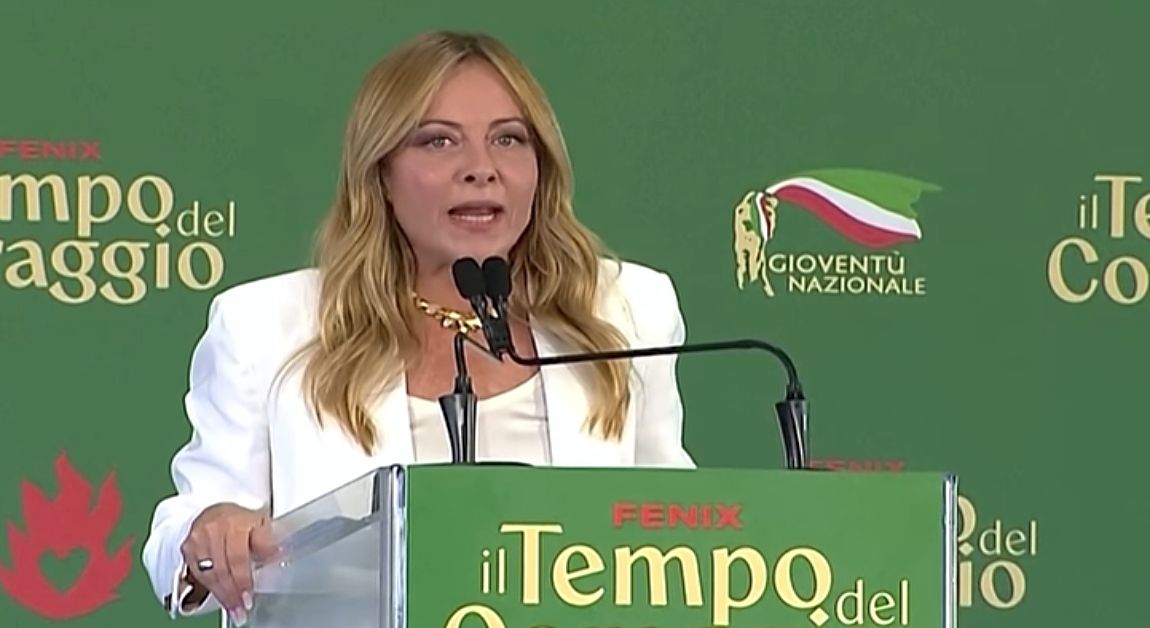
Prime Minister Giorgia Meloni’s government approved a school decree in September targeting face-covering veils, including burqas and niqabs, alongside measures intended to improve Italian-language integration. Fresh reporting Sunday examined the larger argument behind it—and a conservative expert’s warning that Americans should pay attention.
“These cultural shifts will all come to America, unless American leaders are willing to fight back,” Nile Gardiner told Fox News Digital.
Gardiner, director of the Heritage Foundation’s Margaret Thatcher Center for Freedom, argues that European cities offer a warning about mass migration and the growth of socially separate communities. His warning is a political assessment. But the question it raises is perfectly legitimate: what happens when integration becomes something governments are afraid to expect?
Meloni has defended the decree as a way to help students participate in Italian society. “These are common-sense measures that do not divide people, but help foster genuine integration,” she posted after cabinet approval, according to Reuters.
🚨🇮🇹 Meloni announces a BURQA BAN in schools, plus a LIMIT on the number of foreign students per class!!
“The proposed measure will introduce an obligation for the parents of foreign students with serious school-integration problems to learn Italian, and it will introduce a BAN on the burqa and niqab at school.
In Italy, nobody, in the name of a real or supposed tradition, can decide that a young woman must hide herself.
Equality between men and women is not negotiable. It is not negotiable on our streets and it is not negotiable in our schools.”
Brava, Giorgia 👏👏👏
Writer: Michael
https://t.co/y1YCEvZ00N
— Mario Nawfal (@MarioNawfal) September 20, 2026
Common sense. There’s a phrase guaranteed to start an argument when immigration enters the room.
The face-covering restriction concerns garments that conceal the face. A hijab, which leaves the face visible, is different. This is not a blanket ban on Muslim headscarves.
The broader package includes Italian lessons for some parents whose children struggle to integrate and classroom-composition rules intended to support language learning. Accounts differ on the precise scope of the widely reported 30% cap: AP describes it in terms of limited Italian proficiency, while other reporting discusses nationality, birthplace and prior schooling. Calling it a simple ban on classrooms with too many foreign-born children misses those distinctions.
Italy plans to ban burqas and niqabs in schools, as well as limit the number of foreign students in individual classrooms, CBS News’ @SayChrisLive reports.
Italian Prime Minister Giorgia Meloni specifically mentioned the burqas and niqabs worn by some women and girls. The proposed ban would not apply to all forms of Islamic head covering.
— CBS News (@CBSNews) October 12, 2026
The policy also has practical critics. Educators worry about students being sent farther from home and whether schools have the resources to carry out the changes. Reuters reported that exemptions could make the classroom cap affect relatively few children.
Those are questions about implementation. They deserve answers. They do not settle the larger argument over whether shared language and civic participation are reasonable expectations.
Simone Rodan-Benzaquen of the Foundation for Defense of Democracies told Fox that learning the national language and participating in a child’s education are reasonable demands. She also argued that clothing rules alone cannot address the institutions, pressures and organized efforts that discourage integration.
Meloni’s opponents see an electoral calculation. She faces competition from Roberto Vannacci’s harder-right movement ahead of Italy’s next election. Opposition politicians accuse her of pursuing ideological battles instead of fixing schools.
But political competition does not make the underlying issue imaginary. Parents still need schools that can teach. Newcomers still need a route into the wider society. And governments still need the confidence to explain what participation requires.
For America, Gardiner’s warning is about that confidence. Italy’s decree is an Italian policy, not an announced American proposal. The debate over shared language, national identity and integration, however, needs no passport to cross the Atlantic.
MY QUICK TAKE
I have never understood why expecting immigrants to join the country they chose is treated as some outrageous demand.
Keep your family traditions. Practice your faith. Bring your talents. But a country is allowed to have a common civic life, and schools are supposed to help build it.
The progressive habit of treating every expectation as an insult leaves everybody worse off—including immigrants who need language skills and opportunities to succeed. Applauding isolation is a peculiar way to advertise compassion.
Meloni’s rules should be judged by whether they work, whether they respect rights, and whether students actually benefit. But the principle deserves a defense: integration requires participation.
A nation should not have to apologize for expecting people to become part of it.
DBS WIRE SOURCES
- Fox News — Gardiner’s America warning and the broader assimilation debate. Fox News
- New York Post — expert responses on language, face coverings and integration. nypost.com
- Reuters — cabinet approval, Meloni’s response and political opposition. reuters.com
- Associated Press — language-proficiency cap and implementation concerns. apnews.com
- Reuters — analysis of the cap’s potentially limited impact. reuters.com
- Euronews — face veils versus headscarves, initial announcement and criticism.