LISTEN TO THE SHOW HERE
Look out for the Rush Hour link Tuesday – Saturday in your Daily BS email blast.
I’m not an undecided voter. I’m an unanswered phone call.
I remember when people used to complain that nobody ever called them for a political poll.
They’d watch the evening news, see the latest survey results, and wonder who these mysterious Americans were who apparently had nothing better to do than tell strangers what they thought about the president, Congress, and the next election.
“Nobody ever asks me!”
Well, congratulations, America. Somebody finally found your phone number.
And now they won’t leave you alone.
I was listening to pollster Frank Luntz discussing the upcoming elections on CNN, and he made an observation that caught my attention. He was talking about voters who don’t respond to pollsters, particularly people who are skeptical of the surveys themselves.
And I thought, wait a minute.
He’s talking about me.
Not because I’m undecided. Not because I’m hiding my political opinions. Good heavens, I have a radio show. Nobody has ever accused me of keeping my opinions to myself.
I just don’t want to answer the phone.
Is that so unreasonable?
Apparently, in modern America, it is.
There was a time when your telephone was a wonderful invention. It connected you with family, friends, and people you actually wanted to talk to.
The phone rang, and you picked it up.
Imagine that.
Today, when my phone rings and I don’t recognize the number, my first thought isn’t, “I wonder who that is?”
My first thought is, “What do you want, and how did you get this number?”
It could be somebody selling home improvements. It could be a fundraising operation. It could be somebody informing me that my automobile warranty is in mortal danger.
And then there are the political calls.
Oh, the political calls.
Have you ever donated money to a campaign? Even once?
Congratulations. Your telephone number has apparently been entered into the political equivalent of the Witness Protection Program, except instead of hiding you, they’ve distributed your whereabouts to everybody in Washington.
Now every candidate, consultant, committee, and organization with an eagle in its logo wants a piece of your day.
“Hello, we’re conducting a brief survey.”
No, you’re not.
You’re conducting an invasion of my peace and quiet.
“Do you have just two minutes?”
No.
And even if I did, I wouldn’t give them to you.
Because I’ve learned something about these supposed two-minute surveys. Two minutes is merely the time required for the caller to explain why the actual survey will take considerably longer.
And somewhere near the end, somebody inevitably wants money.
Luntz was talking about the difficulty pollsters face when certain voters refuse to participate. He recalled how distrust affected polling in 2016 and questioned whether surveys were adequately capturing the people who would actually turn out to vote.
That is a legitimate problem.
But I think there’s another problem the polling industry ought to consider.
You have trained Americans not to answer their phones.
Think about the irony.
Political campaigns spend fortunes trying to understand the American voter. They hire consultants, commission surveys, study demographics, and develop elaborate mathematical models.
Then they call the voter.
And the voter looks at the screen and presses DELETE.
There’s your research.
I don’t need to attend a focus group to explain this phenomenon. I can demonstrate it in approximately one second with my thumb.
Delete.
Delete.
Delete.
Luntz also talked about the importance of distinguishing between people who say they have opinions and people who will actually show up to vote.
He’s right that turnout matters. Of course it does.
But here’s the difficulty: some of the people who are most determined to vote may also be the least interested in discussing their plans with a stranger who interrupted dinner.
I’m one of them.
I know what I think. I know what issues matter to me. I don’t need a caller from an unfamiliar number to help me discover my political identity.
And I certainly don’t feel obligated to tell a polling organization how I intend to vote.
That’s between me and my ballot.
There’s also something wonderfully American about refusing to participate in somebody else’s survey.
We are a nation of people who don’t particularly enjoy being told what to do.
And now we’ve reached the point where even declining to answer a telephone call has become a subject for political analysis.
“Why aren’t these voters responding?”
Because they’re busy!
They’re working. They’re cooking dinner. They’re watching television. They’re enjoying the one quiet moment they’ve had all day.
Or perhaps they’re simply tired of being treated as a collection of demographic characteristics instead of human beings.
I can almost imagine the next generation of political polling.
“Sir, our records indicate that you ignored our previous seven calls. Would you mind answering a few questions about why?”
Yes.
Here’s my answer.
Because you called seven times.
Now, I don’t believe every poll is worthless. Serious researchers use methods to account for nonresponse, and some surveys do a better job than others. Polling can tell us useful things about public attitudes.
But there is a difference between asking Americans what they think and assuming that every American wants to participate in the asking.
And as the election approaches, I suspect my telephone will become even more popular.
More calls. More texts. More urgent messages from people I’ve never met.
Every candidate will apparently be facing the most important deadline in the history of Western civilization.
Every fundraising appeal will insist that everything depends on what I do in the next fifteen minutes.
And every pollster will want to know whether I’ve changed my mind since the last time I refused to answer.
So let me save everybody some time.
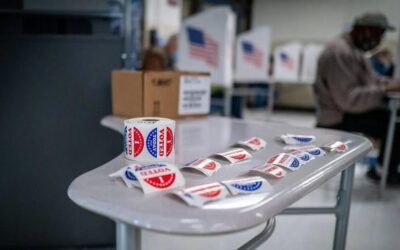
I’m going to vote.
I will make my own decisions. I will show up and cast my ballot.
But I am not taking your survey.
I am not participating in your emergency strategy session.
And I am definitely not staying on the line to be connected with a senior political adviser.
The American people have a right to vote.
They also have a right to let the phone ring.
And if the pollsters can’t figure out what people like me are thinking, perhaps they should stop calling long enough to think about why.
In the meantime, if you really need to reach me, leave a message.
On second thought, don’t.
— Bo
Rush Hour airs Monday through Friday and moves quickly through the day’s hottest political stories, breaking developments and media absurdities. It is the fastest hour in American media because there is always more happening than the legacy media has time—or desire—to explain.
And if you want my daily stack of news and commentary delivered directly to you, sign up for The Daily BS here. It is free, arrives daily and, unlike a New York Democratic event, questions are not removed for exceeding ideological capacity.