

THE DAILY BS: HOW MUCH CAN YOU HANDLE?
SPARE ME THE BS (I’ve got things to do).
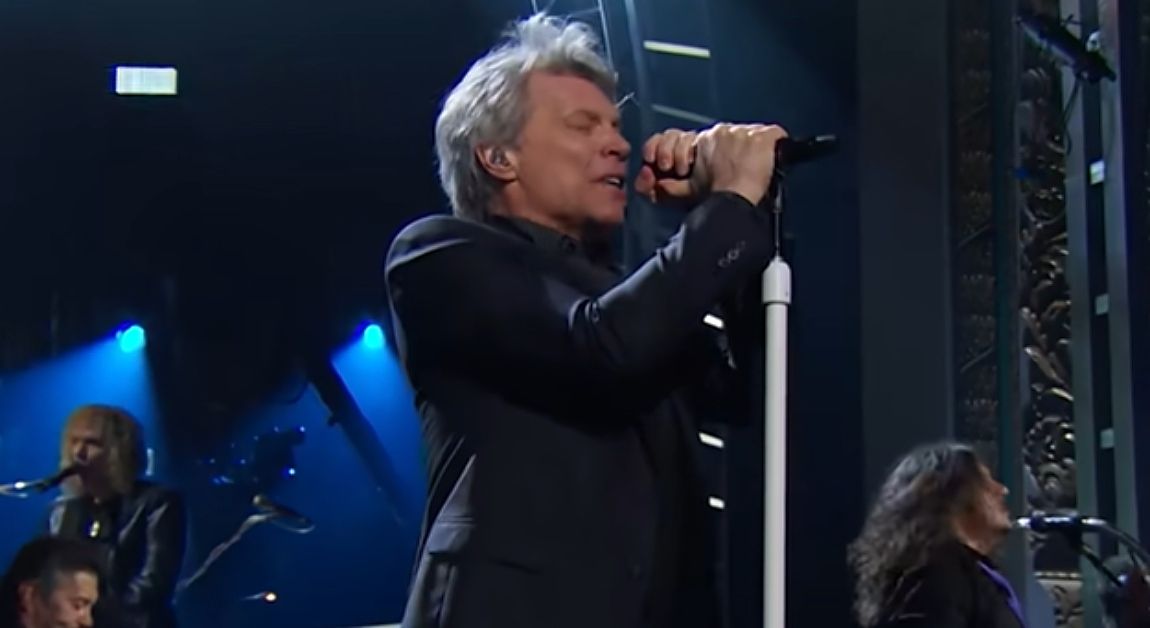
- Louisiana woman Leslie Pickett says a scammer posing as Jon Bon Jovi used convincing AI-generated videos and months of romantic messages to win her trust.
- The impostor even produced customized videos when she demanded proof, before persuading her to send more than $10,000 through payment apps and cryptocurrency.
- Investigators working with National Geographic traced the scammer’s internet connection to Nigeria, while Pickett says the financial damage nearly cost her home.
LAY IT ON ME (I’ve got time).
She gave love a chance. Somebody posing as Jon Bon Jovi gave her a financial nightmare.
A Louisiana woman who believed she was secretly romancing the legendary rock singer says she lost more than $10,000 to an elaborate scam involving artificial intelligence, convincing celebrity videos and a supposed meet-and-greet that never happened.
And the technological deception was so sophisticated that even some of her skeptical relatives became convinced she was communicating with the real Bon Jovi.
Leslie Pickett, a longtime fan who has admired the rocker since she was 14, told Fox News Digital that the ordeal began in late 2024 after she commented on Bon Jovi’s official Instagram account.
Within minutes, she received a message from another account that appeared to belong to the singer. The account wasn’t verified, but the person behind it had a convincing explanation.
According to Pickett, the supposed rock star wanted to communicate privately with ordinary fans, away from his management team. The scammer was patient. For months, the two exchanged messages about everyday life, music and personal interests.
He remembered details from earlier conversations. He sent flowers. He professed his love. He even claimed that Bon Jovi and his wife had secretly filed for divorce but were keeping the matter private.
Apparently, the only thing missing from this backstage romance was the actual rock star.
What makes Pickett’s story especially alarming is the technology involved. The impostor didn’t merely send stolen celebrity photographs or a few suspicious text messages.
He sent realistic videos appearing to show Bon Jovi addressing Pickett personally. When she became suspicious, Pickett devised a rather clever test.
She asked the person she believed was Bon Jovi to perform a series of unusual facial gestures on camera.
“Pull on your right ear, cross your eyes and stick your tongue out,” she recalled telling him.
Within about five minutes, she received a video apparently showing the singer doing exactly that. That’s a pretty impressive trick for someone who wasn’t actually Jon Bon Jovi.
And it was enough to keep the illusion alive.
Pickett showed the material to a cousin who initially doubted the story. After examining the images and videos, even he reportedly became convinced.
Investigative journalist Mariana van Zeller, whose National Geographic documentary “Super Scam Me” explores the romance-scam industry, examined the deceptive videos as part of her investigation.
Van Zeller said some modern AI celebrity impersonations have become remarkably convincing, far beyond the clumsy fake videos that once gave themselves away through distorted faces and unnatural movements.
For seven months, according to van Zeller, the scammer cultivated Pickett’s trust before asking for money. The financial requests began when Pickett tried to attend a Bon Jovi performance in Nashville but couldn’t get tickets.
Her supposed boyfriend offered to arrange a special meet-and-greet through his management. There was, naturally, a price.
Mariana van Zeller interview subject Leslie Pickett reveals romance scammers charged $20,000 for fake celebrity meet-and-greets after posing as Jon Bon Jovi
Leslie Pickett: “I mean like $20,000. For a meet and greet. Do and these meet and greets do happen? Right? That celebrities actually do these meet and greets and charge ridiculous amount of money for people to meet them for just a hello and a selfie?”
Mariana van Zeller: “Right. Well the FBI agent didn’t that got involved you know, when I started reporting it, he was like, ‘Yeah, $12,000 is a drop in the bucket. I’ve seen them for $200,000 and that’s really more or less why the FBI didn’t want to get involved because it was small change to them.'”
Leslie Pickett: “And I I only paid like, you know, in and I’ve got my list with me. I did bring it, I mean like $120, $500, $250.”
Mariana van Zeller: “So you were paying in increments.”Leslie Pickett: “Yeah, in in small increments, you know, at a time.”
Mariana van Zeller: “Because you didn’t have $10,000.”
Leslie Pickett: “No. God, no. I did not.”
— nuel (@c68ty) October 22, 2026
And that is when the imaginary backstage romance became a very real financial disaster.
The impostor directed Pickett to send payments through various services, including Venmo, PayPal, Cash App, and cryptocurrency. Sometimes the money supposedly failed to arrive. Sometimes another payment method was needed.
She sent relatively small amounts at first, but the requests continued. Eventually, in July 2025, the fake Bon Jovi claimed he had traveled to Louisiana to meet her.
He even sent photographs suggesting he was sitting inside a hotel she recognized. But when the long-awaited meeting approached, another obstacle suddenly appeared.
The supposed singer claimed she needed security clearance from his management team before they could meet. A video call ended abruptly, followed by an explanation that management suspected a security breach.
Then came yet another demand for money, this time involving a much larger Bitcoin payment.
By this point, Pickett was beginning to understand what had happened. She reached out to van Zeller, who enlisted cybersecurity expert and former hacker Arman Sadri to help investigate.
The team devised a trap involving another supposed Bitcoin payment and traced the scammer’s internet connection to Lagos, Nigeria.
Using digital investigative techniques, they narrowed down the location from which the messages were believed to have originated. By then, Pickett says she had lost more than $10,000 and fallen so deeply into debt that her home was facing foreclosure.
“My heart was shattered,” she told Fox News.
The emotional damage was every bit as devastating as the financial loss.
For months, she had shared deeply personal conversations with someone she believed cared about her. The flowers, the private videos, the intimate messages, and even the supposed divorce story had been ingredients in an elaborate deception.
Pickett’s experience is now part of National Geographic’s “Super Scam Me,” in which van Zeller investigates the international industry behind romance fraud.
The documentary also examines how scammers use technology and emotional manipulation to maintain relationships with their targets, sometimes for months or years before demanding money.
According to National Geographic, Americans lost more than $1 billion to romance scams in 2025.
Pickett now speaks publicly about her experience in the hope that other people will recognize the tricks before their savings disappear.
The real Jon Bon Jovi, meanwhile, had nothing to do with the romance or the demands for money. His representative has warned that artists do not solicit payments from fans through social media.
DBS WIRE SOURCES (I’ve got all day).
- Fox News — Jon Bon Jovi impersonator uses AI videos to scam woman out of $10,000
- Business Insider — I thought I was dating Jon Bon Jovi. Ten months later, I realized I’d been scammed
- Ars Technica — Super Scam Me documentary shows what it takes to catch a romance scammer
- National Geographic — Official announcement of Super Scam Me investigation
- National Geographic — Watch Super Scam Me










Bon Jovi would not have needed her money. Have them send YOU money. If they refuse…leave.