THE DAILY BS: HOW MUCH CAN YOU HANDLE?
SPARE ME THE BS (I’ve got things to do).
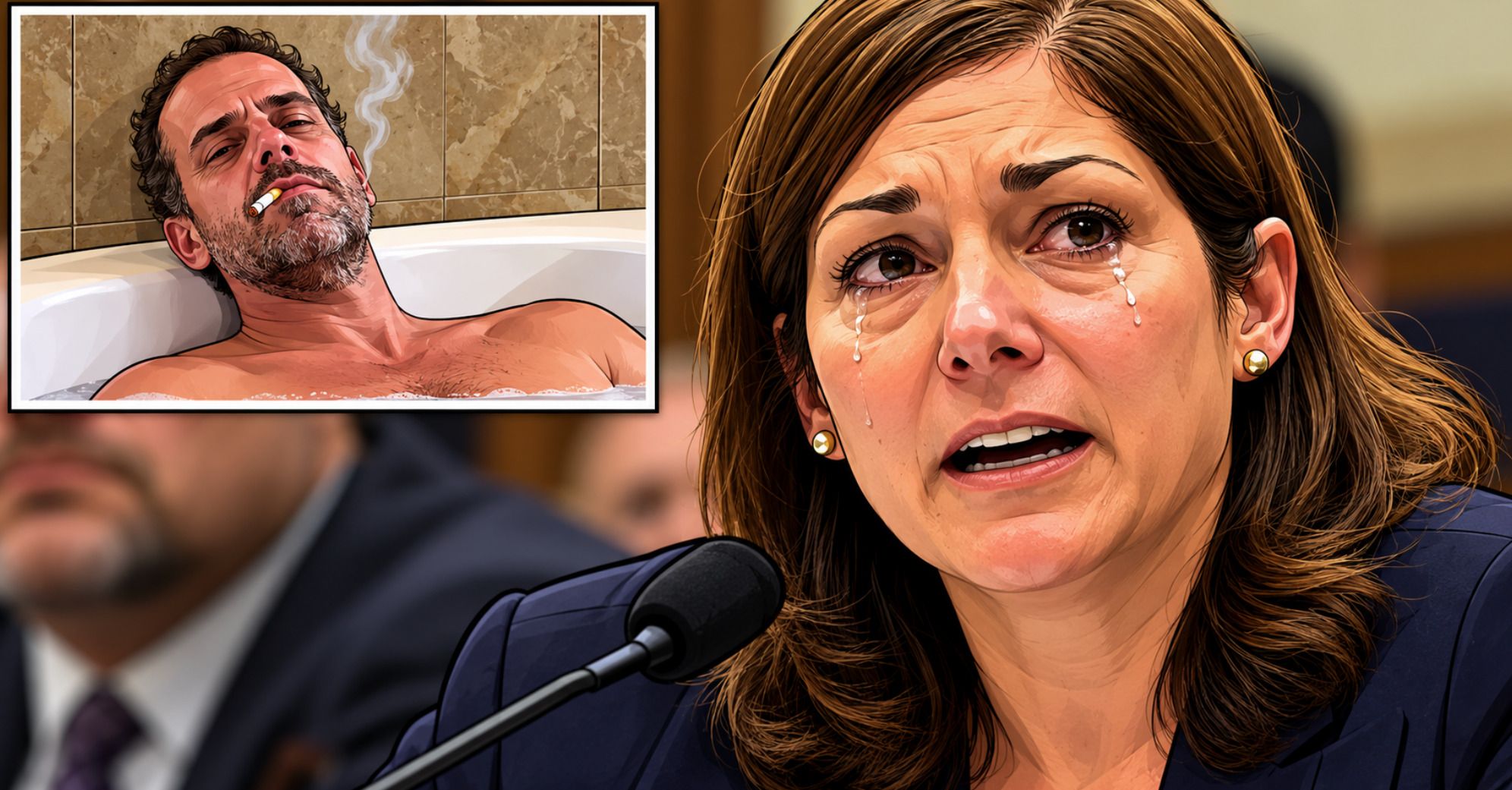
- Former FBI official Nikki Floris was seen crying outside a Washington courtroom as she and Bradley Benavides challenged charges of lying to Congress.
- An FBI investigator testified internal messages appear inconsistent with Benavides’ claim of first learning about the laptop from Wikipedia, but said he lacked direct proof of deliberate dishonesty.
- Magistrate Judge Zia Faruqui rejected prosecutors’ attempt to add an obstruction charge without judicial approval; the original false-statement charges remain.
LAY IT ON ME (I’ve got time).
The Hunter Biden laptop controversy has returned to federal court, now accompanied by a crying former FBI official, an eyebrow-raising Wikipedia explanation and a judge questioning the prosecution’s procedures.
Former FBI official Nikki Floris was reportedly seen weeping outside a courtroom during a break in Tuesday’s preliminary hearing in Washington, D.C. She and former colleague Bradley Benavides face accusations that they lied to congressional investigators about their knowledge of FBI matters involving Hunter Biden and his laptop.
Both worked in senior roles with the FBI’s Foreign Influence Task Force, a unit whose activities during the 2020 election have since attracted congressional scrutiny.
One of the prosecution’s most striking claims concerns Benavides’ 2023 account to the House Judiciary Committee. He reportedly said he first learned that the FBI had Hunter Biden’s laptop from Wikipedia. For an official working on foreign-influence issues around the election, that is certainly a memorable answer.
Prosecutors say FBI messages, emails and other internal records contradict elements of the former officials’ congressional statements. FBI Special Agent Bryan Witt testified about that evidence during Tuesday’s hearing.
According to the New York Post, Witt testified, ‘It’d be common sense to remember that stuff,’ when questioned about whether the relevant communications would be memorable. But the defense also elicited an important concession: Witt said he had no direct proof Benavides intentionally made a false statement.
That distinction matters. In a criminal false-statement case, prosecutors must establish more than a disagreement about someone’s recollection; the statement must meet the relevant legal requirements for falsity, materiality and knowledge.
Meanwhile, prosecutors attempted to file an amended complaint adding an obstruction charge shortly before the hearing. Magistrate Judge Zia Faruqui rejected the filing because it had not received appropriate judicial approval.
‘Why today upend the entire history of how we charge cases?’ Faruqui asked, questioning the unusual procedural maneuver. The original charges, filed when the two former officials surrendered on October 23, were not thereby dismissed.
Defense lawyers say the case is politically driven and that the defendants’ testimony has been misread. At the hearing, Witt acknowledged concern about the appearance of political motivation while maintaining that investigators were assigned to examine potential criminal conduct, not invent a crime.
U.S. Attorney Jeanine Pirro announced the charges, and FBI Director Kash Patel criticized the former foreign-influence unit. Neither defendant has been convicted. The hearing was scheduled to continue Wednesday, with the court still to determine whether the original complaints establish probable cause.
That leaves a courtroom drama with two very different questions: what the former officials actually knew about the laptop, and whether the government can prove that their congressional answers were knowingly false. Whatever the answer, ‘I read it on Wikipedia’ has become the detail nobody is going to forget.
DBS WIRE SOURCES (I’ve got all day).
- New York Post — Courtroom reporting
- Department of Justice — Charging announcement
- CBS News — Attempted additional charge
- Associated Press — Judicial scrutiny
- Roll Call — Original charges