THE DAILY BS: HOW MUCH CAN YOU HANDLE?
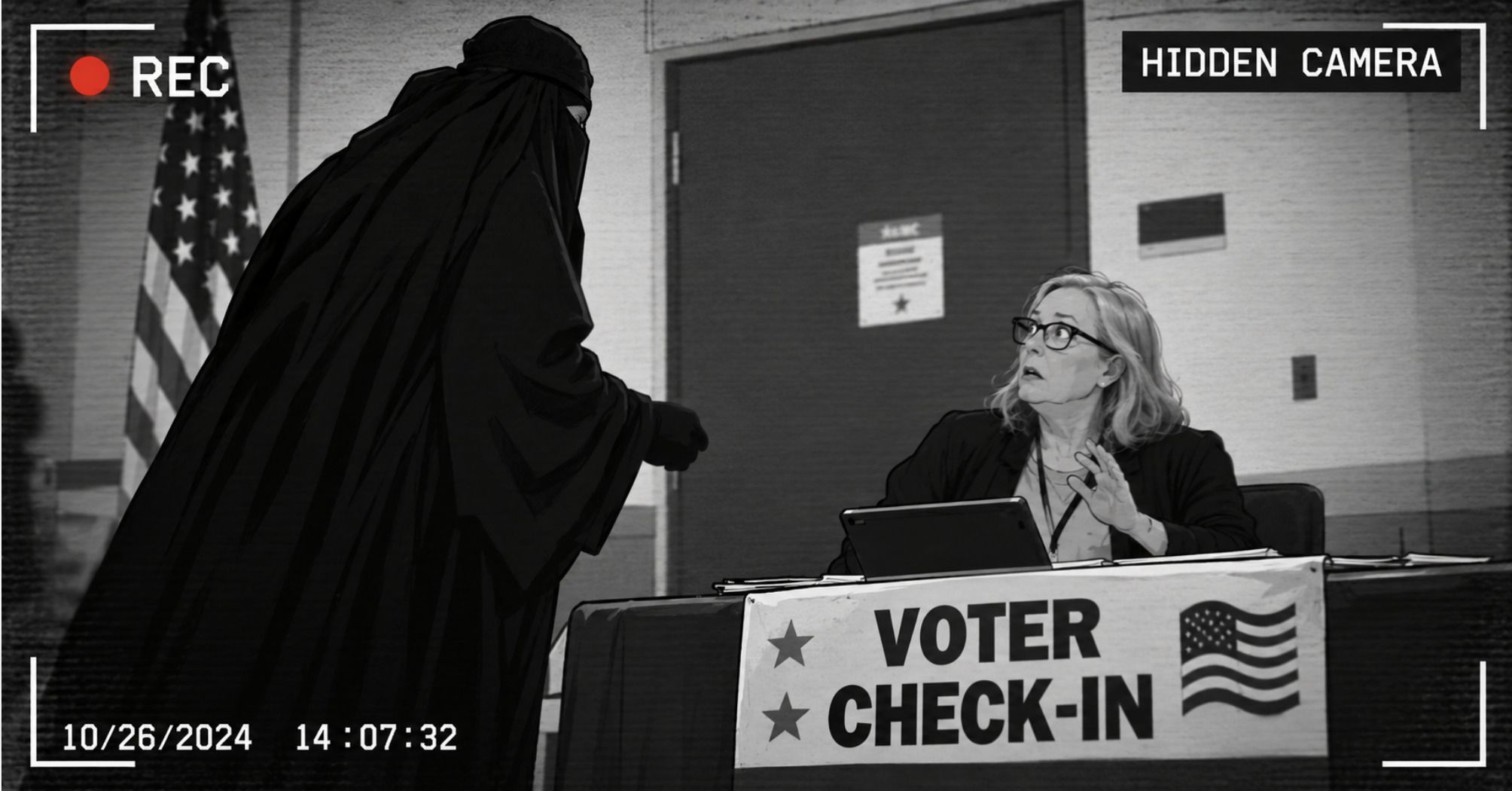
depiction
SPARE ME THE BS (I’ve got things to do).
- Hennepin County Attorney Mary Moriarty charged James O’Keefe and Cam Higby with felony unlawful voting and identity theft over their August undercover investigation.
- Neither man cast a ballot or signed the required oath. Prosecutors say impersonating registered voters while applying for ballots was enough to violate Minnesota law.
- The pair say they were exposing weaknesses in a system allowing one registered voter to vouch for up to eight others. Moriarty says the investigation crossed a legal line.
LAY IT ON ME (I’ve got time).
James O’Keefe went undercover to test how easily someone could get through Minnesota’s election procedures without showing identification. Now the county prosecutor says he and fellow conservative journalist Cam Higby committed felonies while trying to prove their point.
On Wednesday, October 28, Hennepin County Attorney Mary Moriarty announced charges of unlawful voting and identity theft against O’Keefe and Higby, stemming from an August 11 operation at Minneapolis polling places.
And here’s the detail that makes this case particularly interesting: Neither man actually cast a ballot.
Neither signed the required voter oath, either.
🚨 BREAKING: Journalists James O’Keefe and Cam Higby have been hit with TWO FELONY CHARGES in Minneapolis for their video EXPOSING vulnerabilities in Minnesota’s elections
This is TOTAL LAWFARE!
@camhigby walked in wearing a burqa to show they’d let him vote with a WOMAN’S name with NO questions asked, and he could even “vouch” for some other unregistered “Muslim” (who was @JamesOKeefeIII in a costume)
NEITHER of them voted.
The charges include felony unlawful voting and identity theft.
It’s a WITCH HUNT to try to SCARE OFF conservative journalists, and nothing more.
DO NOT BE DETERRED! https://t.co/UTAlbGwKJ9
— Nick Sortor (@nicksortor) October 28, 2026
Nevertheless, Moriarty’s office says the alleged offense occurred when the pair presented themselves to election officials using the names of registered voters who had not authorized them to do so.
O’Keefe and Higby were investigating Minnesota’s voter-vouching system, which permits a registered voter from the same precinct to confirm the residence of as many as eight other people seeking to register and vote.
For their undercover demonstration, the men wore clothing they described as Muslim disguises, adopted accents and approached election workers with questions about registering and vouching for additional voters.
The resulting footage attracted millions of views and renewed arguments over Minnesota’s voting procedures.
One election worker was recorded explaining that a registered voter could serve as proof of residence for others in the precinct. Critics of the system argued that the exchange demonstrated how someone might exploit the rules.
Higby offered his own explanation during an August livestream.
“I didn’t actually vote,” he said. “I just showed up and tested the system.”
He maintained that election workers were willing to proceed without independently confirming the identities of the people standing in front of them.
But prosecutors have a different interpretation of what happened.
According to the criminal allegations, O’Keefe and Higby entered multiple polling places and supplied names belonging to actual registered Minnesota voters without their knowledge or permission.
CBS Minnesota identified one of those voters as William Pomeranz, who learned that his identity had appeared in the undercover operation after someone alerted him to the video.
Pomeranz said election workers subsequently reported the incident and that he was able to vote normally.
At her Wednesday announcement, Moriarty explained why the absence of a completed ballot did not end the matter.
“It’s a multi-step process,” she said. “They did begin to apply.”
Her argument is that falsely identifying yourself to election officials is part of the ballot-application process, whether or not a ballot ultimately gets deposited into a box.
Minnesota law prohibits intentionally misrepresenting one’s identity when applying for a ballot, depositing a ballot or attempting to vote through an electronic voting system.
The felony identity-theft allegations concern the use of actual voters’ names in connection with the operation.
Moriarty also rejected the suggestion that the defendants’ political views or provocative disguises were the basis for the prosecution. Her office says the alleged violations involve the use of other people’s identities.
Minnesota Secretary of State Steve Simon was already criticizing the undercover effort back in August, arguing that the videos misrepresented the state’s safeguards and that polling-place workers had reported the encounters.
That leaves two sharply different accounts of the same operation.
O’Keefe and Higby contend they were conducting journalism intended to reveal vulnerabilities before those weaknesses could be exploited in an election.
State officials maintain the men demonstrated why impersonating a registered voter is prohibited in the first place.
And while critics question why no identification was demanded in some recorded exchanges, Minnesota officials note that the state’s vouching procedure is subject to additional requirements, including an oath by the voucher and subsequent verification of voter-registration records.
According to the secretary of state’s office, fewer than 0.6 percent of votes in Minnesota’s 2024 general election involved the vouching process.
The charges are being brought by summons, with court appearances expected in November. Moriarty said the offenses are relatively low-level felonies and that a conviction would likely carry a presumptive probationary sentence rather than prison time.
So the question now moves from the polling place to the courtroom: Where does an undercover test of election procedures end and an unlawful application for a ballot begin?
DBS WIRE SOURCES (I’ve got all day).
- Hennepin County Attorney’s Office — Official charges announcement
- FOX 9 Minneapolis — Prosecutor and Higby responses
- CBS Minnesota — Voting-sting charges
- Minnesota Star Tribune — Court details
- MPR News — August undercover operation
- Twitchy — Commentary