THE DAILY BS: HOW MUCH CAN YOU HANDLE?
SPARE ME THE BS (I’ve got things to do)
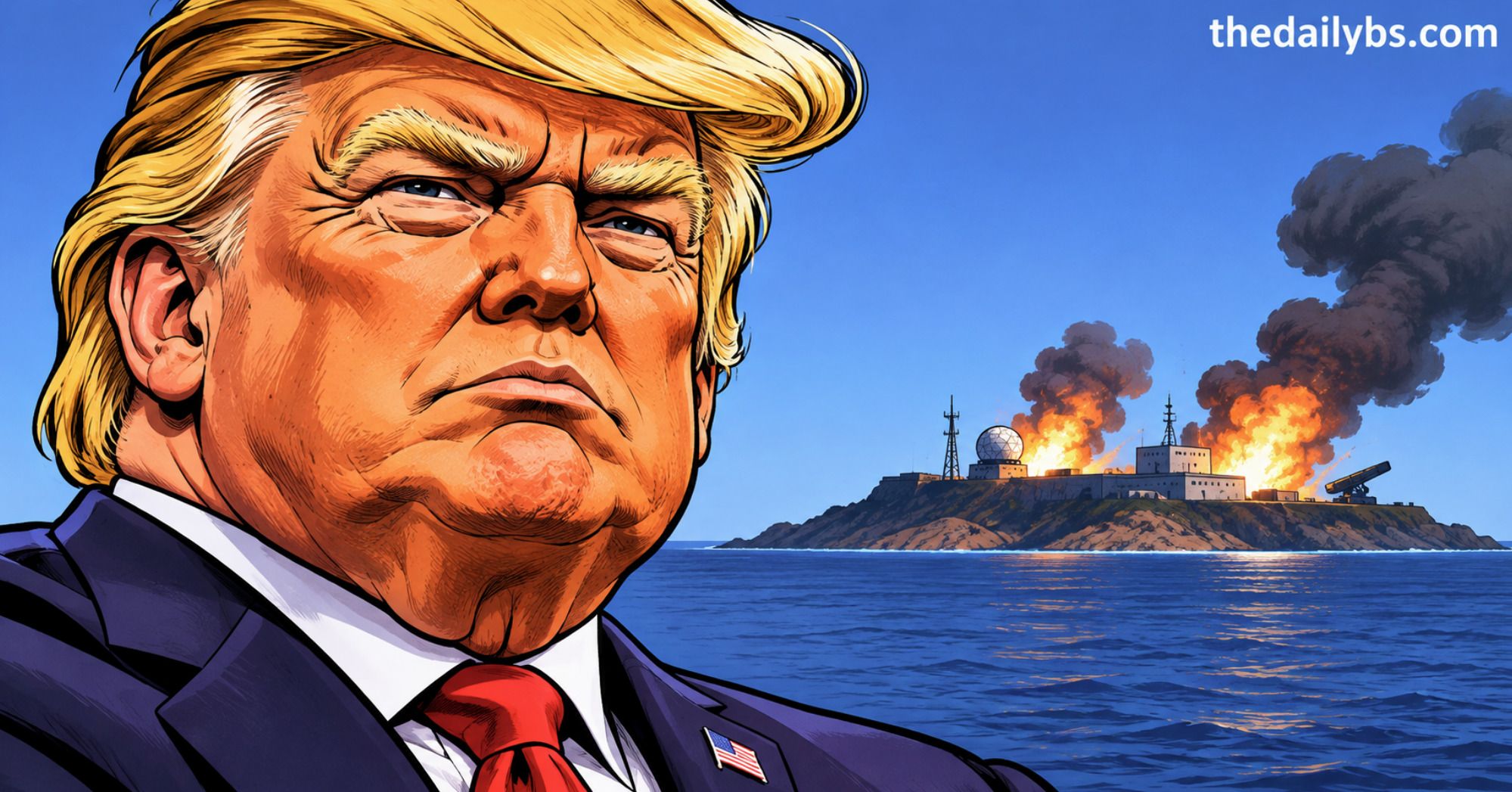
- American forces struck Iranian targets on Qeshm Island near the Strait of Hormuz Monday after Iranian forces reportedly fired on a U.S. aircraft.
- U.S. officials described the operation as defensive — and revealed that other limited American strikes had been conducted in recent weeks without public announcements.
- The strikes came as Trump said a peace deal “could happen,” with Iran offering conditional terms for reopening the vital oil-shipping corridor.
LAY IT ON ME (I’ve got time)
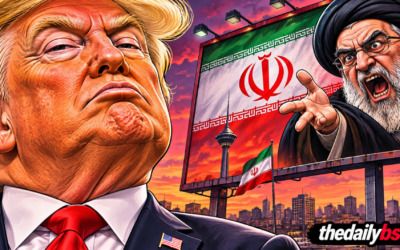
President Trump says Iran wants a deal.
American forces, meanwhile, just bombed part of Iran.
And if that wasn’t enough Election Eve excitement, U.S. officials say this wasn’t even the first recent American strike that Washington chose not to announce.
There’s diplomacy, there’s military pressure, and then there’s whatever happens when both arrive at the same address.
On Monday evening, American forces carried out limited airstrikes against Iranian targets on Qeshm Island, a strategically important piece of Iranian territory at the entrance to the Strait of Hormuz.
Multiple American officials confirmed the operation to the Associated Press, CBS News and other outlets.
One senior military official told CBS News the operation followed Iranian Revolutionary Guard forces firing at an American aircraft.
Other officials described the strikes as targeting Iranian surface-to-air missile capabilities threatening U.S. assets.
The strikes were characterized as defensive rather than the beginning of another major American air campaign.
But here’s the detail that deserves considerably more attention.
U.S. officials also acknowledged that American forces had conducted other limited strikes in recent weeks without publicly announcing them.
According to reporting by The Washington Post and ABC News, the decision not to publicize some operations was intended to avoid suggesting that Washington had resumed major combat operations against Iran.
In other words, the public was hearing about diplomatic maneuvering while limited military exchanges were continuing behind the scenes.
The latest confrontation reportedly followed an incident involving American aircraft.
Iranian authorities also claimed Monday to have shot down two American RQ-170 reconnaissance drones. A U.S. official disputed that claim.
Iranian state media subsequently reported explosions on Qeshm Island.
U.S. Central Command had not provided a detailed public account of the strike when the reports emerged.
The location matters.
Qeshm Island sits along the Strait of Hormuz, the narrow passage connecting the Persian Gulf to the Gulf of Oman.
It’s one of the world’s most important energy-shipping routes.
When military tensions threaten traffic through the strait, the consequences aren’t confined to admirals, diplomats and Pentagon briefing rooms.
They can reach American gasoline pumps, shipping companies and household budgets.
And that brings us to the political timing.
The strikes took place on the eve of America’s midterm elections, with the Iran conflict already a major issue in the campaign.
Trump has been trying to demonstrate that he can bring the confrontation toward a negotiated conclusion.
On Monday, he suggested an agreement remained possible.
A deal “could happen,” the president wrote on Truth Social.
He added: “Iran wants a settlement, as soon as possible.”
Vice President JD Vance offered a similarly optimistic assessment.
“We’ve certainly made some progress. We’ll see if we can make some more,” Vance told reporters.
Iran’s government, however, presented a more conditional picture.
Tehran indicated it might reopen the Strait of Hormuz within days if Washington accepted its terms.
Iranian officials also suggested the responsibility for moving negotiations forward rested with the United States.
Qatar has been helping mediate indirect negotiations, but Monday’s reports indicated that several days of talks had not produced a decisive breakthrough.
So the situation is rather delicate.
The United States wants Iran to stop threatening shipping and American assets.
Iran wants relief from American pressure and guarantees regarding any agreement.
Israel, meanwhile, is worried about leaving Iran with the capacity to threaten the region again.
According to Associated Press reporting, Israeli Prime Minister Benjamin Netanyahu has urged Trump to consider additional military action.
Other regional governments fear another large-scale campaign could ignite a much broader conflict involving Iranian-aligned forces.
And American officials are balancing all of that while attempting to keep the strategic waterway open.
The administration has maintained a naval blockade and deployed additional military forces to the region.
The conflict has already carried enormous economic and military costs.
Oil prices fell sharply Monday as financial markets reacted to the possibility of a diplomatic breakthrough.
But markets were welcoming talk of peace on the very same day that American aircraft were attacking Iranian military targets.
That’s quite a split-screen.
For American voters, the central question is no longer whether the United States might someday become involved in another confrontation with Iran.
The country is already involved in military operations, and the administration is simultaneously trying to negotiate a way out of the current crisis.
Monday’s strikes underline the considerable distance between optimistic diplomatic announcements and the situation facing American personnel in the Strait of Hormuz.
Trump is saying Iran wants a settlement.
Iran is setting conditions.
American forces are answering missile threats with airstrikes.
And the voters are being asked to decide which party they trust with the next chapter.
Whatever happens at the negotiating table, one thing is already clear.
The Strait of Hormuz hasn’t gotten the memo that it’s Election Day.
DBS WIRE SOURCES (I have all day)
- Associated Press: U.S. conducts defensive strikes on Iranian targets in Strait of Hormuz
- ABC News: U.S. carries out defensive airstrikes on Iran’s Qeshm Island
- CBS News: Iran war live updates — American strikes and Trump peace remarks
- The Washington Post: U.S. forces launch new defensive strikes in Iran on eve of election
- CNN: U.S. military conducts strikes on Iran’s Qeshm Island in defensive operation