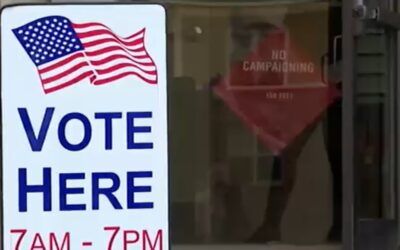
In our editorial this week, we pointed out how Attorney General Merrick Garland, in his own words, is doubling resources of the elections section of the DOJ’s Civil Rights division to challenge states and jurisdictions during this election season.
Garland believes that many states that have reformed electoral processes after 2020 and have tightened mail-in voting, the use of drop boxes, and voter ID requirements are racist. He regards these changes as discriminatory, burdensome, and unnecessary restrictions on access to the ballot.
It is unconscionable that the chief law enforcement officer of the United States is actively promoting election practices that could cause ineligible and non-citizen voters to participate in America’s elections. America is a deeply divided nation. In 2020, liberal NPR analyzed the results and showed how close the first Trump-Biden match was: “Just 44,000 votes in Georgia, Arizona, and Wisconsin separated Biden and Trump from a tie in the Electoral College. Democrats and the liberal media insist that there was no evidence of fraud because the courts tossed over 60 challenges brought by Trump after the election, all on technical grounds.
However, when over 6.607 million votes were cast in these three battleground states, an error of just 0.6 percent can yield 44,000 votes and swing an election. We remain unconvinced that the election processes in these states during a raging pandemic when polling worker shortages were acute and numerous changes pushed through were so perfect that even a 0.6% percent error is implausible.
The price of security. Since 9/11, Americans have bought into the idea that a little bit of inconvenience (surveillance, screening, loss of privacy) is a price worth paying for security in an otherwise free country. It is why we have programmed ourselves to readily provide an ID card even for an activity as harmless as visiting a government building or paying taxes. Unfortunately, governments under both administrations have exploited the American psyche and expanded the surveillance state dramatically without a commensurate increase in our sense of security.
Mail-in ballots and ballot boxes offer numerous conveniences to people who cannot vote in person, either on election day or during the early voting calendar. Perhaps a voter is out of town, or people are sick or caring for someone at home who is ill and cannot leave home to exercise their precious right to choose their elected representatives. Indeed, until the 2018 election, in most states, voting by mail was known as “casting absentee ballots.”
Voters could write, call, or email the local election office and request that an absentee ballot application be sent to them. The voters would then provide authentication information to the office, including name, a Social Security number, and some form of identification, such as a voter ID or driver’s license number, and return the form, postage-paid.
Upon receiving the form, the voting district would cross-check the submitted information against their databases, confirm that the voter is authentic, and then send out a mail-in ballot to be used before election day. The district would cover the postage for returning the ballot, so the voter was again not burdened with that cost.
Every state had restrictions on when the mail-in ballot could be received for it to count. The gold standard would require voters to postmark their ballots well before election day and have them arrive by election day. When counting started at each polling station, the mail-in ballots would already have been authenticated against the requester’s application form and would be ready to be counted.
Universal mail-in ballot. This type of voting is appropriate in states with extraordinarily low population densities. Most voters have been voting by mail in Alaska, Montana, Wyoming, Idaho, and Oregon for generations. These voters don’t request mail-in ballots; the state automatically sends ballots to voters by election day.
The process makes sense. People living in small communities, such as single-stop and sign towns, may otherwise have to drive many hours to the nearest polling station, often in bad weather, to vote. The secretaries of state in each of these regions would find it cost-prohibitive to have a voting booth operational in all the far-flung communities. Voting by mail is an outstanding solution because these state secretaries put extra effort into validating the eligibility of each voter. When a voter moves to a different state or dies, these state secretaries work hard to capture that information in time for the next election so that voter rolls are kept up to date.
Changes in 2020. With Covid dictating significant lifestyle changes (virtual school, work from home), Democratic operatives such as Mark Elias manipulated state laws at the last minute. States with no experience with universal mail-in ballots began to implement the system. Philadelphia had to buy two $500,000 vote counting machines with election day fast approaching using funds from ‘Zuck Bucks.’ Connecticut, Delaware, Massachusetts, Missouri, New Hampshire, New York, Virginia, and South Carolina all enacted legislation to expand vote-by-mail eligibility in some way.
There were other concessions. California, Massachusetts, Mississippi, and New York extended their mail-in ballot receipt deadlines well after election day. Illinois allowed voters to send their ballots within 14 days of the election. In Nevada, ballots with unclear postmarks received by the third day following the election were deemed to have been postmarked on or before election day. If a postmark was missing in New York, the ballot was presumed to have been mailed before election day, no questions asked. So, if an unscrupulous poll worker teamed up with a corrupt postal worker and mailed in boxes of ballots after election day, they would all be counted as valid.
Michigan, New Jersey, New York, and Virginia all created or expanded notice and cure processes through new legislation. Vote curing occurs when the signature on a mail-in ballot is unclear or missing. Voting districts then notify voters and allow them ample time to correct these errors. The correction can happen even after election day. According to the National Conference of State Legislatures, 24 states require election administrators and officials to conduct this ballot-curing process. The remaining states typically do not count ballots that need correction.
To improve election integrity and ballot safety, American voters expect to go through a bit of inconvenience, such as appearing at a polling station after providing a valid ID or requesting an absentee ballot and completing its requirements. Universal mail-in voting and ballot boxes operated by party activists may make voting convenient – but they are not always secure and raise questions.
An official of the status of the Attorney General should weigh on the side of caution when it comes to election integrity. But in Garland, we have an official who wants to go the other way to attract and retain the minority vote. It is a sad commentary on what America has become.
TIPP Picks
Content selected by tippinsights
 tippinsights Editorial Board
TIPP Staff
TIPP Staff
TIPP Staff
Issues & Insights Editorial Board
TIPP Takes
Geopolitics, Geoeconomics, And More
1. Hamas Says Continuing Gaza Ceasefire Talks Despite Absence Of Israeli Negotiators – Al Arabiya
Negotiators are trying to secure a 40-day ceasefire in the war in time for the Muslim fasting month of Ramadan, which begins early next week.

President Joe Biden said on Tuesday it was in the hands of Hamas whether to accept a deal on the table for a ceasefire in exchange for the release of Israeli hostages.
2. Tensions In Israel War Cabinet As Gaza Conflict Rages On – AFP
Analysts say Israel’s war cabinet, seen as a symbol of national unity in the war against Hamas, has been shaken by political rivalry between Prime Minister Benjamin Netanyahu and centrist Benny Gantz.

A former military chief and ex-defense minister, Gantz visited Washington Monday before heading to London on Wednesday for high-level talks in a trip that Netanyahu did not authorize.
Gantz, who joined the war cabinet after Hamas’s unprecedented October 7 attacks, has been at odds with Netanyahu on how to win the release of hostages and draw up an exit strategy from the conflict.
3. U.S. Exploited ‘Loophole’ To Quietly Sell Weapons To Israel Amidst Gaza Bloodshed: Report – WION
As per a Washington Post report, since the start of the Gaza war, the U.S. has made over 100 weapon sales to Israel.

These transactions, however, escaped congressional approval due to a loophole — their individual amounts were below the threshold requiring such oversight. Reportedly, these sales included precision-guided munitions, small-diameter bombs, bunker busters, small arms, and other lethal aid.
4. Saudi Arabia Condemns Israel’s Plan To Build 3,500 New Settlement Homes In West Bank – Al Arabiya
Saudi Arabia’s foreign ministry said in a statement, “The Kingdom strongly condemns this attempt to judaize large parts of the West Bank, including Jerusalem, which is in contravention of all international resolutions, international human rights law, and United Nations charters.”

Israeli Finance Minister Bezalel Smotrich said the new planned settlements will add to a record number of 18,515 homes approved for the occupied West Bank.
5. Three Killed In First Fatal Attack On Red Sea Shipping By Yemen’s Houthis – Al Arabiya
The multinational crew of a merchant ship that was hit by a Houthi-launched ballistic missile in the Gulf of Aden reported three fatalities and at least four injuries, the U.S. military said.

The Houthis claimed responsibility for the attack, which set the Greek-owned, Barbados-flagged ship True Confidence ablaze around 50 nautical miles off the coast of Yemen’s port of Aden.
6. Russian Missile Nearly Hits Zelensky’s Motorcade – The Hill
A Russian missile struck near Ukrainian President Volodymyr Zelensky’s motorcade Wednesday in the city of Odesa.

The missile hit about 490 feet from the motorcade, which was accompanied by Greek Prime Minister Kyriakos Mitsotakis, according to Greek outlet Protothema. At a joint press conference with Mitsotakis, Zelensky told reporters that the world “saw this blow today,” referencing the Russian strike that hit near his motorcade.
7. Ukraine Is Regrouping Forces, Aiming For New Counteroffensive ‘This Year,’ Says Ground Commander – RFE/RL
Oleksandr Pavlyuk, named Ukraine’s ground commander on February 11, said the military is now focusing on stabilizing front-line positions and regrouping troops to “conduct counteroffensive operations this year.”

Ukraine’s progress has slowed over recent months, with Kyiv’s leaders pleading with Western allies to deliver badly needed ammunition and air defense systems.
8. Wang Yi Says U.S. Sanctions On China Have Reached ‘Bewildering Absurdity’ – Nikkei Asia
Chinese Foreign Minister Wang Yi said that while ties with the U.S. have improved, Washington fundamentally misunderstands China, and its unilateral actions against Beijing will backfire.

“The U.S. has been devising various tactics to suppress China and kept lengthening its unilateral sanction list, reaching a bewildering level of unfathomable absurdity,” Wang told reporters on the sidelines of the National People’s Congress in Beijing.
9. China Will ‘Legitimately Defend Rights’ In South China Sea: FM – AFP
“We will legitimately defend our rights in accordance with the law,” Beijing’s foreign minister Wang Yi said at a press conference during the annual meeting of Chinese lawmakers known as the Two Sessions.

China claims almost the entire South China Sea and has sought to assert sovereignty there despite competing claims from Southeast Asian nations and an international arbitration ruling that its stance has no legal basis.
10. Chinese Investment In Asia Rose 37% In 2023, Led By Indonesia – Nikkei Asia
A new report shows that Chinese investment and construction activity is rising in the Asia-Pacific region, bucking global trends even as the world’s No. 2 economy sputters.

Brisbane’s Griffith University and Shanghai’s Fudan University report shows that Chinese investment totaled nearly $20 billion across the Asia-Pacific last year, up 37%. It also logged about $17 billion in construction contracts, partly financed by Chinese loans, marking a roughly 14% increase from 2022.
11. China’s Exports Beat Forecasts, Rise 7.1% In January-February – Reuters
China’s export and import growth in January-February beat forecasts, suggesting global trade is turning a corner in an encouraging signal for policymakers.

Imports were up 3.5%, compared with a poll forecast for growth of 1.5%. Policymakers have pledged to roll out further measures to help shore up growth after the measures implemented since June had only a modest effect. Still, analysts caution Beijing’s fiscal capacity is now very limited.
12. Ex-Google Engineer Charged With Stealing AI Secrets – BBC
A former Google software engineer has been charged in the U.S. with stealing trade secrets about artificial intelligence (AI) while secretly working for two Chinese companies.

Linwei Ding, also known as Leon Ding, was indicted in California on four charges and arrested on Wednesday. The Chinese national allegedly stole more than 500 confidential files. He faces up to 10 years in prison and $250,000 in fines on each count.
13. Google Opens Cyberdefense Hub In Tokyo Amid China Threat – Nikkei Asia
Google will work with the Japanese government, companies, and universities to develop countermeasures to cyberattacks at its new hub in Tokyo.

The U.S. tech giant wants to promote research on countermeasures against cyberattacks by sharing the latest information with related government officials, companies, and universities in Japan. The new facility will also be a base for training regional cyber defense experts.
14. Egypt Boosts Economic Resilience: Inks $8 Billion IMF Deal – WION
The $3 billion, 46-month Extended Fund Facility that was first negotiated with the IMF in December 2022 is being expanded by this agreement.

The deal marks a more than doubling of the existing rescue program, following extensive efforts, including a substantial devaluation and a noteworthy interest-rate hike. This reflects Egypt’s efforts to tackle its worst foreign currency crunch in decades.
15. North Korea’s Kim Jong Un Orders Heightened War Preparations – Al Jazeera
While inspecting troops at a military operations base, North Korean leader Kim Jong Un said, “Our army should … steadily intensify the actual war drills aimed at rapidly improving its combat capabilities for perfect war preparedness.”

Kim’s visit occurred as forces from the United States and South Korea continued their annual Freedom Shield large-scale military exercises.
16. Japan Signals Interest In AUKUS Tech Partnership – AFP
An official said Japan is interested in discussing cooperation with Australia, the United Kingdom, and the United States on advanced military technology.

The official added that Japan was aware of discussions between the three countries on various issues, including artificial intelligence (AI) and underwater capabilities.
17. UN Says 2023 Deadliest Year For Migrants In A Decade – D.W.
The United Nations said last year was the deadliest for migrants since 2014, with at least 8,565 people dying on migration routes worldwide.

Last year’s death toll was also 20% up on 2022. The Mediterranean route from North Africa to Europe remains the riskiest for migrants.
18. 10,000 Steps A Day Can Lower Risk Of Heart Disease For Almost Everyone – UPI Health
The more steps a person can fit into their day, the lower their risk of early death and heart disease, regardless of how much of a couch potato they are otherwise, a new study shows.

Researchers found that people who are sedentary for more than 11 hours a day gain the same health benefits from walking more than active people do. Researchers said the optimal number of daily steps to improve health was between 9,000 and 10,000. That amount of walking lowered the risk of death by 39% and heart disease risk by 21%.
Republished with permission from TIPP Insights