President Biden shapes our nation’s fiscal policy, and Federal Reserve Chairman Jerome Powell directs the monetary policy. But, these two social engineers seem clueless about what is happening to Americans on Main Street, behaving more like Tweedledum and Tweedledee. Their vacuous remarks about the economy are often chilling. Americans shudder to think that their economic future is in the hands of these two leaders.
One stark example of the consequences of their policies is the fading American dream of home ownership. The dream that once symbolized prosperity and stability is now slipping away under the weight of their economic policies.
Beyond his reputation for cunning lawfare and weak foreign policy, President Biden is the mastermind behind Bidenomics, his signature economic policy. His legislation, like the Inflation Reduction Act, has had far-reaching effects. His reckless spending and his green energy policies have transformed the U.S. from an energy-independent nation to one dependent on others. The result? ‘Bidenflation’ (the rise in prices under his watch) hovers around 18%.
In the lead-up to the election, President Biden takes on the role of Santa Claus, promising gifts like $160 billion in student loan waivers to win over young voters. He even goes against recent Supreme Court rulings to do so. Biden also tries to shift the blame for ‘Bidenflation’ onto Trump despite sounding out of touch with reality. He even dares to predict the Federal Reserve’s monetary policy, disregarding the Fed’s independence. In a White House press conference during Japanese Prime Minister Fumio Kishida’s visit, he boldly stated, “Well, I do stand by my prediction that, before the year is out, there’ll be a rate cut.”
On the other hand, Chairman Powell has a history of swinging quickly between hawkish and dovish monetary policy positions.
At the FOMC post-meeting conference on Wednesday, Chairman Powell sounded witty and laughed at the idea of stagflation. Powell said:
I was around for stagflation, and it was 10% unemployment, high-single-digit inflation, and very slow growth. Right now, we have 3% growth, which is pretty solid growth, I would say, by any measure. And we have inflation running under 3% … I don’t see the ‘stag’ or the ‘flation,’ actually.
Powell was reminiscing about the stagflationary economy of the 1970s and early 1980s. Watching the nation’s monetary policy chief make a clueless and flippant remark was jaw-dropping.
Powell was exaggerating, reflecting his wishful thinking. Neither do we have 3% growth nor inflation running under 3%.
Was he pleasing President Biden in an election year? What made him transform from his hawkish posture two weeks before to take a dovish stance? Or must we chalk this one in the same category as the notion of “transitory” inflation he tried to sell a few years ago?
There are many signs of a slowing economy. All you need to do is look. Here’s the Stag part of it.
In the first quarter, the U.S. economy grew at its slowest pace in nearly two years. The Commerce Department’s recent report revealed that GDP expanded by only 1.6% in the first quarter, ending a six-quarter streak of 2% or higher growth.
On Wednesday, the Institute for Supply Management reported that a decline in orders led to a contraction in U.S. manufacturing in April, reversing a brief expansion in the previous month. Additionally, prices paid by factories for raw materials approached a two-year high during this period.
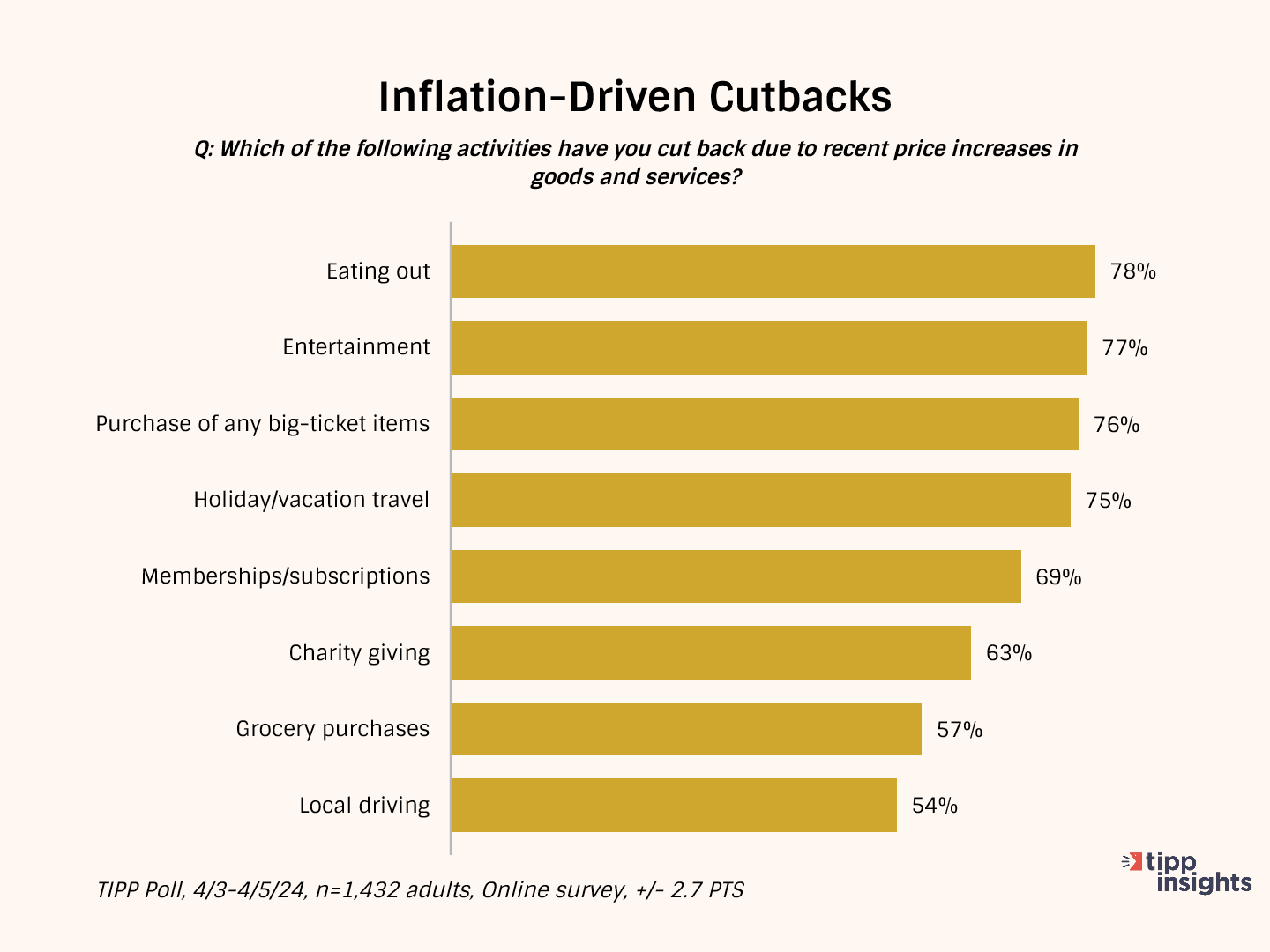
American consumers are pessimistic, as indicated by the RealClearMarkets/TIPP Economic Optimism Index, a leading gauge of consumer sentiment. Further, reports show that consumers are pulling back, impacting sales this quarter at Starbucks, KFC, and McDonald’s.
Some business leaders are noticing the signs Chairman Powell refuses to acknowledge. Last week, speaking at the Economic Club of New York, JPMorgan CEO Jamie Dimon said that now more than ever, the economy resembles the 1970s, when both inflation and unemployment were high, but economic growth was weak.
Next, consider the “flation” aspect of stagflation.
Put simply, Americans find themselves squeezed by inflation. Since January 2021, prices have increased by 18.8%, while real wages have declined by 2.5%. According to some estimates, Americans need an extra $12,828 yearly to make ends meet.
Based on our research findings, we recently published an editorial on Americans’ financial well-being, titled 21 Charts Reveal Bidenflation’s unyielding grip on Americans. The article shows that the pain of inflation has not lessened for Americans because their wages are not growing. They struggle to pay their mortgage, utility bills, auto loans, credit card payments, school fees, and daily expenses to maintain their living standards.
Chairman Powell and the Fed subscribe to copious research about Americans’ financial well-being. Oddly, he still lacks sensitivity to Americans’ predicaments, and his talk borders on insult.
Both Biden and Powell share the trait of engaging in loose talk that is far from reality. Sadly, their decisions dictate our economic destiny.
TIPP Takes
Geopolitics, Geoeconomics, And More
1. U.S. ‘Very Close’ To Bilateral Deal With Saudi Arabia As Part Of Israel Normalization – Al Arabiya
As part of the larger deal, which would need to include normalization with Israel, there are bilateral agreements between the U.S. and Saudi Arabia, which are being worked on to include a defense pact, cooperation in artificial intelligence fields as well as Riyadh’s civilian nuclear program.
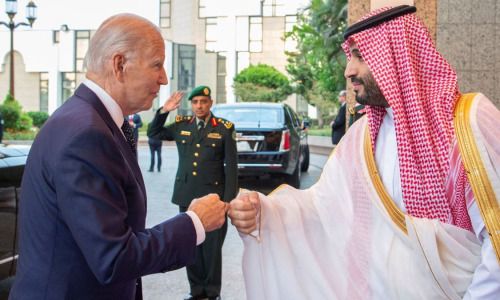
However, as State Department Spokesman Matt Miller alluded to, Saudi Arabia has been adamant that any potential agreement would need to include an irreversible, irrevocable pathway to a Palestinian state.
2. Israeli Security Cabinet Set To Approve Closure Of Qatari News Outlet Al Jazeera – UPI
The Israeli Security Cabinet is set to vote Thursday to close Al Jazeera’s office in the country.

Israeli officials have long complained about Al Jazeera’s coverage of the Gaza war, which they argue skews in favor of Hamas. Still, they have so far stopped short of taking action against the news site because Qatar funded construction projects in the Gaza Strip, which all sides see as favorable.
3. Turkey Halts Trade With Israel Over ‘Humanitarian Tragedy’ In Gaza – BBC
In a statement, Turkey said the trade suspension covered “all products.” The Turkish trade ministry said the measures would be in place until Israel allowed an “uninterrupted and sufficient flow” of aid into Gaza.
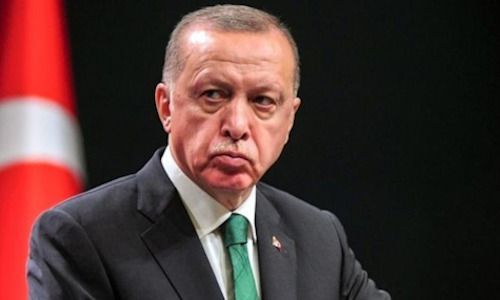
Trade between the two countries was worth almost $7bn last year. Israel’s foreign minister accused Turkish President Recep Tayyip Erdogan of acting like a “dictator.”
4. UN Estimates Rebuilding Gaza Will Cost $30 Billion To $40 Billion – AFP
“The scale of the destruction is huge and unprecedented … This is a mission that the global community has not dealt with since World War II,” said UN Assistant Secretary-General Abdallah al-Dardari.

He added that Gaza’s reconstruction, carried out through the normal process, could take decades, and “the Palestinian people do not have the luxury of waiting for decades.”
“It is therefore important that we act quickly to re-house people in decent housing and restore their lives to normal – economically, socially, in terms of health and education.”
5. Zelenskiy Discusses Ukraine’s Readiness To Receive Promised Weapons Deliveries – RFE/RL
Ukrainian President Volodymyr Zelenskiy said that he instructed commanders to take all possible measures to shorten the time needed to receive the weapons. This applies especially to the supply of air defense equipment.

Despite U.S. efforts to deliver weapons, including Patriot missiles, Foreign Minister Dmytro Kuleba has admitted that Ukraine’s allies are behind schedule.
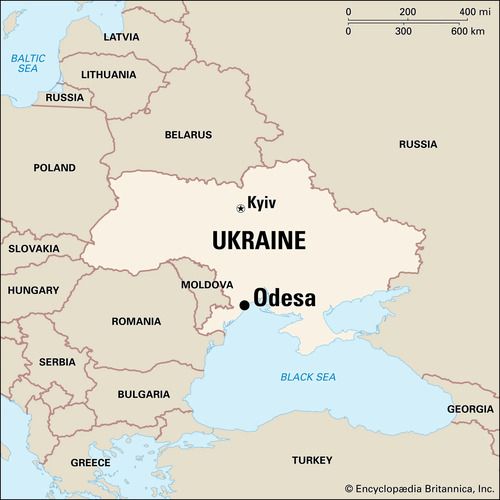
6. Russia Strikes Odesa For 3rd Time This Week – D.W.
Odesa, a key Black Sea port through which the lion’s share of Ukraine’s economically vital grain exports passes, has regularly been targeted by Russian rockets and drones.
7. Russian State Media Posting More On TikTok Ahead Of U.S. Election – A.P.
Russian state-affiliated accounts have boosted their use of TikTok. According to a study by the Washington-based Brookings Institution, they are getting more engagement on the short-form video platform ahead of the U.S. presidential election.
The report states that Russia is increasingly leveraging TikTok to disseminate Kremlin messages in English and Spanish. State-linked accounts post far more frequently on the platform than they did two years ago. Such accounts are also active on other social media platforms. However, the report says user engagement has been much higher on TikTok.
8. Germany Accuses Russia Of Cyberattack On Governing Party – D.W.
A German government investigation accused Russia’s military intelligence service, the GRU, of being behind a 2023 cyberattack that targeted the Social Democrats (SPD) in the governing coalition.

“Today we can say unambiguously… we can attribute this cyber attack to a group called APT28, which is steered by the military intelligence service of Russia,” German Foreign Minister Baerbock said.
APT28, also known as Fancy Bear, is controlled by Russia’s military intelligence service. It has been accused of dozens of cyberattacks worldwide.
9. Russia Shipping Fuel To North Korea Above UN Cap, U.S. Says – Reuters
Russia has been quietly shipping refined petroleum to North Korea at levels that appear to violate a cap imposed by the UN Security Council, the White House said.

The disclosure came after a UN panel of experts monitoring the enforcement of long-standing UN sanctions against North Korea for its nuclear weapons and missile programs was disbanded following Russia’s veto of its renewal.
10. Chinese Media Withdraw From Regional Journalism Competition – Nikkei Asia
Chinese-owned media are distancing themselves from Asia’s highest-profile journalism prize amid rising domestic pressure on those seen to be “colluding with foreign forces.”
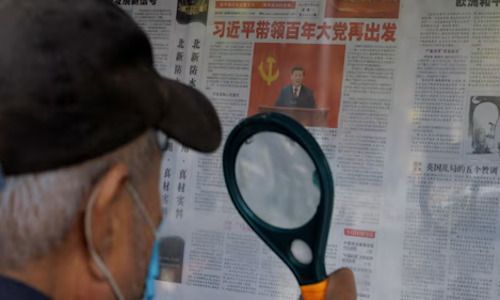
Beijing-based Caixin Media, which won SOPA awards for five straight years from 2014 to 2018, has stopped submitting entries in recent years “for obvious reasons,” two senior staff members at the company told Nikkei Asia. “We cannot submit, even if we get invitations from overseas organizations; we just cannot participate,” said one of them.
11. On World Press Freedom Day, Journalists Across Asia Continue To Face Threats – RFA
UNESCO chose the theme of “Journalism in the Face of the Environmental Crisis” for this year’s World Press Freedom Day on May 3.
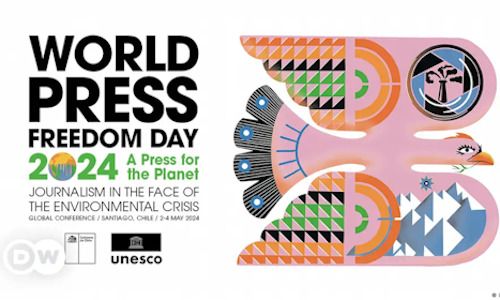
But journalists across Asia – from Myanmar to Vietnam and Hong Kong – face threats, repression, and imprisonment for their reporting on all issues.
Last year, the New York-based Committee to Protect Journalists ranked Myanmar as the second-worst country in the world – after China – for arresting and imprisoning journalists.
12. President Biden Calls Allies India And Japan ‘Xenophobic’ – BBC
President Joe Biden has called Japan and India “xenophobic,” grouping them with Russia and China as countries that “don’t want immigrants.”
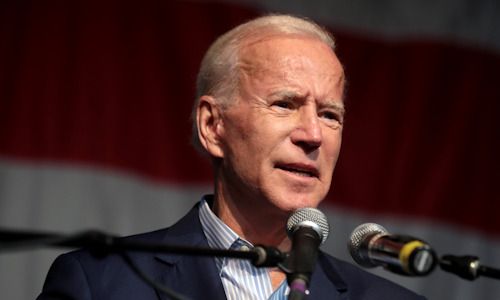
The remarks were made to a predominantly Asian-American audience at a campaign fundraising event.
His criticism of Japan comes just weeks after he called the U.S.-Japan alliance “unbreakable” during Prime Minister Fumio Kishida’s state visit. India is also a key U.S. partner despite U.S. concerns about human rights and religious freedoms there.
The White House says that Mr. Biden meant no offense to either country.
13. U.S.-Japan Missile Development Project To Cost Over $3 Billion – Kyodo News
A Defense Department official said the U.S. and Japan have estimated that the total cost of jointly developing a new type of missile capable of intercepting hypersonic weapons will exceed $3 billion.

According to an official from the U.S. Missile Defense Agency, Japan will allocate $1 billion to the Glide Phase Interceptor project. The two countries aim to complete the missile’s development by the 2030s.
14. Apple Sees Biggest Fall In Sales For A Year – BBC
Sales slumped 4% year-on-year in the first three months of 2024 to $90.8bn, weighed down by a sharp drop in demand for iPhones.
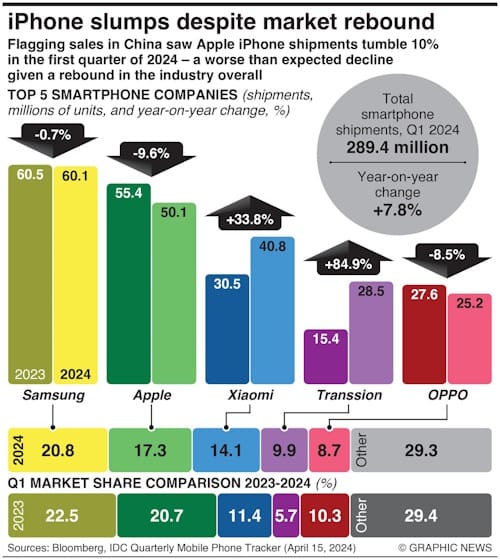
Executives said the results were distorted by Covid-related supply disruptions, which led to unusually strong sales during the same period last year. They said sales would return to growth in the months ahead, noting upcoming product launches and investments in artificial intelligence (AI).
According to research firm Canalys, smartphone shipments rose 10% globally in the first three months of the year, expanding after a long lackluster period.
15. Study: AI Is Unreliable In Assessing Heart Risk In Emergencies – HealthDay News
A new study shows that artificial intelligence might be able to help doctors by filling out rote paperwork, but it’s not going to be useful in the ER anytime soon.

Researchers report that OpenAI’s ChatGPT program provided inconsistent conclusions when presented with simulated cases of patients with chest pain.
The AI returned different heart risk assessment levels for the exact same patient data, which is not what doctors want to see when responding to a medical emergency.
16. Survey Of LGBTQ+ Youth Shows Higher Risk Of Suicide, Need For Support – UPI Health
A new report shows LGBTQ+ young people continue to report high rates of mental health challenges, bullying, discrimination, and increased suicide risk. At the same time, the data also shows supportive environments can make a difference.
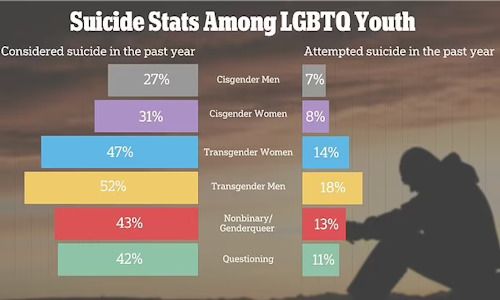
The 2024 U.S. National Survey on the Mental Health of LGBTQ+ Young People was released by The Trevor Project. While it reveals continued risks for LGBTQ+ youth, it also highlights a link between lower suicide rates and access to safe spaces such as LGBTQ+-affirming homes and schools, as well as gender-neutral bathrooms and clothing.
Republished with permission from TIPP Insights