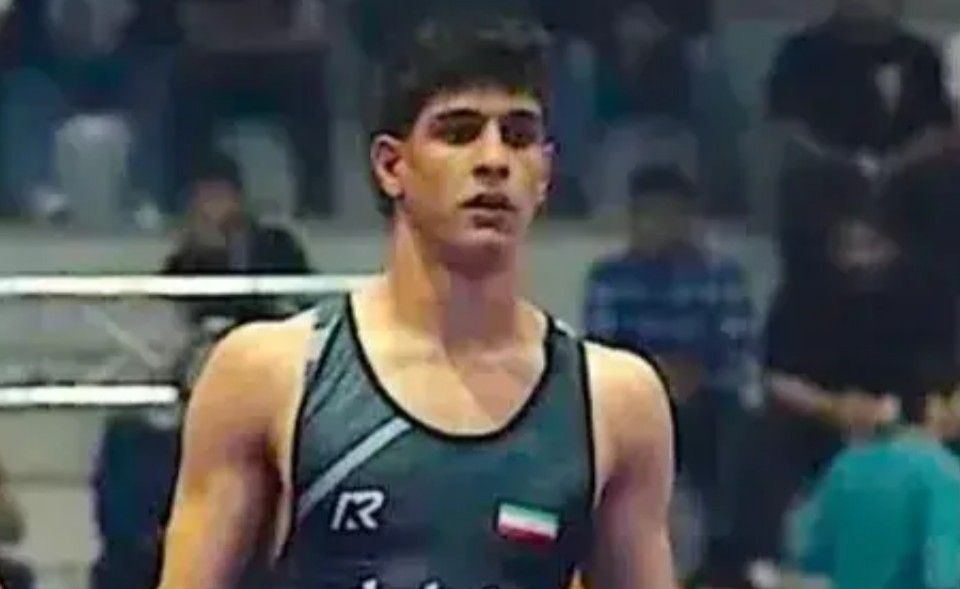
In a stunning display of defiance, the Islamic Republic of Iran’s judiciary pushed forward with the execution of 19-year-old wrestling standout Saleh Mohammadi—shrugging off warnings from Washington and desperate pleas from elite athletes with Iranian roots.
The young champion, once celebrated on the mat, was reportedly put to death in a public hanging—an act many human rights advocates are calling nothing short of barbaric. The regime’s message was unmistakable: dissent will not be tolerated, even from its brightest young stars.
Mohammadi’s alleged “crime”? Taking part in protests against the ruling establishment under Supreme Leader Ayatollah Ali Khamenei. For that, he paid the ultimate price.
Nima Far, a human rights activist and combat sports expert told Fox News Digital, “His execution was a blatant political murder, part of the Islamic Republic’s pattern of targeting athletes to crush dissent and terrorize society, as seen with Navid Afkari and others executed despite international outcry.”
Far also blasted global sports institutions for what he sees as weak, ineffective responses. In his view, quiet diplomacy simply isn’t enough when lives are on the line. He argued, “The IOC [International Olympic Committee] and UWW [United World Wrestling] should have intervened forcefully with public ultimatums, threatening immediate suspension of Iran’s NOC [National Olympic Committee] and federations if the killing proceeded rather than relying on ineffective quiet diplomacy, given their own commitments to protect athletes from politically motivated harm.”
Far called for sweeping consequences: “Iran must be banned from international competitions until it halts executions of protesters and athletes, releases those jailed in sham trials, and ends retaliation against competitors who speak out or defect.”
Analysts and commentators echoed the call for accountability.
Iran expert Alireza Nader expressed sympathy for the young athlete and his family but warned that stronger measures are needed. “I feel very bad for him and his family. There should be a boycott of the regime when it comes to international sport,” he said. While acknowledging the risk to athletes still inside Iran, he added, “But there must be a heavy price for the regime for executing young people like this. There must be a deterrent.”
Prominent activist Masih Alinejad took to social media with a blistering condemnation. She wrote: “Today, in Iran, in the middle of a war, the regime executed a 19-year-old national wrestling champion for the crime of joining January protests. After signaling to the world, including President Donald Trump, that they would halt executions of protesters, the regime has done the exact opposite.”
She further detailed the grim allegations surrounding the case: “Three young protesters, Saleh Mohammadi, Mehdi Ghasemi, and Saeed Davoudi, were hanged in Qom after a sham trial. Reports indicate torture. Forced confessions. No access to chosen lawyers. Closed-door proceedings. No right to appeal. I call on @GlobalAthleteHQ to stand with Iranian athletes who are being silenced, imprisoned, and executed simply for raising their voices. This is not just about sports. This is about human dignity.”
Earlier warnings from the U.S. State Department appear to have fallen on deaf ears. In a Farsi-language statement posted in January, officials declared: “The United States is deeply concerned by reports that 19-year-old wrestling champion Saleh Mohammadi is facing imminent execution. The regime of the Islamic Republic of Iran is massacring young people and destroying Iran’s future. We call on the Iranian regime to halt the execution of Saleh Mohammadi and all those sentenced to death for exercising their fundamental rights.”.
Sardar Pashaei, a former world champion and national coach, shared his anguish: “My heart is broken for this young wrestler. Anyone who still shows sympathy for the Islamic Republic should understand — this is only a small glimpse of its brutality.”
He revealed he had direct warnings from inside Iran before the execution: “Before the internet was shut down, I spoke with one of Iran’s national wrestling team coaches. He warned me that Saleh’s case was critical. We were both deeply worried. I did everything I could — speaking to the media, raising awareness — but I could not save him.”
His conclusion was stark: “This regime is built on executions, fear, and hatred. It does not change. The International Olympic Committee and global sports bodies failed.”
According to Iranian state-linked reporting, Mohammadi and two others—Mehdi Ghasemi and Saeed Davoudi—were accused of killing police officers during protests in the holy city of Qom earlier this year. Authorities claimed the men acted on behalf of foreign adversaries, including the United States and Israel—a charge critics say is routinely deployed to discredit dissent.
Human rights groups dispute the legitimacy of those accusations, pointing to allegations of torture, coerced confessions, and secret proceedings.
Just months ago, Mohammadi stood on the international stage, earning a bronze medal at a major wrestling competition in Russia. Footage later shared by activists shows a determined young athlete documenting his journey—now tragically cut short.