DAILY BS BULLETIN
- A Senate committee voted 8–7 to hold Anthony Fauci in contempt after he repeatedly invoked the Fifth Amendment.
- Rand Paul may send the referral directly to Washington’s U.S. attorney without waiting for a full Senate vote.
- Fauci’s pardon, constitutional rights and newly obtained phone records could shape what happens next.
Anthony Fauci has been held in contempt of Congress—but he is not being fitted for an orange jumpsuit, at least not yet.
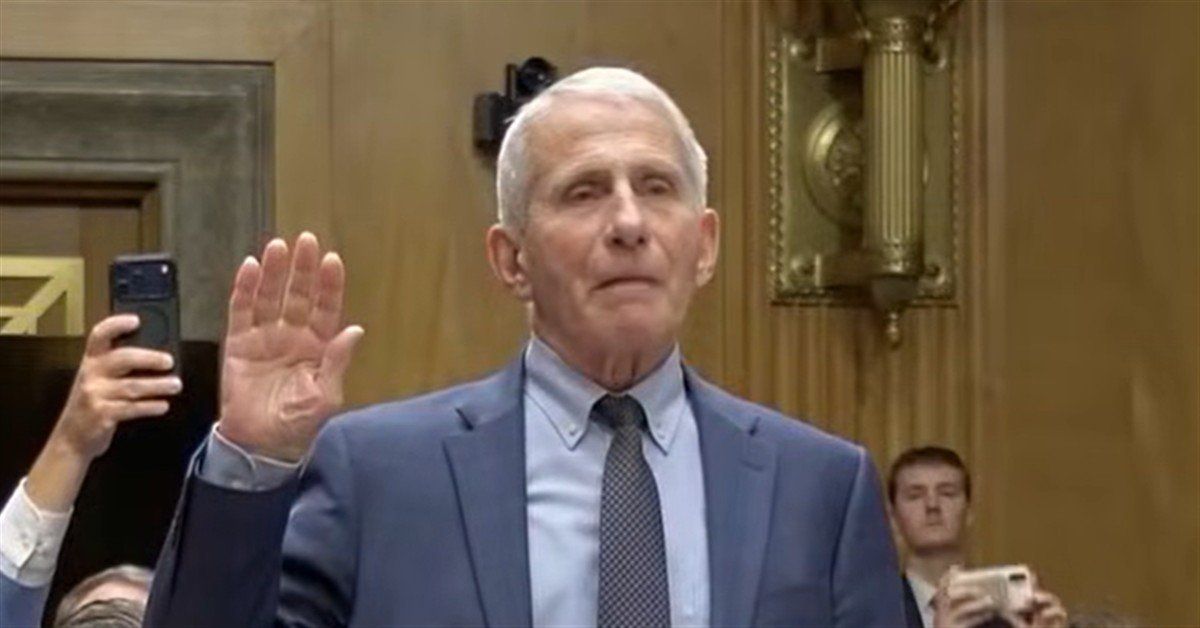
The Senate Homeland Security and Governmental Affairs Committee voted 8–7 along party lines Thursday to approve a contempt referral after Fauci refused to answer more than 100 questions during a subpoenaed hearing on the government’s handling of COVID-19.
PASSED BY REPUBLICANS ON BEHALF OF THE MILLIONS OF AMERICANS AND THEIR FAMILIES STILL AFFECTED YEARS AFTER THE COVID PANDEMIC, THE RESOLUTION TO HOLD ANTHONY FAUCI IN CONTEMPT OF CONGRESS HAS PASSED OUT OF THE SENATE HOMELAND SECURITY AND GOVERNMENTAL AFFAIRS COMMITTEE BY A VOTE… https://t.co/9wgO1KeMd2
— Senator Rand Paul (@SenRandPaul) August 6, 2026
The vote represents the sharpest escalation yet in Sen. Rand Paul’s years-long effort to force answers from the former director of the National Institute of Allergy and Infectious Diseases. It does not, by itself, convict Fauci of a crime or even guarantee that criminal charges will be filed.
What happens next may depend on which procedural road Paul chooses—and whether the Justice Department agrees that the committee has handed it a prosecutable case.
The referral could go straight to Jeanine Pirro
Ordinarily, a congressional contempt resolution approved by a committee moves to the full House or Senate for another vote. If the full chamber approves it, the matter is certified to the appropriate U.S. attorney for presentation to a grand jury.
Federal law says that a witness who willfully refuses to answer a pertinent question after being summoned by Congress may be prosecuted for a misdemeanor. The statute provides for one month to one year in jail and a fine if the witness is convicted.
A full Senate vote, however, would present Paul with an immediate political problem. Advancing the resolution would probably require 60 votes, meaning Republicans would need substantial Democratic support that does not appear to exist.
“A million Americans died, and I think they deserve to know the truth.”
Sen. Rand Paul says Dr. Anthony Fauci has no reason not to talk after the Senate voted to hold him in contempt of Congress, calling out his Biden-era presidential pardon that dates back to 2014.
Paul says… pic.twitter.com/FoqpRKBxtS
— Fox News (@FoxNews) August 6, 2026
Paul has therefore suggested sending the committee’s recommendation directly to the Justice Department with a supporting legal brief rather than waiting for the full Senate. He has not ruled out eventually going to the floor, but said he did not want to “waste time” on a vote likely to stall.
That would place the referral before the U.S. Attorney’s Office for the District of Columbia, headed by Jeanine Pirro. Her office could examine the committee record, determine whether a federal offense can be established and decide whether to seek an indictment from a grand jury.
That is the first major fork in the road. Pirro’s office could move forward, request additional evidence, decline the case or conclude that the procedural uncertainty surrounding a committee-only referral makes prosecution too risky.
The Fifth Amendment question will be the heart of the fight
Fauci did not ignore the subpoena or refuse to appear. He showed up and invoked his Fifth Amendment protection against self-incrimination repeatedly.
Paul ruled during the hearing that Fauci could not rely on the Fifth Amendment because former President Joe Biden had already granted him a broad pardon covering federal offenses connected to his government service between January 2014 and January 19, 2025.
Paul also argued that Fauci weakened or waived any remaining privilege by delivering an opening statement and selectively discussing certain subjects before refusing to answer questions. The senator called Fauci’s refusal an obstruction of a legitimate congressional investigation.
Fauci’s attorneys take the opposite position. Attorney David Schertler called the contempt vote a “crude political stunt” intended to punish Fauci for exercising a constitutional right. He argued that Paul’s repeated public calls for Fauci’s prosecution gave his client ample reason to fear that anything he said could be used to build a new case against him.
That argument is not frivolous merely because Fauci has a pardon.
Biden’s pardon does not cover crimes allegedly committed after January 19, 2025. Any false statement, obstruction or perjury committed during new testimony could potentially create fresh exposure. The pardon also cannot block state prosecutions, and several Republican-led states are reportedly examining Fauci’s pandemic-era conduct.
Fauci’s lawyers are therefore likely to argue that answering the committee’s questions could furnish investigators with links in a chain leading to state charges or new federal allegations outside the pardon.
If Pirro seeks an indictment, a judge may ultimately have to decide whether Paul properly rejected Fauci’s Fifth Amendment claims—and whether the questions Fauci refused to answer were sufficiently clear, pertinent and protected from possible self-incrimination.
That could turn the case into something much larger than a dispute between two men who have spent years glaring at each other over Senate microphones. It could test how much testimony Congress may compel from someone who has received a sweeping presidential pardon but still faces other conceivable legal exposure.
Fauci’s old phone may become more important than his silence
The committee’s investigation does not depend entirely on getting Fauci to talk.
Sen. Ron Johnson reportedly obtained a backup copy of Fauci’s government iPhone from the Department of Health and Human Services. The device dates from Fauci’s tenure at NIAID and could contain messages, contacts, notes or other material related to the government’s pandemic response.
That development may prove more consequential than the contempt vote itself.
If investigators can reconstruct Fauci’s communications through phone records, emails, agency documents and testimony from other witnesses, they may be able to answer some of their questions without Fauci’s cooperation. Any discrepancies between those records and Fauci’s earlier sworn testimony could also generate new referrals separate from the current contempt dispute.
Paul has previously accused Fauci of misleading Congress about federally supported research connected to the Wuhan Institute of Virology and about the government’s definition and funding of gain-of-function research. Fauci has consistently denied lying to Congress.
The phone will not automatically resolve those arguments. Records can be incomplete, ambiguous or easily stripped of context. But it gives investigators another route around Fauci’s refusal to speak—and another reason the inquiry is unlikely to end with Thursday’s vote.
Fauci could still return and testify
Contempt disputes do not always end in prosecution. Sometimes the threat of prosecution is used to obtain compliance.
Fauci and the committee could negotiate another appearance with narrower questions, additional assurances or some form of immunity. Congress has tools for granting immunity that can compel testimony while restricting how prosecutors use that testimony, although doing so would involve its own legal and political complications.
The committee could also attempt a civil enforcement action asking a federal court to order Fauci to answer. That would likely move more slowly, but it could allow a judge to resolve the privilege dispute before criminal punishment is considered.
A negotiated return may be the most efficient route for lawmakers who genuinely want information. It would be less satisfying to those who want prosecution, but it would put Fauci’s answers under oath and create potential consequences for any knowingly false statements made now—conduct that Biden’s earlier pardon could not cover.
State investigations remain outside Biden’s pardon
Even if the Justice Department declines the contempt referral, Fauci’s legal problems may not disappear.
Reuters reported that West Virginia has joined Louisiana, Florida and Alabama in examining aspects of Fauci’s pandemic conduct. A president’s pardon applies only to federal offenses; it cannot erase potential violations of state law.
Whether any of those investigations produces charges is uncertain. State officials would still need jurisdiction, evidence and a viable statute that applies to the conduct under examination.
But the existence of those investigations strengthens Fauci’s argument that his Fifth Amendment concerns are not merely theoretical. It also gives Paul and other Republicans additional avenues for sharing evidence uncovered by Congress.
The precedent could outlive Fauci
The stakes reach beyond masks, lockdowns, laboratory research and the decisions made during COVID.
If Congress can force a pardoned witness to testify on the theory that federal clemency eliminates the risk of self-incrimination, future presidents may find that pardoning aides does not end congressional scrutiny. Lawmakers could summon those individuals, compel answers and potentially create new criminal exposure if the witnesses lie or obstruct.
If, on the other hand, a broad presidential pardon does not meaningfully limit a witness’s ability to take the Fifth before Congress, lawmakers could find major investigations stopped by blanket assertions of privilege even after federal liability has supposedly been removed.
Either outcome could shape future clashes between Congress and the executive branch.
For the moment, the most likely next step is a referral from Paul’s committee to Pirro’s office, followed by a legal review rather than an immediate arrest. Prosecutors will have to determine whether the committee’s action satisfies statutory requirements, whether Fauci had a valid basis for remaining silent and whether a criminal case can survive the constitutional challenge certain to follow.
The contempt vote was the easy part. Proving criminal contempt beyond a reasonable doubt will be considerably harder.
DBS WIRE SOURCES:
Reuters: U.S. Senate panel votes to hold Fauci in contempt of Congress
Associated Press: Senate panel acts on Fauci contempt referral
Senate Homeland Security Committee: Chairman Paul releases Fauci contempt resolution
Cornell Legal Information Institute: Federal contempt-of-Congress statute
Cornell Legal Information Institute: Certification of congressional contempt referrals