In the latest chest-thumping display from Iran’s ruling elite, a top regime insider went on state television and practically dared the United States to call his bluff — threatening to send American warships to the bottom of the Strait of Hormuz while fantasizing about a hostage payday that sounds ripped from a bad action movie.
Mohsen Rezaei — no fringe loudmouth, but a former chief of Iran’s Islamic Revolutionary Guard Corps — delivered the regime’s message loud and clear: the U.S. Navy isn’t just unwelcome, it’s a target.
“Is this really your job? Is this the job of a powerful army like the US?” Rezaei scoffed, mocking Washington’s role in safeguarding one of the world’s most critical oil chokepoints. Then came the punchline — or threat, depending on how seriously you take Tehran’s bluster: “These ships of yours will be sunk by our first missiles and have created a great danger for the U.S. military. They can definitely be exposed to our missiles and we can destroy them.”
And if that wasn’t enough, Rezaei floated an even more eyebrow-raising scenario: an American ground invasion. Not as a nightmare — but as an opportunity.
According to reports, he said it would be “great” if U.S. forces came ashore, boasting Iran “would take thousands of hostages and for each hostage we would get a billion dollars.”
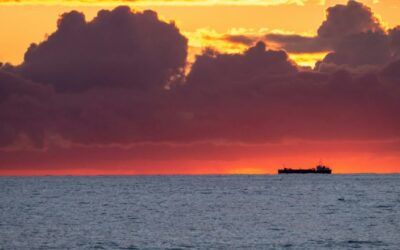
Meanwhile, the reality on the water tells a different story. U.S. Central Command says its naval blockade is already squeezing Iran where it hurts — its economy. “Ten vessels have now been turned around and ZERO ships have broken through since the start of the U.S. blockade,” officials said, underscoring that American forces have effectively choked off maritime trade to and from Iranian ports. And it’s exactly why the regime is lashing out.
The Strait of Hormuz isn’t just another shipping lane — it’s the artery through which a massive chunk of the world’s oil supply flows. Any disruption there doesn’t just rattle the Middle East; it sends shockwaves through global markets. That’s why even Iran’s supposed allies are starting to sweat.
China, hardly a cheerleader for U.S. foreign policy, is now urging calm — and, more importantly, open waters. In a call with Iran’s foreign minister, Beijing’s top diplomat stressed that while Iran’s sovereignty should be respected, the bigger priority is keeping the strait navigable and safe.
The Chinese message was blunt in its own way: reopening the Strait of Hormuz isn’t optional — “a unanimous call from the international community.”
And behind the diplomatic phrasing lies a stark reality. The situation, as Beijing put it, is teetering on a knife’s edge — a “critical juncture between war and peace.”
For now, Iran is talking tough. The U.S. is tightening the screws. And the rest of the world is holding its breath, hoping that the war of words doesn’t turn into something far more explosive.
Because in the Strait of Hormuz, it only takes one missile — or one miscalculation — to turn bluster into a global crisis.