

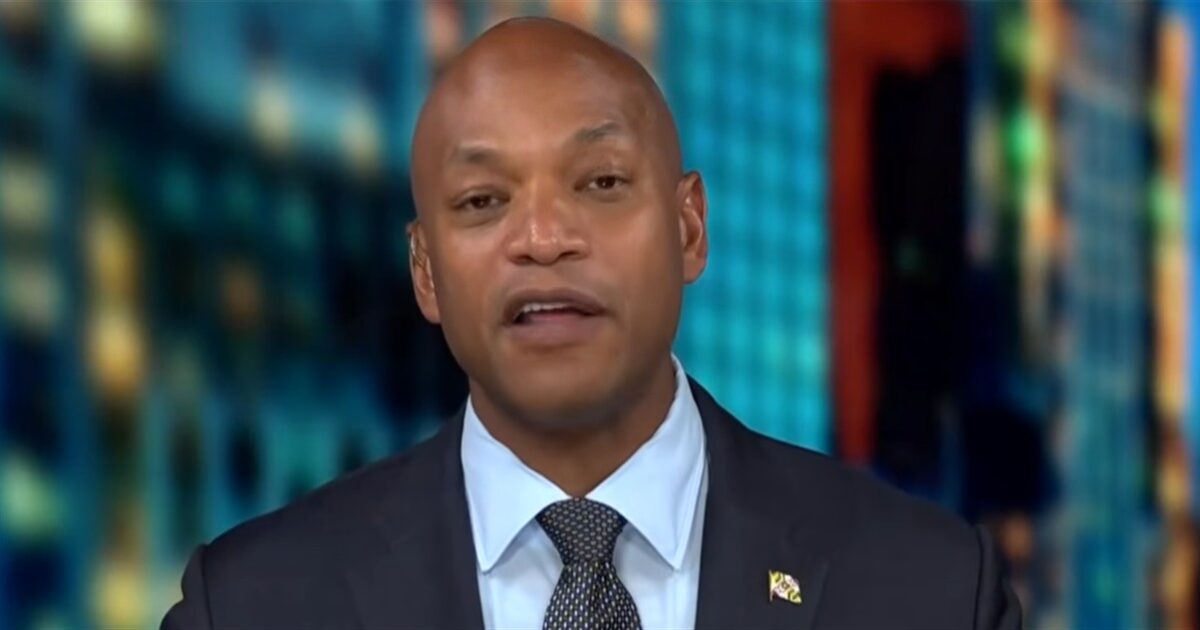
If Maryland Gov. Wes Moore really wants to run for president in 2028, somebody on his staff should probably hide the microphones for a while.
Until now, Moore had been playing the slickest game in Democratic politics: stay polished, stay vague, let louder progressives like Gavin Newsom soak up all the bad headlines while you quietly audition as the “normal” Democrat in the room.
Then came his interview with Patrick Bet-David — and suddenly the Maryland governor looked less like the party’s future and more like a focus-group disaster waiting to happen.
During the sprawling two-hour sit-down, Bet-David asked Moore a simple question that millions of American parents have probably discussed around the dinner table: What if your young son decided he wanted to transition into a girl?
Moore’s answer landed with all the grace of a shopping cart rolling downhill in Times Square.
“You know, it’s my son, so I love him regardless,” Moore said. “And he’s always going to have my undying love. That’s me, right? I want to make sure that I’m involved in understanding where he is, how he’s feeling, the way he’s feeling, why he thinks it’s important. If this is a journey that he wants to go down, I want him to always be comfortable in his own skin, and I want him to always know that he has a partner in me to help him along that journey.”
That might play well in a faculty lounge in Brooklyn or at a wine-and-cheese fundraiser in Bethesda. But in the middle of the country? In a Democratic primary already panicking about why working-class voters keep fleeing the party? Good luck.
The moment was especially striking because Moore wasn’t talking about an adult son making adult choices. He was talking about a child — his own son, who according to public family posts is barely in middle school.
And when Bet-David pressed him on whether a teenager should wait until adulthood before making permanent medical decisions, Moore reportedly suggested 14 could be old enough to begin that process — though he later drew a line at supporting puberty blockers.
That distinction is unlikely to calm critics who already believe Democrats have drifted miles away from mainstream parents on gender issues.
The politics here are brutal for Moore because the ground has shifted fast. Five years ago, Democratic politicians treated “gender-affirming care” as untouchable dogma. Today, even some liberals are openly questioning whether children should be rushed into life-altering medical pathways before they’re old enough to drive a car or sign a lease.
European countries that once aggressively embraced youth gender medicine — including Britain, Sweden and Finland — have scaled back parts of those policies amid concerns about weak evidence and long-term consequences. Meanwhile, American voters have repeatedly shown discomfort with progressive messaging around minors and gender identity.
But Moore didn’t sound cautious. He sounded like a politician still trapped in the activist bubble of 2021.
That’s especially awkward because he’s spent years cultivating the image of a pragmatic Democrat: military veteran, family man, measured speaker, less chaotic than the coastal loudmouth wing of his party. He has carefully built a national résumé, and political insiders have openly floated him as a future White House contender for years.
Yet this interview ripped the mask off that carefully managed image.
The governor who once seemed determined to avoid the progressive caricature suddenly sounded like every Republican attack ad rolled into one neat little soundbite: elite Democrat, terrified to say no to cultural extremism, couching radical ideas in soft-focus language about “kindness,” “partnership,” and “journeys.”
And voters have heard this script before.
Moore has already signed executive actions and legislation expanding protections for gender-transition procedures in Maryland, including measures shielding providers of so-called “gender-affirming care.”
So his comments weren’t some accidental verbal stumble. They fit neatly into a broader ideological record.
The real shock is that Democrats still seem convinced this is political gold.
The party got shellacked on cultural issues in race after race over the past few election cycles. Polling has consistently shown broad public discomfort with minors medically transitioning. Parents — including many independents and moderate Democrats — increasingly view activist rhetoric on gender as detached from reality.
Yet here was Moore, a man supposedly savvy enough to mount a national campaign, sounding like he was auditioning for a university diversity seminar.
If Republicans couldn’t script a cleaner contrast, they’d hire better writers.
To be fair, Moore clearly intended to come across as compassionate. No decent parent stops loving a child over confusion, insecurity, or emotional struggles. That was plainly the spirit of his remarks.
But voters also expect parents to be parents — to set limits, provide guidance, and recognize that children are not fully equipped to make irreversible decisions.
That’s where Moore’s answer veered into dangerous political territory.
Americans may disagree passionately on transgender policy. But a growing number draw a hard line when it comes to minors and irreversible medical interventions. And when a governor appears more worried about affirming every adolescent feeling than exercising parental judgment, the reaction is swift.
The irony is rich. Democrats spent years branding conservatives as extremists on social issues. Now some of the party’s rising stars are out here arguing that middle-schoolers are mature enough to embark on gender-transition “journeys” with mom and dad cheering from the sidelines. That’s not moderation. That’s a 30-second attack ad.
And if Wes Moore really is eyeing Iowa in 2028, he may want to start practicing a different answer — because this one sounded a lot less like a future president and a lot more like a candidate sticking a fork in his own campaign before it even begins.









A dope in a suit is still a dope.