Raw Story Headline: Eric Trump messaged UFC insider about ‘rigged’ fights: report
When readers see a headline screaming that Eric Trump allegedly asked whether UFC fights were “rigged,” they might reasonably expect evidence of corruption, match-fixing, gambling misconduct, or some earth-shattering scandal.
Instead, they get what appears to be a handful of reported direct messages, an online controversy, a deleted social media post, and a media ecosystem eager to inflate a curiosity into a crisis.
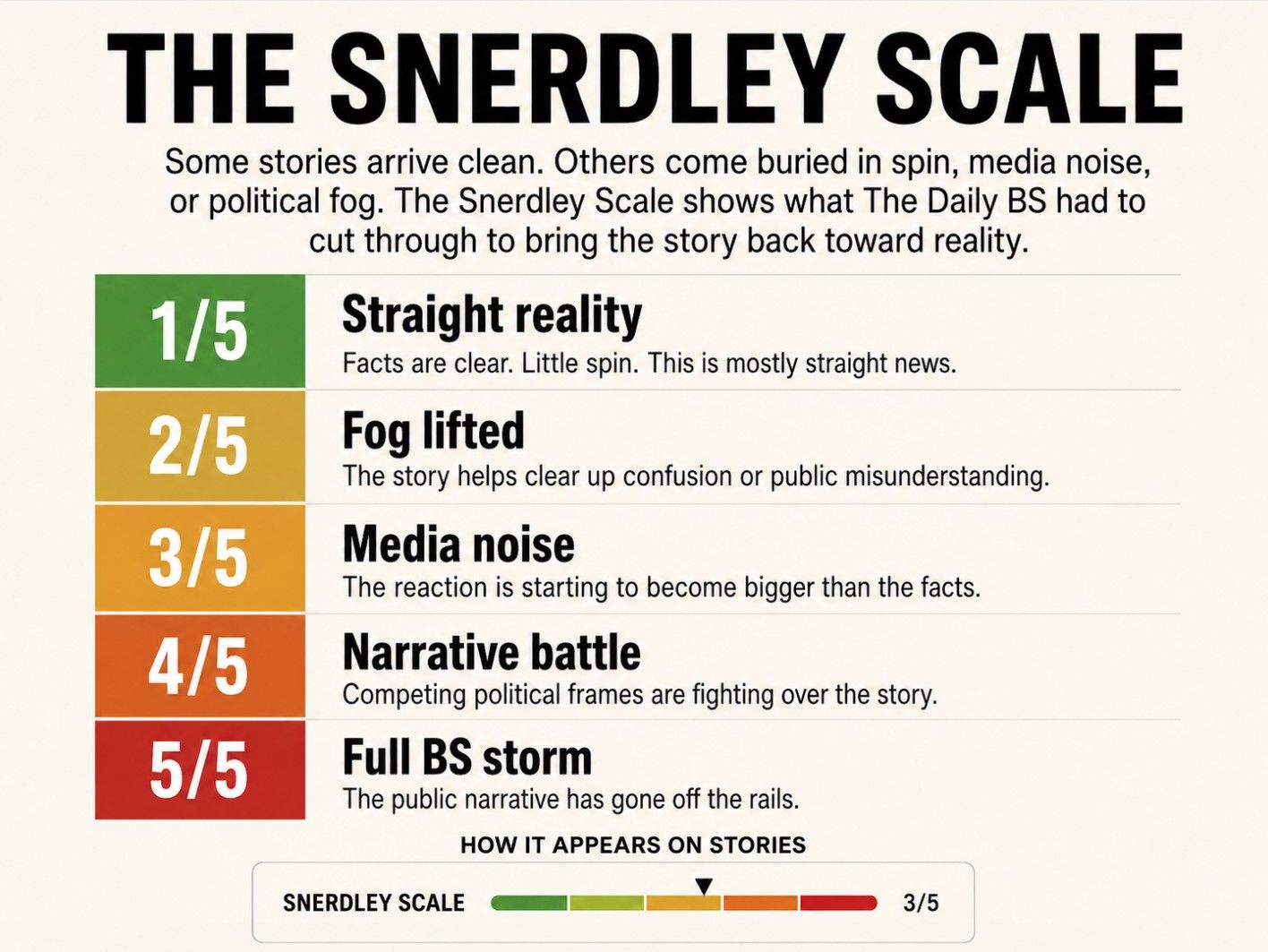
That’s why this “Eric Trump messaged UFC insider asking if White House fights were ‘rigged’: report” lands at a solid 4 out of 5 on the Snerdley Scale: Spin zone.
The giveaway starts in the headline itself. The phrase “asking if fights were rigged” is deployed with maximum dramatic effect, inviting readers to imagine smoke-filled rooms, fixed outcomes, and shadowy conspiracies. But the actual reporting described in the story points to something far less explosive: a private conversation in which Eric Trump allegedly asked a UFC insider questions that many fans, bettors, and sports obsessives have asked at one time or another.
The article highlights one message: “I’ll just cut to the chase. Are any of the fights tomorrow rigged?”
Presented alone, it’s meant to sound sinister. But context matters. Sports fans joke about “rigged” outcomes constantly. Every Sunday during football season, social media fills with accusations that referees are fixing games. Every controversial judging decision in combat sports triggers an avalanche of claims that something was “rigged.”
The story then follows with another line: “I’ve been eyeing the Lopes fight and I think an upset wouldn’t be too unrealistic $”
Again, the implication is obvious: readers are nudged toward seeing something improper. Yet the article never appears to establish that any insider information was provided, that any fight was manipulated, that any betting activity occurred, or that any rules were violated.
That’s where the framing does most of the heavy lifting.
Notice what the piece is actually built around. A commentator reportedly posted screenshots. The post was later deleted. Another journalist reportedly confirmed seeing the post before deletion. Then speculation emerged about whether the messages were authentic. One observer even suggested the possibility of a hack.
In other words, the article spends much of its energy reporting on reactions to reactions to screenshots.
That’s classic media-cycle inflation: a social media controversy becomes the story itself.
The most revealing part may be the ending. After pages of intrigue, readers are left with a reportedly cryptic response from Daniel Cormier: “Are people really this dumb?”
That quote can be interpreted in several ways, but the article leaves it hanging like a mystery movie cliffhanger. Readers are encouraged to connect dots that the reporting itself never fully connects.
The broader political angle is impossible to miss. If the individual involved were not a Trump, would this rise above sports-blog chatter? Would a text message asking whether a fight was “rigged” generate national political coverage? Or would it be treated as the kind of locker-room banter that surfaces online every day?
That’s where the story enters Spin Zone territory.
To be fair, some facts here are newsworthy. If a public figure sought genuine insider betting information, that could be relevant. If authentic screenshots exist, they are worth discussing. The article is not fabricated from thin air.
But the leap from “reported text exchange” to headline-level scandal relies heavily on audience assumptions. The story appears designed to maximize eyebrow raises rather than deliver meaningful revelations.
In the end, readers are left with screenshots, speculation, deleted posts, secondhand confirmations, and a headline doing Olympic-level lifting.
No exposed corruption. No evidence of rigged fights. No betting scandal. No demonstrated wrongdoing.
Just another round in the never-ending media cage match where anything Trump-adjacent can be promoted from curiosity to controversy before the opening bell even rings.
Final Snerdley score: 4/5 — Spin zone.

The underlying facts may be real. The promotional framing, however, lands a much harder punch than the evidence described in the story.