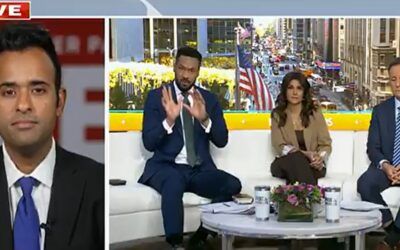
Fox News host Brian Kilmeade lit into a reported U.S.–Iran memorandum of understanding on Wednesday, sounding the alarm over what he sees as a diplomatic muddle that could hand America’s adversaries exactly what they want while tying Israel’s hands in the process.
TODAY: Trump to wrap G7 after securing Iran deal pic.twitter.com/Eeaid3eE9w
— Brian Kilmeade (@kilmeade) June 17, 2026
During a heated on-air exchange with Hudson Institute analyst Rebeccah Heinrichs, Kilmeade zeroed in on the Israel component of the arrangement, which reportedly involves a pause or limitation on Israeli military action against Hezbollah. The idea, he argued, defies basic logic on the ground in the Middle East.
Kilmeade didn’t hold back, essentially questioning how Washington could expect Israel to stand down while Hezbollah continues firing into its north. His takeaway was blunt: the whole construct “makes absolutely no sense,” reflecting a broader frustration among foreign-policy hawks who see deterrence as something you either enforce—or lose.
Heinrichs echoed that concern, noting that past diplomatic efforts to get Hezbollah to disarm have gone nowhere for decades. In her view, folding Israeli restraint into any broader agreement risks constraining a key U.S. ally while an entrenched militant group continues operating unchecked. She warned that it would effectively limit Israel’s ability to defend itself at a time when it has demonstrated battlefield effectiveness in ongoing regional conflicts.
Kilmeade pushed further, arguing that Israel’s military advantage is being treated as a liability rather than a strategic asset. He rejected the idea that Israel should be expected to step aside and allow Syria or other regional actors to confront Hezbollah, pointing out that those governments lack the capability to meaningfully counter the group’s missile arsenal.
The conversation then shifted to the broader Iran framework itself—and that’s where the tone sharpened further.
Heinrichs warned that easing sanctions or unlocking Iranian financial channels could funnel enormous sums back into the Islamic Revolutionary Guard Corps. She raised concerns that any “conditions-based” structure risks becoming unenforceable in practice, particularly if funds are quickly accessible rather than tightly restricted in escrow-style mechanisms.
Her bigger worry: Tehran gaining new economic breathing room while still retaining leverage in strategic waterways like the Strait of Hormuz. Even modest Iranian influence over shipping routes, she argued, could translate into a de facto “toll” system with global economic consequences.
Kilmeade took that concern and ran with it, suggesting that the agreement could ultimately free up massive frozen assets and open the door to renewed oil revenue flows. He warned that such a scenario wouldn’t just strengthen Iran—it could also set a precedent that other global powers might attempt to replicate in key maritime chokepoints around the world.
He also raised a sharper political question: whether the people shaping the agreement have fully briefed the president on what’s actually inside it, hinting at confusion or disconnect inside the policymaking process.
By the end of the segment, Heinrichs concluded the deal may leave the U.S. worse off than before negotiations began, arguing that leverage over Iran’s nuclear ambitions could erode once sanctions relief is granted. Kilmeade agreed, expressing hope that last-minute changes could still salvage what he clearly sees as a dangerously flawed framework.
In short, what was meant to be a diplomatic breakthrough instead landed, on Fox’s airwaves at least, as a warning flare: a deal critics say may empower Tehran, constrain Israel, and raise more questions than it answers.