Musk lit the fuse this week when he blasted Britain’s handling of the grooming-gang scandal and called for consequences not just for the predators, but for the officials who allegedly stood by while vulnerable girls were abused.
“The politicians who turned a blind eye to the Rape of Britain must go to prison,” Musk wrote on X after the release of a sprawling independent report commissioned by Member of Parliament Rupert Lowe.
This is approximately a million times worse than Epstein. It’s not even remotely close. The scale. The nature of the crimes. The powerful institutions implicated. And yet something tells me that many of the Epstein obsessives will have nothing at all to say about this. https://t.co/in3Rkdh7p5
— Matt Walsh (@MattWalshBlog) June 17, 2026
That report wasn’t funded by government bureaucrats, academic commissions, or taxpayer grants. It was funded by ordinary citizens. More than 23,000 people reportedly chipped in roughly $1.1 million to support the investigation, a remarkable sign of how little faith many Britons have left in their own institutions.
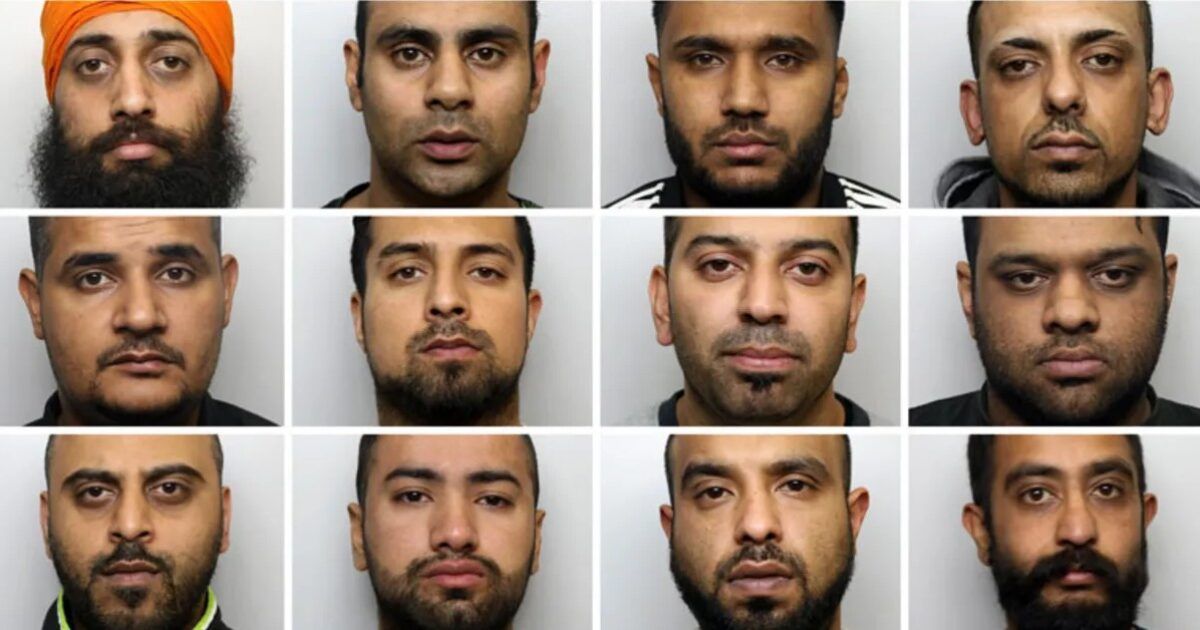
The report paints a devastating picture of systemic failure. It revisits notorious cases from communities including Rotherham, Rochdale, Telford, Oxford and Oldham, where organized groups of men preyed upon young girls through grooming, sexual exploitation, trafficking and rape while police departments, social-service agencies and local authorities repeatedly failed to intervene.
Critics have long argued that concerns about race, culture and accusations of bigotry discouraged officials from aggressively confronting the problem. The new report goes even further, alleging that public authorities often provided either active or passive cover through inaction, denial, or bureaucratic paralysis.
Lowe’s investigation describes the scandal as a national disgrace and calls for dramatically tougher penalties, including life-sentence starting points for organized child rape, stronger witness protections, specialized prosecutors, and deportation of foreign nationals convicted of group-based child sexual exploitation.
Lowe warned that if authorities refuse to act, alternative legal avenues could be pursued. “If they fail to take the necessary steps, we will deploy private prosecutions to obtain justice at last,” he wrote.
The mass rape of vulnerable working class white girls by gangs of primarily Pakistani Muslim men is pure unfettered evil.
Our report outlines in great detail what has happened, why it happened and what we need to do to stop it from happening again.
This is an important day. pic.twitter.com/1to6cNQAPJ
— Rupert Lowe MP (@RupertLowe10) June 16, 2026
Perhaps the most controversial section of the report involves offender demographics. The investigation argues that Muslim men, particularly men of Pakistani heritage, appeared disproportionately represented in many of the country’s most notorious grooming-gang cases.
That claim remains fiercely debated. The report’s estimate that victims nationwide could exceed 250,000 has not been officially verified. Yet even government-commissioned reviews have acknowledged troubling gaps in official data.
FROM THE REPORT:
The R*** Gang Inquiry examined the systematic targeting of vulnerable girls, overwhelmingly White British, by predominantly Muslim Pakistani gangs across towns and cities throughout the United Kingdom …
… The scale of the crimes committed is staggering. It has been previously established that, at the very least, 250,000 young white girls have been subjected to repeated r***, gang r***, trafficking, torture, pregnancy, forced Islamic conversion, and lifelong trauma. The true number is probably higher. The perpetrators bear primary responsibility, yet the institutional failures that enabled them for decades must also be confronted. In court records and official inquiries, around 87% of those convicted in these group-based child sexual exploitation (‘CSE’) cases bore distinctively Muslim names. The vast majority of men involved in these gangs were not convicted. Dr. Taj Hargey, an imam with the Oxford Islamic Congregation, believes the true proportion of gang members who are Muslims to be around 95%. This figure far exceeds the Muslim share of the overall United Kingdom population.
Girls as young as 11 were initially befriended by a young Muslim man who then treated the young child like an adult and would then start providing them with alcohol, drugs, and cigarettes. After a few months the girls would then be collected from school gates, care homes, and streets in taxis. They were taken to houses, flats, restaurants, and hotels where they were r***d repeatedly by groups of men, tortured, filmed for blackmail, and told they were ‘white trash’ or ‘kuffar’ who merited punishment. Many became pregnant while still children. Some miscarried under trauma, others endured coerced abortions, and some gave birth to children who were later removed by the state.
We found that the same unspeakable crimes occurred in at least 149 local authority districts – close to 40% of all such districts across the United Kingdom. Survivors described daily r***s, ‘red rooms’ of extreme torture, trafficking between cities, and institutional disbelief that compounded their suffering. Some girls were even trafficked to the Middle East where they would endure Islamic marriage.
Were Britain functioning effectively, these girls would have received considerable state protection. However, every one of our institutions failed them catastrophically. Police forces ignored repeated reports, criminalised victims instead of perpetrators, destroyed evidence, and allowed known r**ists to walk free on bail. Social care services undermined protective parents, placed children in trafficking hubs inside children’s homes, closed cases despite clear indicators of exploitation, and retaliated against whistleblowers. The NHS recorded genital injuries, multiple sexually transmitted infections in children as young as 13, pregnancies caused by r***, and suicide attempts, yet discharged victims back to their abusers without safeguarding referrals or trauma care. Schools observed older men collecting girls at the gates, heard disclosures of r*** on school premises, and responded by excluding victims rather than protecting them. Taxi licensing authorities renewed permits for drivers who formed the logistical backbone of the networks and collapsed in the face of organised protests when basic safety measures were proposed.
A major audit led by Baroness Louise Casey found that authorities frequently failed to collect or publish ethnicity information for offenders. Casey wrote, “We found that the ethnicity of perpetrators is shied away from and is still not recorded for two-thirds of perpetrators, so we are unable to provide any accurate assessment from the nationally collected data.”
At the same time, Casey’s review concluded there was sufficient evidence from multiple police-force areas showing disproportionate numbers of suspects from Asian ethnic backgrounds in organized child-sex-exploitation cases to justify significantly deeper examination.
Importantly, her findings also noted that offenders came from a variety of backgrounds, including White British, European, African and Middle Eastern communities. The larger issue, however, may be less about demographics and more about accountability.
Even some experts who question portions of the new report say its central warnings deserve serious attention.
Emma Schubart of the Henry Jackson Society argued that while some conclusions will undoubtedly be challenged, the report raises legitimate concerns regarding institutional failures, grooming gangs and offender patterns that policymakers cannot simply dismiss.
Meanwhile, the British government insists it is already acting. A formal national inquiry was launched earlier this year with powers to investigate institutional failures, examine allegations of cover-ups, and explore the role of ethnicity, religion and culture in organized child sexual exploitation.
Government officials have described the scandal as one of the most shameful chapters in modern British history. Authorities say hundreds of previously closed cases are being reexamined, with that number expected to climb beyond 1,000.
Prime Minister Keir Starmer has pushed back aggressively against critics, accusing some opponents of exploiting the issue for political gain. Starmer has defended his own record, arguing that reforms were implemented during his tenure as Britain’s top prosecutor and that previously abandoned cases were reopened.
But many voters remain unconvinced. After all, Britain has already conducted multiple investigations over the years. Reports have been written. Recommendations have been issued. Apologies have been delivered. Yet thousands of victims are still asking if everyone agrees catastrophic failures occurred, why has so little accountability followed?
That question may explain why tens of thousands of citizens opened their wallets to fund an investigation outside the government system.
As one observer noted, the most revealing finding may not be buried somewhere inside a 200-page report. It may be the fact that so many people no longer trust public institutions to investigate themselves.
Let’s be clear…
UK leadership allowed ~250,000 little girls, their nation’s daughters, to be abused and gang raped by Pakistani-Muslims to protect their policy of open-border multiculturalism.
There should be Nuremberg-style trials and executions for those involved. https://t.co/TxPbgXB3Yu pic.twitter.com/OoA9m8gnQL
— Geiger Capital (@Geiger_Capital) June 16, 2026