Every once in a while, a story comes along that makes ordinary Americans stop and ask a simple question: “How on earth did we get here?” This may be one of those stories.
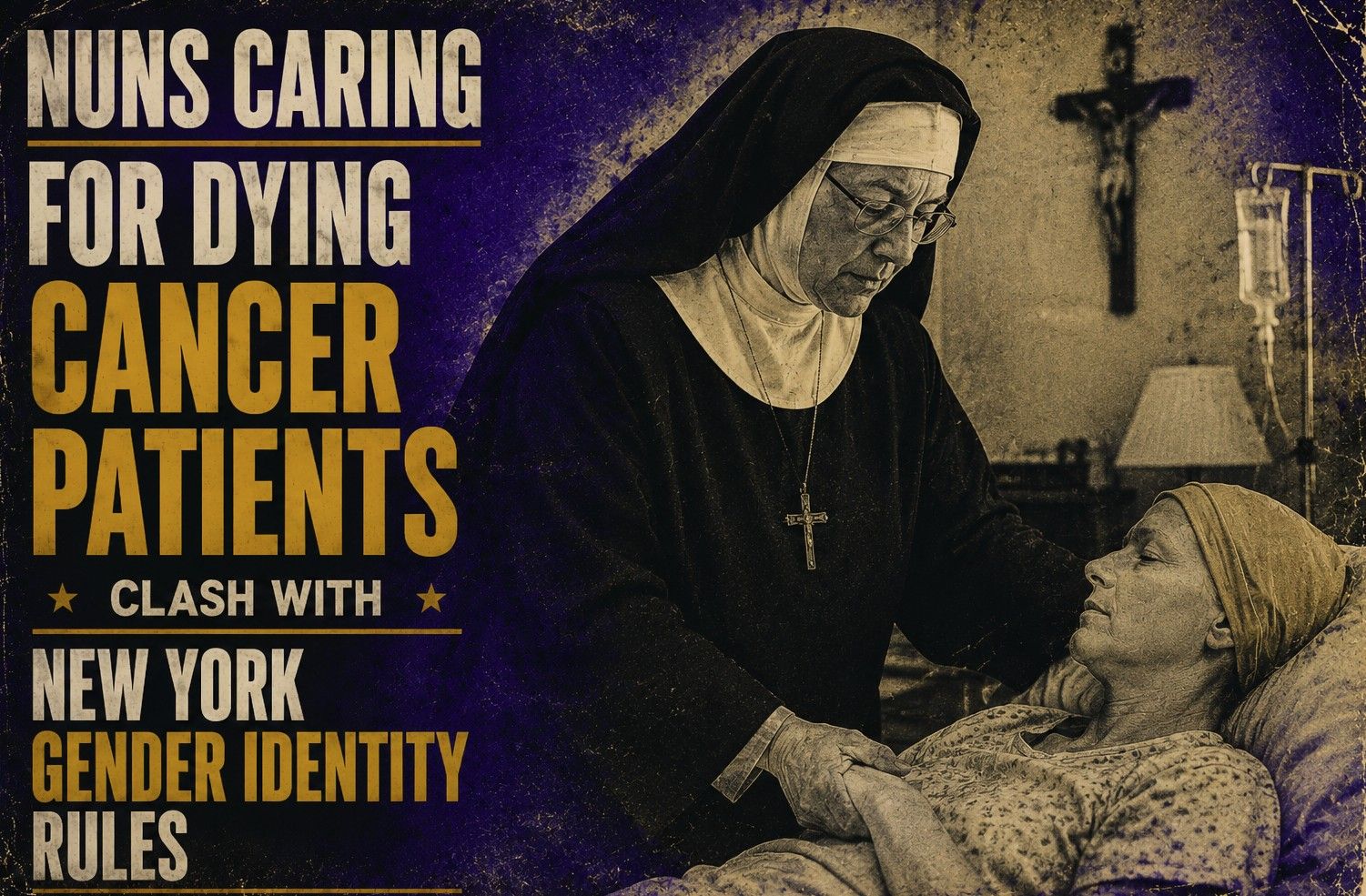
For more than a century, a small order of Catholic nuns has quietly cared for dying cancer patients who had nowhere else to go. No headlines. No cable-news tours. Just women dedicating their lives to comforting people in the final chapter of life. Now those same nuns find themselves in a legal battle with the State of New York over gender identity rules, pronouns, room assignments, and government mandates.
If that sounds like the beginning of a satire article, you’re not alone.
The Justice Department has now stepped into the fight on the side of the Dominican Sisters of Hawthorne, who operate Rosary Hill Home in Westchester County.
According to court filings, the sisters argue that New York’s long-term care regulations would force them to violate deeply held religious beliefs in order to keep their facility operating.
Assistant Attorney General Harmeet Dhillon weighed in, “States should take notice that they cannot require Americans to abandon their religious beliefs in the name of woke gender ideology.” She continued: “For more than a century, the Dominican Sisters of Hawthorne have provided free palliative care to indigent cancer patients in their last days. New York’s law would force these religious women to choose between their faith and their license if they wish to continue serving the dying.”
The Dominican Sisters say the state is demanding compliance with policies involving gender identity, preferred pronouns, room assignments, facility access, staff training requirements, and public notices affirming adherence to the state’s rules.
According to the lawsuit, failure to comply could expose the facility to fines, licensing consequences, and other penalties. The sisters argue that those requirements directly conflict with Catholic teachings.
New York sees things differently. The state says the rules exist to ensure residents are protected from discrimination and treated with dignity regardless of sexual orientation, gender identity, or HIV status.
On paper, both sides insist they’re protecting vulnerable people. The disagreement is over how that protection should work. And that’s where the political fireworks begin.
One detail from the lawsuit is especially striking. The sisters point out that over a four-year period, state records reportedly show zero complaints filed against their facility while thousands of complaints were filed against nursing homes elsewhere in New York.
That doesn’t settle the legal question. But it does raise an obvious one. If an organization has spent generations caring for terminally ill patients without controversy, should government officials be eager to force major operational changes on it? Or should accommodations be made? That’s ultimately what this lawsuit is about. Not whether transgender individuals deserve respect. But whether government can compel a religious ministry to adopt practices it believes violate its faith.
And that’s a question courts have increasingly wrestled with over the last decade. From religious adoption agencies to faith-based schools to healthcare providers, similar disputes have surfaced across the country as governments attempt to balance anti-discrimination policies with constitutional protections for religious liberty.
The Supreme Court has repeatedly weighed in on related disputes, often siding with religious organizations when government mandates substantially burden religious exercise. Which helps explain why this case is drawing national attention.
These women have devoted their lives to caring for people who are literally dying. And somehow we’ve arrived at a point where the public conversation revolves around pronoun policies instead of the extraordinary work they’re doing.
That’s not a criticism of anyone involved. It’s just an observation about where our culture is. A hundred years ago, Americans would have looked at these sisters and seen caregivers. Today, many people first see participants in a political controversy. That’s quite a shift.