Filmmaker Sophia Maddox spent years wondering about the grandfather her father had never known.
The answer arrived through a genealogy search, and it was about as far from a heartwarming family reunion as anyone could imagine.
Her grandfather was Charles Manson.
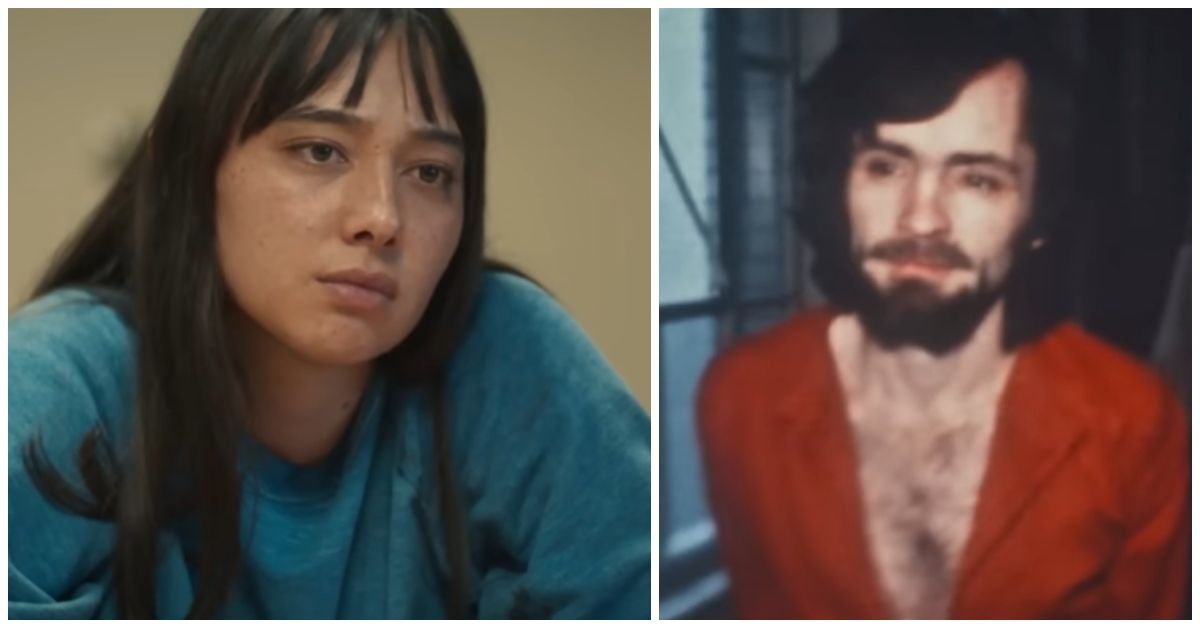
Maddox, 26, said she was overwhelmed when she and her father, Daniel Arguelles, confirmed that Arguelles was the biological son of the infamous cult leader connected to the 1969 Tate-LaBianca murders.
A DNA test in 2022 revealed Charles Manson was filmmaker Sophia Maddox’s biological grandfather.
Her new documentary uncovers “eerie” parallels between Manson and the father who raised her. pic.twitter.com/1cOjwQecjS
— Bored Panda (@boredpanda) July 23, 2026
“I was obviously very devastated,” Maddox told the New York Post. She described herself as “dumbstruck” and “sobbing” as the news sank in.
“My dad was just rubbing my back and holding me, and telling me we were nothing like him,” she said. “But it was a little traumatic.”
That discovery became the heart of the new Hulu documentary, “My Grandfather Charles Manson,” co-directed by Maddox and Alexandra Orton.
The film follows Maddox as she investigates Manson’s history, interviews people who knew him and wrestles with what—if anything—his legacy means for her identity.
“I come from a murderer,” she says near the beginning of the film. “Who the f— would accept me?”
Arguelles was born in 1959 after his 17-year-old mother, Darlene, reportedly encountered Manson at a bus stop. Maddox said Manson was using the name “Charlie Dear” at the time and that the pair had a brief relationship lasting one or two nights.
The genealogy search initially connected Arguelles with a previously unknown half-brother, Michael Brunner, another acknowledged son of Manson. Subsequent testing reportedly used genetic material obtained from Manson’s estate and produced a 99.9999% probability that Manson was Arguelles’ father.
Maddox said her father was so shaken by the discovery that he waited two months before telling her. “When my dad found out, he couldn’t bring himself to tell me for two months because it was so dark,” she told The Guardian.
The documentary includes interviews with former Manson associate Lynette “Squeaky” Fromme and prosecutor Stephen Kay, while also retracing Manson’s childhood, institutionalization and criminal history.
Maddox said examining the abuse and instability in Manson’s early life should not be confused with excusing the atrocities committed under his direction. “I don’t believe that facing what his life was is justifying any actions,” she told the Post. “I think to end cycles of abuse, you have to look at the root of it.”
That distinction became central to the film: Maddox wanted to understand whether evil could be inherited, or whether what passed through the generations was instead trauma, fear and emotional instability.
Her conclusion was that blood does not dictate character.
Her father expressed a similar conflict in the documentary. “I never knew him, but I know him,” Arguelles said of Manson. “I am him, but I’m not him.”
Maddox has also spoken about concerns over Manson’s history of mental illness and what that could mean if she has children. Manson received various psychiatric diagnoses during his lifetime, although experts differed over the precise nature of his condition.
Maddox said therapists have cleared her of mental-health disorders, but she acknowledged the concern may never disappear entirely.
If future children inherited issues such as depression, anxiety, bipolar disorder or hypomania, she said, “I do have a hopeful heart that we have tools, and we have therapists.”
She added that they would have “the support that they need.”
The most painful consequence of the project may have been the deterioration of Maddox’s once-close relationship with her father.
The two clashed during filming over how deeply she should continue investigating the family history, and they are now estranged.
Still, Maddox said she hopes he eventually sees the documentary and recognizes that it portrays not only the darkness he inherited, but the good he passed along.
“I hope he feels seen,” she told The Guardian. “I also hope he’s proud of me, that I’ve dug deep into our generational trauma, our mental health generational trauma as well, and I hope he can see that if I am able to get past it, he can too.”
DBS WIRE SOURCES:
- New York Post — Filmmaker Sophia Maddox ‘devastated’ and ‘dumbstruck’ to learn her grandfather was Charles Manson
- Hulu — Watch “My Grandfather Charles Manson”
- Los Angeles Times — Discovering Charles Manson was her grandfather plunged her into crisis: ‘I come from a murderer’
- The Guardian — ‘I come from a murderer’: The woman who found out Charles Manson was her grandfather
- People — 5 bombshells from Hulu’s “My Grandfather Charles Manson”
- People — L.A. woman makes shocking discovery: My grandfather was Charles Manson
- Time — “My Grandfather Charles Manson” and the DNA test behind the family discovery