BS BRIEF:
- Colin Gray was sentenced Thursday to 15 years in prison after becoming the first parent in the United States convicted of second-degree murder over a mass shooting committed by his child. The prosecution had requested an 80-year sentence, while the defense sought 10 years behind bars followed by probation.
- A jury found that Gray criminally disregarded escalating warning signs surrounding his son, Colt, yet gave him the AR-15-style rifle later used to murder two teachers and two 14-year-old students at Apalachee High School. Evidence included the teenager’s fixation on school shooters, deteriorating mental health and continued access to firearms and ammunition.
- The verdict does not criminalize gun ownership or make every parent responsible for a teenager’s secret conduct; it establishes that adults may face severe consequences when they knowingly put deadly weapons within reach of an obviously dangerous child.
FATHER WHO ARMED GEORGIA SCHOOL SHOOTER GETS 15 YEARS FOR IGNORING THE WARNING SIGNS
Colin Gray did not walk into Apalachee High School and pull the trigger. But a Georgia jury concluded that he helped place the murder weapon into the hands of the deeply troubled 14-year-old who did.
Now he is going to prison.
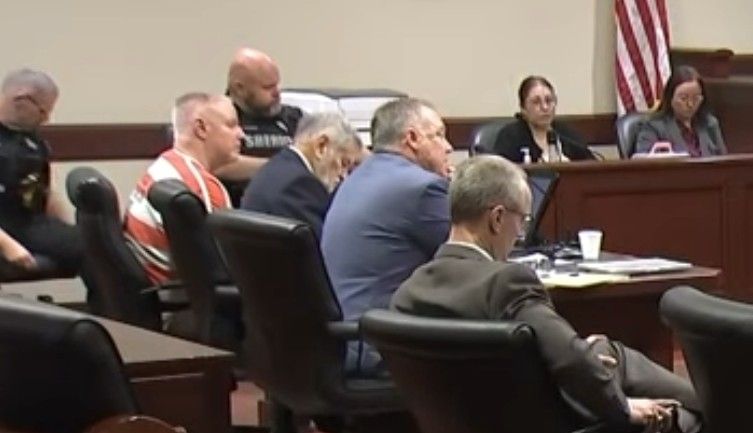
Barrow County Superior Court Judge Nicholas Primm sentenced Gray, 55, to 15 years behind bars Thursday for his criminal role in the September 4, 2024, massacre committed by his son, Colt Gray.
A jury convicted the elder Gray in March on 27 charges, including second-degree murder and involuntary manslaughter. The historic verdict made him the first American parent convicted of murder in connection with a mass school shooting carried out by his child.
Primm told Gray that his punishment arose not from sharing his son’s murderous intent, but from a catastrophic series of parental decisions made while the danger became increasingly difficult to ignore.
“The warning lights were flashing brighter and brighter,” the judge said. “It is clear you failed as a parent.”
Primm emphasized that the father’s criminal responsibility remained legally distinct from the son’s calculated violence.
“The weight of your crimes is tethered and tied to the acts of someone else, your son,” he said.
That distinction helps explain why Primm rejected the prosecution’s request for an effective 80-year sentence and instead imposed concurrent terms totaling 15 years.
The judge described the case as a novel and divisive prosecution involving a new legal phenomenon: parents being criminally charged over mass violence committed by their children. He said Gray’s behavior amounted to criminal negligence, not the malicious purpose displayed by Colt.
Colt Gray, now 16, received an entirely different sentence two days earlier. The teenager pleaded guilty to all 55 counts against him and was sentenced to life in prison without the possibility of parole.
Judge Primm cited the shooter’s elaborate planning, obsession with previous massacres, desire for notoriety and lack of remorse in denying him any future chance of release. On September 4, 2024, Colt carried the rifle into Apalachee High School in Winder, Georgia, and opened fire.
He murdered teachers Richard “Ricky” Aspinwall, 39, and Cristina Irimie, 53. He also killed students Mason Schermerhorn and Christian Angulo, both 14. Another teacher and eight students were injured, seven by gunfire.
The younger Gray was 14 years old.
Prosecutors did not argue that his father knew the precise date, place or details of the planned attack.
They argued something more specific: Colin Gray knew his son was mentally deteriorating, fascinated with mass shootings and potentially dangerous, yet continued buying him firearms and allowed him access to the rifle and ammunition. The weapon was reportedly given to Colt as a Christmas present in December 2023. That gift came months after law-enforcement officers had visited the family home to investigate online threats about carrying out a school shooting.
Colt denied making the threats. His father told investigators that the boy had access to hunting firearms but said he had been taught about gun safety and did not have unrestricted access.
The investigation did not produce charges at the time. Prosecutors later argued that the visit should have caused any reasonable parent to exercise extraordinary caution. Instead, Colin Gray purchased the semiautomatic rifle and additional accessories for his son. Trial evidence portrayed a teenager whose troubles were becoming more visible.
Investigators found material in Colt’s room reflecting an intense fixation on mass killers, including a shrine devoted to the gunman responsible for the 2018 massacre at Marjory Stoneman Douglas High School in Parkland, Florida. Digital evidence showed repeated interest in mass shootings, weapons and violence. Prosecutors also presented evidence that Gray kept buying his son guns and related equipment despite those behavioral concerns.
Colt’s mother had warned that the boy needed psychiatric help and urged that firearms be secured, according to reporting on the trial and sentencing. The judge said Colin Gray had several straightforward options available. He could have locked up the firearms. He could have removed the ammunition. He could have stored the weapons outside the home. He could have sought emergency mental-health intervention.
Had Gray taken those steps, Primm told him, “you wouldn’t be here today.”
The defense argued that Colt concealed the depth of his violent intentions and that his father did not receive the same unmistakable warnings involved in the prosecution of James and Jennifer Crumbley, whose son murdered four students at Michigan’s Oxford High School in 2021. Colin Gray maintained that the family used guns for hunting and bonding and that he did not knowingly give his son unsupervised access.
His attorneys asked for 10 years in prison followed by 10 years of probation. The prosecution demanded 80 years, arguing that four people died because Gray continually chose denial over basic responsibility.
Primm landed far below the prosecution’s recommendation but above the defense request. He imposed a sentence comparable in length to those received by the Crumbleys, who were each sentenced to 10 to 15 years after separate involuntary-manslaughter convictions.
The Georgia case, however, went further. The Crumbleys were convicted of involuntary manslaughter. Colin Gray was convicted of second-degree murder under Georgia law, which can apply when a person causes a death through cruelty to a child even without intending to kill. Prosecutors argued that providing gun access to an unstable minor and failing to secure the weapons constituted that underlying criminal negligence.
The jury agreed.
The conviction does not establish that every gun-owning parent will be criminally liable when a teenager secretly commits violence. The facts presented in court were unusually severe and cumulative: an earlier investigation into shooting threats, a troubled child’s fascination with mass killers, pleas for mental-health intervention, repeated firearm purchases and unsecured access to the eventual murder weapon. That combination made this far more than a tragic failure to detect a hidden plan.
The state’s case was that Gray repeatedly saw smoke and continued supplying gasoline. Before the sentence was imposed, relatives of those murdered described the price of those decisions.
Shayna Aspinwall, widow of slain teacher Ricky Aspinwall, told the court that she now suffers from post-traumatic stress disorder while raising the couple’s two daughters without their father. “Our daughters must grow up without their father,” she said. “They will miss his guidance, his encouragement, his hugs and all the milestones he should have been here to witness.” Birthdays, graduations, weddings and ordinary family moments, she said, will forever be marked by his absence.
Aspinwall acknowledged that Colin Gray was not the person who fired the shots, but argued that his recklessness helped make the killings possible. Her husband was an assistant football coach and mathematics teacher who reportedly died while trying to protect his students. Other relatives described permanent grief, anxiety, shattered families and the knowledge that the attack might have been prevented by an adult willing to act.
The victims’ statements were not merely requests for vengeance against a grieving father. They reflected anger at the gap between what Gray knew and what he did.
The sentence arrives as Apalachee High School prepares to begin another academic year under the shadow of the massacre.
Friday is the school’s first day back for the new term. Students and teachers will return carrying memories that no courtroom ruling can erase.
DBS WIRE SOURCES:
- Fox News — Father who bought AR-15 for Georgia school shooter learns fate in first-of-its-kind conviction
- Atlanta Journal-Constitution — Apalachee High shooter’s dad gets 15 years in prison
- Associated Press — Colin Gray, who gave his son the gun used in Georgia school shooting, is sentenced to 15 years
- Reuters — Father of Georgia school shooter sentenced to 15 years in prison
- ABC News — Father sentenced to 15 years in Georgia high school shooting carried out by teenage son
- Atlanta Journal-Constitution — Apalachee High School shooter gets life without parole
- Reuters — Life without parole for Georgia teen who killed four in 2024 school shooting
- CBS News Atlanta — Digital evidence reveals ignored red flags before Apalachee shooting
- The Trace — Georgia father sentenced to 15 years for role in son’s school shooting