The WNBA’s task force met Wednesday amid mounting demands that the league establish clear eligibility rules for transgender athletes. It emerged without a policy, without a definition—and with a lecture for the people asking questions.
“Today’s meeting covered a wide range of topics, including ongoing discussions on transgender athletes and the continued hate and vitriol directed at players online,” the league said in a statement.
“We will continue to engage all league stakeholders in the coming weeks and months,” it continued. “There are no immediate eligibility matters affecting the WNBA, and we strongly denounce the bad-faith efforts to use these topics to demean or marginalize others.”
Translation: Nothing to see here, more meetings are coming, and please stop noticing the hole in our rulebook.
The virtual meeting included WNBA team presidents and general managers but produced no immediate change to player-eligibility standards, ESPN reported.
The league is correct that it has no current transgender eligibility case involving an active player. But that is hardly a reason to postpone settling the rule. Fire departments do not wait for the building to burn before deciding where to keep the hoses.
The WNBA’s collective bargaining agreement states that “only players who are women are eligible to play in the WNBA.” Yet the more than 400-page agreement does not define “women,” establish a biological-sex standard or spell out separate transgender eligibility requirements.
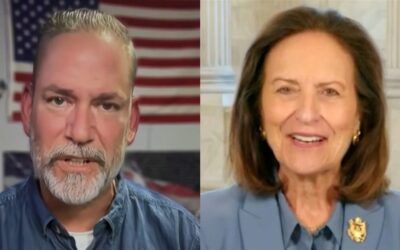
That omission was thrown into the spotlight after former NBA players Enes Kanter Freedom and Royce White announced bids to enter the 2027 WNBA Draft.
Kanter Freedom, a 6-foot-10 former NBA center, submitted a letter declaring himself for the draft and posted a video captioned: “Let ‘The Transition’ to the @WNBA begin.”
“If simply declaring who you are is all that’s required, then I meet every single requirement necessary to compete in the WNBA,” he argued.
White similarly said he identifies as a woman “for purposes of basketball” and threatened a discrimination lawsuit if the league rejects him.
Both announcements are plainly designed to force the WNBA to confront the consequences of its undefined standard. Merely declaring for a draft does not establish that either man is legally eligible, nor does it guarantee the league will accept their applications. But the stunt has succeeded in exposing the unanswered question.
If the WNBA believes Kanter Freedom and White are ineligible, it should be able to explain precisely why. That is what rules are for.
The controversy intensified after Indiana Fever guard Sophie Cunningham publicly defended reserving women’s sports and locker rooms for biological females.
“I don’t think biological men should be playing in women’s sports,” Cunningham said during an ESPN appearance. “I think people should be able to live their life. But when it comes to sports, that’s where I draw the line.”
Cunningham added that her concern extends beyond professional basketball.
“I’m talking about our young girls,” she said. “We need to protect them.”
President Donald Trump and Vice President JD Vance praised Cunningham for speaking out, while other WNBA players and coaches accused critics of using transgender people as political targets.
The Women’s National Basketball Players Association then released a statement celebrating the league’s “different lived experiences, cultures, lifestyles and opinions” while insisting players would not be used as “political pawns.”
It never answered the eligibility question either.
The political dispute became tangled with an ugly on-court incident Saturday when Chicago Sky guard DiJonai Carrington struck Cunningham in the head and neck from behind during a fast-break layup.
Officials determined that the play involved “windup, impact and follow-through,” upgraded the foul to a Flagrant 2 and ejected Carrington.
Carrington later posted “WHITE PRIVILEGE @indianafever” on social media. She subsequently denied that the message referred to the foul ruling or her ejection.
“I never said that my ejection was white privilege,” Carrington told reporters. “Everybody assumed that’s what I was talking about.”
Carrington also insisted the blow was accidental.
“I was trying to make a play on the ball,” she said. “It was never intentional.”
Fever coach Stephanie White initially said she did not believe Carrington intended to injure Cunningham, prompting criticism from fans and Indiana Lt. Gov. Micah Beckwith. White later called the foul “egregious” and said she had not seen the entire play before her first remarks.
Before Indiana’s Tuesday victory over the New York Liberty, White lashed out at those questioning her response.
“I will always stand behind our players,” she said. “Everybody else can go to hell.”
Caitlin Clark also criticized fans who booed White, saying the coach had the locker room’s support.
All of that drama, however, remains separate from the underlying policy question: Who is eligible to compete in a professional league explicitly created for women?
Other governing bodies have answered it. World Athletics, World Aquatics and cycling’s UCI have adopted biological eligibility standards for women’s competition. Their policies can be debated, challenged and revised—but at least athletes know what the rules are.
The WNBA has chosen another round of stakeholder conversations.
Women built this league, women play in it, and women’s competition is its entire reason for existing. If its executives cannot defend that foundation without hiding behind accusations of hate, they are unfit to protect it.
WIRE SOURCES:
- OutKick: Clueless WNBA attacks “bad-faith” fans who don’t want biological men ruining women’s sports
- New York Post: WNBA slams “bad-faith efforts” amid transgender-athlete debate
- ESPN: WNBA task force discusses transgender athletes amid furor
- OutKick: Enes Kanter Freedom officially declares for the 2027 WNBA Draft
- New York Post: Royce White announces WNBA Draft bid
- Associated Press: Carrington denies linking her ejection to “white privilege”
- WNBPA: Collective bargaining agreement