BS BULLETIN:
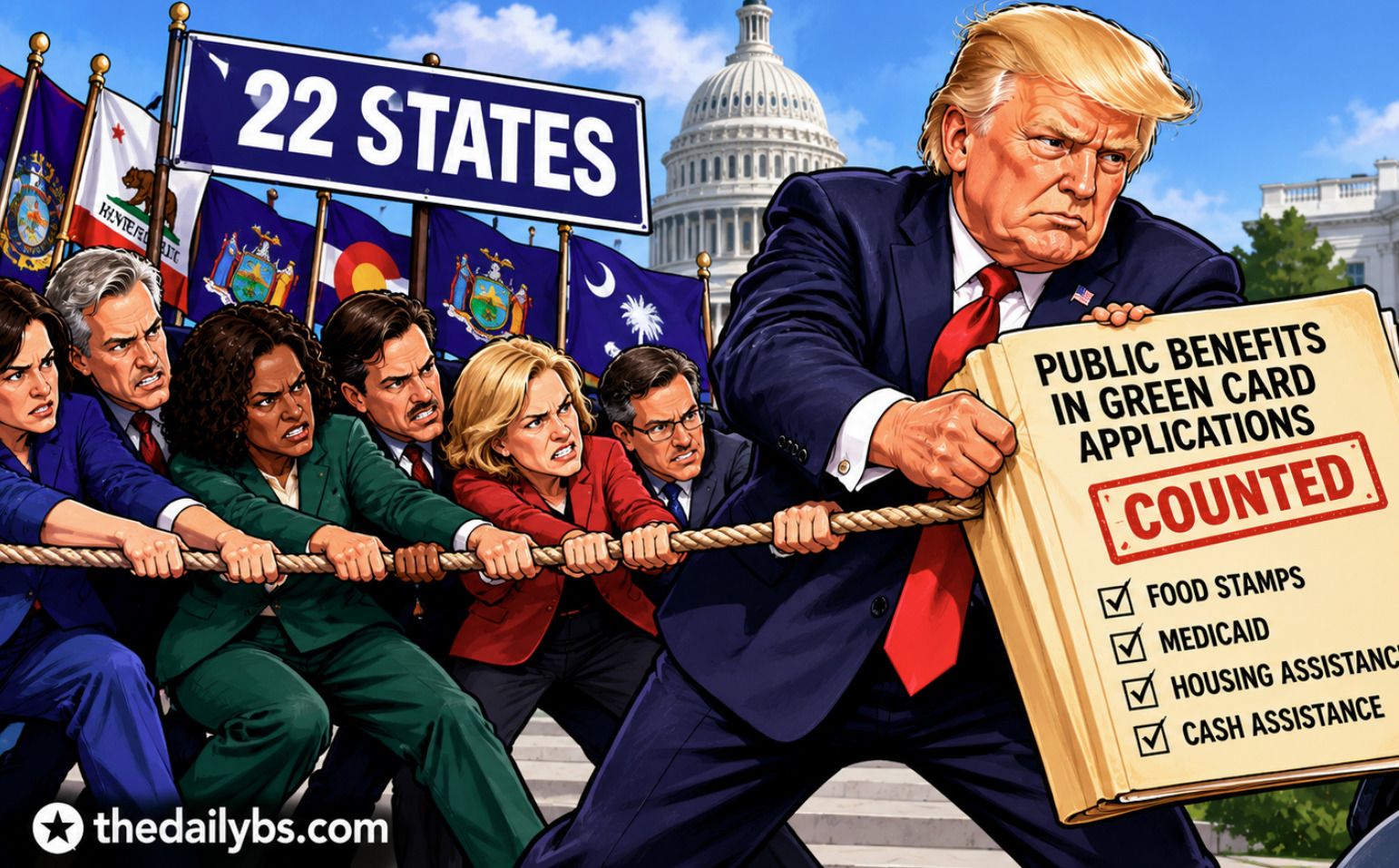
- Twenty-two Democratic-led states and Washington, D.C., are suing to block the Trump administration’s new “public charge” rule.
- The policy gives immigration officers broader discretion to consider an applicant’s use of public benefits when deciding whether to grant a green card.
- DHS mocked the backlash, saying opponents are apparently worried noncitizens might remove themselves from American welfare programs.
The battle over whether immigrants seeking green cards should be judged partly on their reliance on taxpayer-funded benefits has officially become a multi-state legal war.
A coalition of 22 Democratic-led states and Washington, D.C., filed suit Monday seeking to block the Trump administration’s new “public charge” rule before it takes effect Friday.
New York Attorney General Letitia James is leading the challenge alongside California Attorney General Rob Bonta and Illinois Attorney General Kwame Raoul.
A separate lawsuit was filed by New York City, Chicago, San Francisco, Seattle and other local governments.
At issue is an old concept in American immigration law: The “public charge.”
Federal immigration law has long allowed the government to deny admission or permanent residency to certain immigrants considered likely to become primarily dependent on government support.
The argument is over what counts. Under Biden administration rules adopted in 2022, officials generally focused on cash assistance for income maintenance and government-funded long-term institutional care.
The Trump administration’s new policy goes considerably further. Immigration officers would have broader discretion to consider noncash assistance such as Medicaid and food benefits when evaluating whether someone seeking permanent legal status is likely to become a public charge.
The rule also allows officials in certain circumstances to consider benefits received by family members whom the applicant is legally obligated to support.
And that’s where the states say Trump has gone way too far. James argues the policy could leave immigrant families afraid to use government programs for which they are legally eligible. “This rule preys on that fear,” she said, arguing that families could be forced to choose between obtaining food or health care and protecting their immigration prospects.
The states offered a particularly striking example. An immigrant parent’s green-card application could potentially be affected by benefits legally received by his or her American-citizen child, such as state-provided health insurance.
The Trump administration sees the issue rather differently. DHS responded to the lawsuits with considerably less legalese. “Let’s get this straight, sanctuary states are terrified they will lose federal funds because hundreds of thousands of illegals and noncitizens might remove themselves from American welfare programs,” the department said. “We’re shaking in our boots over this supposedly terrible outcome.”
The states argue that isn’t what the rule will actually accomplish. Their lawsuit says frightened families will drop out of assistance programs, including families containing U.S. citizens who remain legally entitled to benefits. They also argue the policy will shift costs onto hospitals, schools and state governments.
DHS itself estimates that disenrollment or people declining to enroll could reduce federal Medicaid and CHIP payments to states by roughly $4.05 billion annually and SNAP transfers by another $1.02 billion.
The legal coalition argues the administration’s rule violates the Administrative Procedure Act, exceeds DHS’s authority and improperly expands the meaning of “public charge.”
There’s history here, too. Trump attempted a similar expansion during his first administration in 2019. Democratic states sued then as well.
The Biden administration eventually abandoned that policy and replaced it with the narrower 2022 standard.
Now Trump is back. So is the public-charge rule. And so are the lawyers.
MY QUICK TAKE:
Twenty-two states and D.C. have rushed to court over the proposition that using taxpayer-funded benefits shouldn’t necessarily hurt your chances of getting permanent residency.
DHS’s response basically amounts to: Wait — that’s the part you’re suing us over?
“We’re shaking in our boots” may not make the official legal brief, but somebody at Homeland Security clearly had their coffee Monday morning.
DBS WIRE SOURCES:
- The Hill — Democratic-led states sue Trump administration over public charge rule on green cards
- Associated Press — States, cities sue over Trump rule seeking to deny green cards to immigrants using public benefits
- California Attorney General — Bonta sues to block Trump administration’s new public charge rule
- Illinois Attorney General — Raoul sues to block Trump administration’s public charge rule
- Los Angeles Times — California, others challenge Trump effort to deny green cards over use of public aid