THE DAILY BS: HOW MUCH CAN YOU HANDLE?
SPARE ME THE BS (I’ve got things to do)
- Elon Musk warned Friday that a Democratic sweep of the White House, House and Senate in 2028 could turn America into what he called a “permanent one-party state.”
- He identified three potential moves: statehood for Washington, D.C., and Puerto Rico; broad legalization of immigrants living illegally in the United States; and expanding the Supreme Court.
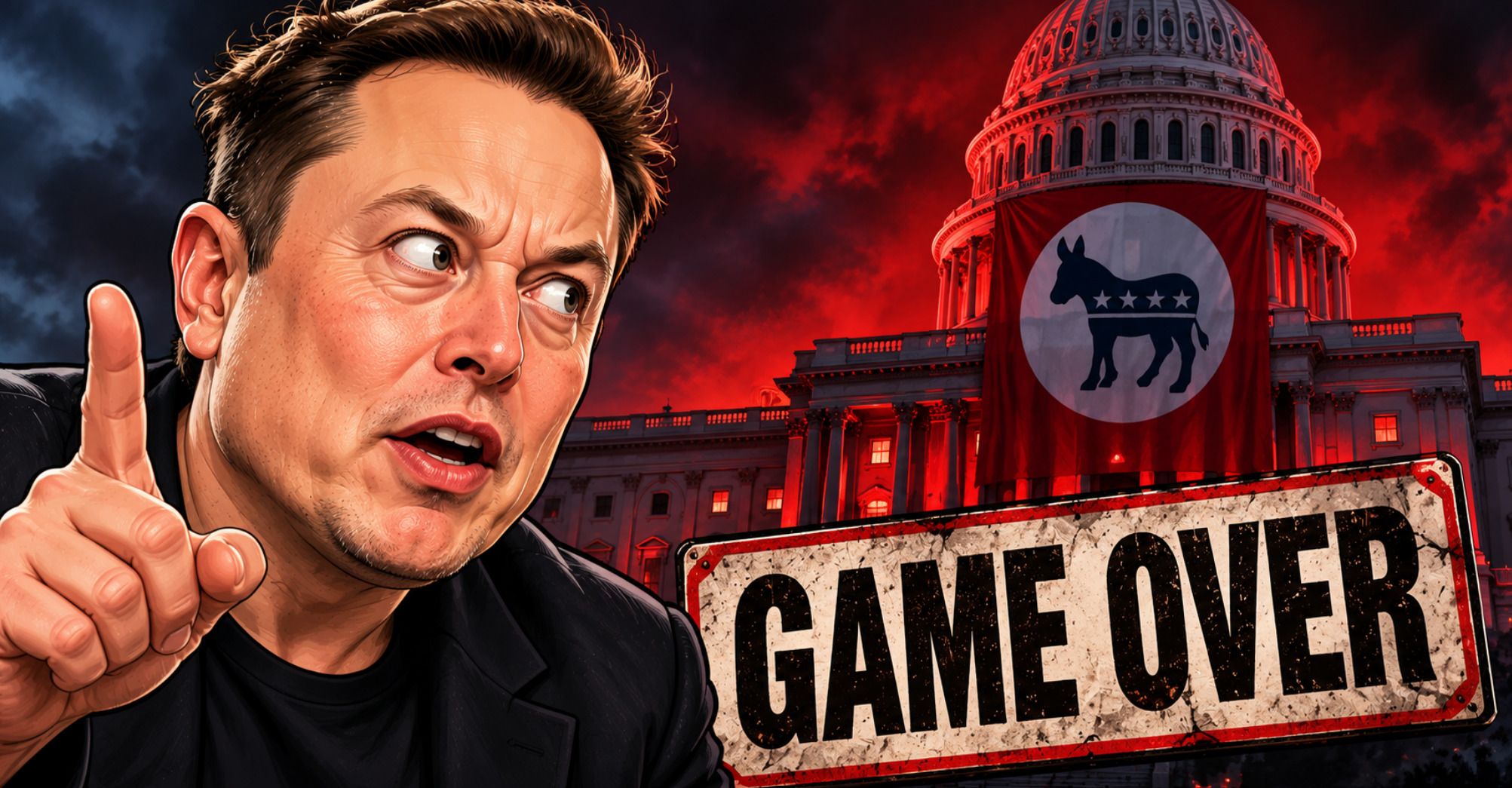
- Musk argued that 51 Republican senators in 2029 would prevent that scenario, declaring in a separate post, “It would be game over for America.”
LAY IT ON ME (I’ve got time)
Elon Musk has a warning about the next two election cycles, and he’s not exactly easing America into it.
The billionaire Tesla and SpaceX chief took to X Friday with a three-part prediction about what could happen if Democrats eventually control the White House and both chambers of Congress.
His conclusion? “It would be game over for America.” Well, nobody can accuse Musk of burying the headline.
With the November 3 midterms approaching, Musk is looking beyond Tuesday and warning about the possibility of Democrats winning complete control of Washington after the 2028 presidential election.
“My biggest concern is that if there is a clean sweep by Democrats of the House, Senate and Presidency in 2028,” Musk wrote, before outlining three changes he believes would follow.
First, he predicts Democrats would make Washington, D.C., and Puerto Rico states to increase their representation in the Senate. Second, he fears an immigration overhaul involving broad legalization of people currently living in the country illegally. Third, Musk predicts Democrats would increase the number of Supreme Court justices to obtain an ideological majority.
That’s a fairly ambitious Washington renovation project. Two new states, a sweeping immigration law and a larger Supreme Court, all before the paint dries on the next administration.
“This would result in America becoming a permanent one-party state and the end of democracy in any meaningful sense of the word,” Musk wrote.
And unlike some celebrity political messages involving vague appeals to hope and assorted inspirational adjectives, Musk supplied a specific number: fifty-one.
“All that is needed to ensure this doesn’t happen is 51 Republican senators in 2029,” Musk declared. He argued that maintaining that Senate majority should be the decisive consideration for voters concerned about his scenario.
A Senate majority of 51 can prevent legislation from passing, assuming its members remain united. But passing most contested legislation under existing Senate rules generally requires 60 votes to end debate.
Even a party controlling both houses of Congress and the presidency cannot guarantee every member will support an ambitious legislative agenda.
Still, the institutional changes Musk identified are not imaginary subjects. Democratic lawmakers have supported D.C. statehood, although Puerto Rico’s political-status debate includes competing positions on statehood, independence and other arrangements.
Proposals to expand the Supreme Court have also been introduced in Congress. Democrats have debated various forms of legalization for undocumented immigrants, with substantial disagreements over eligibility and border enforcement.
The difference is between proposals that have actually been advanced and Musk’s prediction that Democrats would enact all three to secure lasting political control. That prediction is his argument, not a confirmed program adopted by every Democratic candidate.
Musk is plainly treating the potential consequences as serious enough to justify an enormous political investment. He has become one of the largest individual financial supporters of Republican campaigns, pouring hundreds of millions into candidates and political organizations.
Recent reporting indicates his contributions for the 2026 election cycle have exceeded $400 million, including substantial funding for his America PAC. He also said Friday that he had voted early in Texas.
So this is more than a billionaire casually sharing thoughts between rocket launches. Musk is financially and publicly involved in the contest, and his latest message explains why he considers the Senate especially consequential.
Last week, Musk warned Democrats considering investigations into his government activities that he would fight back. “Live by the sword, die by the sword,” he wrote in response to reporting about potential congressional investigations.
Which suggests the billionaire’s relationship with Washington isn’t going to become any more relaxed after Election Day.
For Republicans, Musk’s latest warning centers on preserving a legislative check against a possible future Democratic administration. For Democrats, his post is another example of a wealthy, politically active technology executive predicting sweeping consequences from an opposing party’s election victories.
The underlying institutional questions are consequential regardless of the rhetoric: Who should determine the number of Supreme Court seats? What is the appropriate path for territories seeking statehood? And how much authority should a congressional majority have to reshape immigration law?
Those debates existed before Musk posted his warning, and they’ll continue after the ballots are counted.
But the world’s most prominent rocket entrepreneur has now put his political forecast in unmistakable terms. He sees a future Democratic sweep as a threat to the structure of American government.
And with one final post, he reduced the entire argument to five words: “It would be game over for America.” Washington has heard plenty of election warnings; this one arrived with a three-part blueprint, a 51-seat calculation and a billionaire determined to make himself heard.
DBS WIRE SOURCES (I have all day)
- Elon Musk on X — original October 30 post
- Elon Musk on X — game over follow-up
- Benzinga — October 30 reporting
- ANI / The Tribune — October 30 direct quotations
- AFP — Musk’s dispute over congressional investigations
- U.S. Senate — official voting and cloture requirements
- U.S. Supreme Court — official FAQ on Court size