

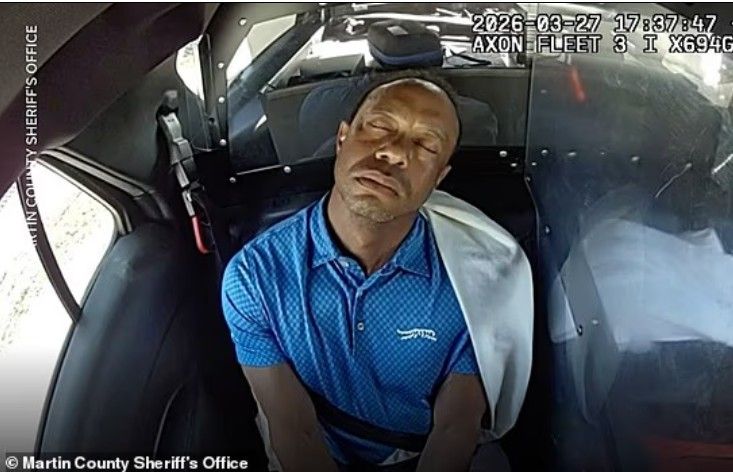
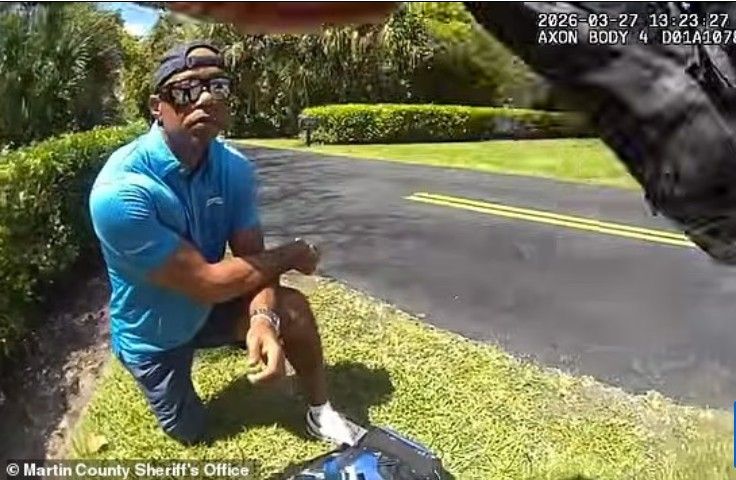
In newly released police footage, Tiger Woods is seen barely holding it together—kneeling on the roadside, glassy-eyed and unsteady—before later dozing off in the back of a patrol car after a chaotic high-speed crash in Florida.
The 50-year-old golf legend flipped his SUV on a quiet stretch of Jupiter Island Friday, allegedly while trying to pass another vehicle. What should’ve been a routine drive turned into a full-blown disaster—and the cameras caught every second of it.
In bodycam footage, a visibly shaken Woods offers a blunt explanation for the wreck:
“I looked down at my phone, and all of a sudden… boom!” That split-second distraction proved costly. Authorities say Woods clipped the back of a pressure-washer trailer before his Range Rover rolled onto its side.
The once-precise athlete—famous for laser focus under pressure—was now kneeling in the grass, struggling to stay upright as officers checked on him. When asked if he was comfortable, Woods muttered: “Yeah, yeah.”
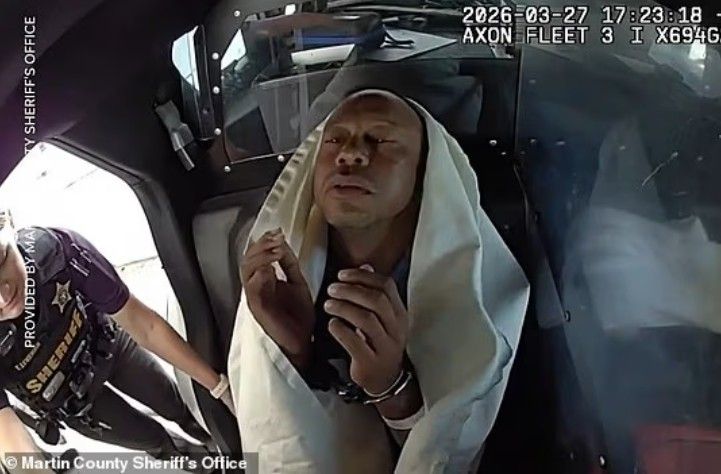
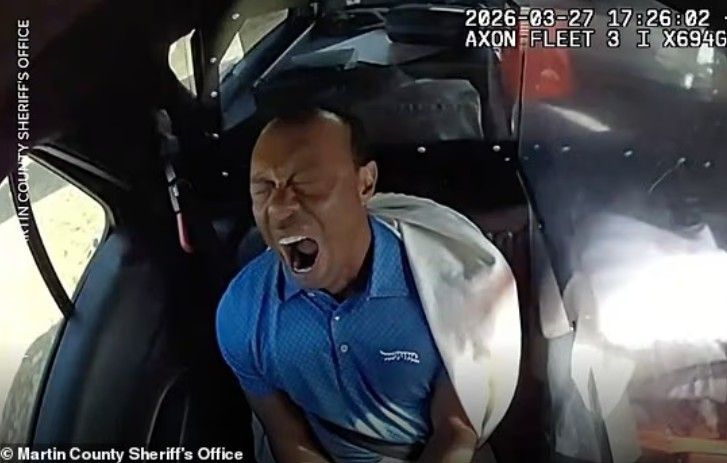
During a 17-minute ride to jail, Woods sat silently in the back of a squad car—yawning uncontrollably, hiccuping, and at one point appearing to fall asleep altogether. A blanket was draped over his head, adding to the surreal spectacle of a sports icon in visible distress.
Cops say they found two white pills in Woods’ pocket marked “M367”—identified as hydrocodone, a powerful opioid used for severe pain and known for its addictive risks.
When asked about medications, Woods gave a vague reply: “I take a few.” Authorities noted his “bloodshot and glassy” eyes and “extremely dilated” pupils—classic signs of impairment.
Despite agreeing to a breathalyzer—which reportedly showed no alcohol—Woods refused a urine test, leaving investigators unable to confirm exactly what substances were in his system. Woods now faces a trio of charges:
- Driving under the influence
Property damage
Refusal to submit to a lawful test
According to the arrest report, he was “limping and stumbling” during sobriety tests and deemed unfit to be behind the wheel. Martin County Sheriff John Budensiek didn’t mince words, saying Woods was driving at “high speeds” on a 30 mph residential road and showed clear “signs of impairment.”
This isn’t an isolated incident—it’s part of a troubling pattern. Woods has now been involved in multiple crashes over the years, including a terrifying 2021 wreck in California that left him with devastating leg injuries. Doctors at the time even considered amputation.
And this isn’t his first run-in involving impairment without alcohol. Back in 2017, Woods was found asleep at the wheel and later admitted to taking a dangerous mix of prescription drugs.
Even Donald Trump, a longtime friend, acknowledged the situation isn’t pretty. “I feel so badly. He’s got some difficulty. Very close friend of mine. He’s an amazing person. Amazing man. But, some difficulty.”
Woods—once the embodiment of discipline and dominance—is now once again at the center of a cautionary tale about personal responsibility, prescription drug use, and reckless decision-making.












Its called a concussion
jk
ds