

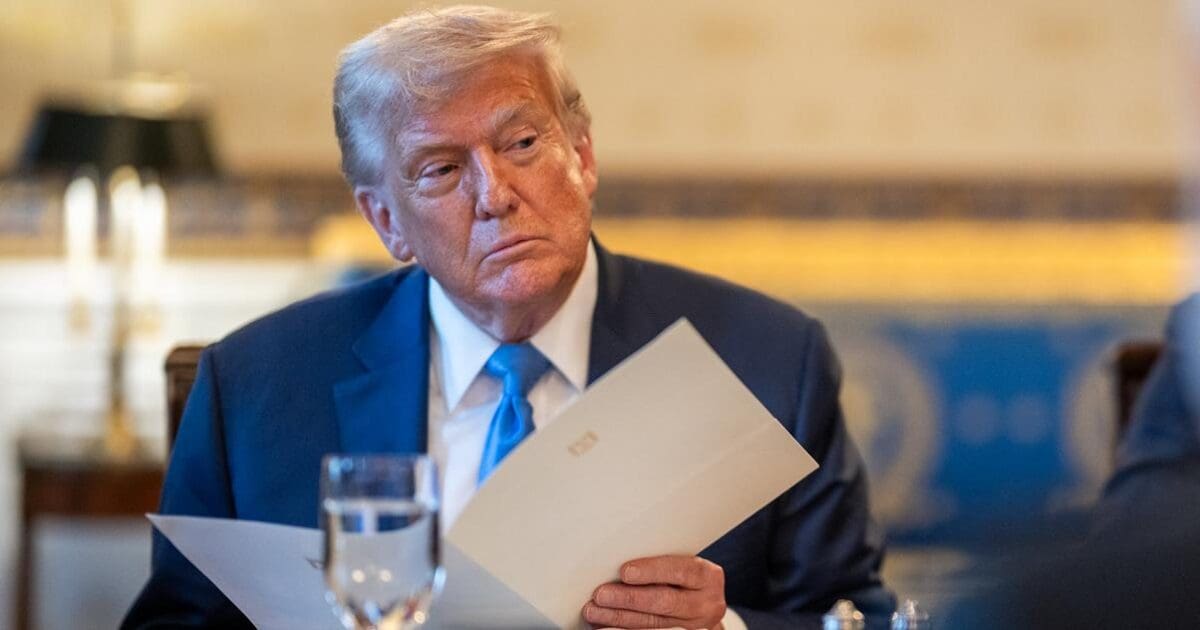
If Republican senators are feeling optimistic about the road to November, they’re doing a great job of hiding it.
Behind closed doors, GOP lawmakers are reportedly staring down polling numbers that they describe in anything but polite company. According to a Tuesday Senate Republican Conference briefing led by Sen. Tom Cotton (R-Ark.), Democrats are opening up a significant lead with independent voters — the very bloc that often decides who controls Washington when the dust settles.
And the reaction from inside the room? Not pretty.
One Republican senator didn’t bother sugarcoating it, calling the numbers “terrible” and “very bad,” after data showed Democrats running ahead of Republicans by double digits among independents with just months to go before the general election.
For a party that’s long relied on Donald Trump’s dominance with the GOP base, the warning lights are flashing in neon: base enthusiasm isn’t the same thing as general-election strength.
The deeper concern among senators is that independents — including some who backed Trump in 2024 — are increasingly focused on kitchen-table economics rather than political messaging out of Washington. One GOP senator put it bluntly: voters are worried about “their pocketbook, their wages, inflation,” and believe Republicans aren’t prioritizing those concerns.
Sen. Thom Tillis (R-N.C.), never shy about sounding alarms, went further, suggesting Republicans could be barreling toward a midterm outcome on par with the 2010 Democratic collapse — except this time, with the roles reversed and the GOP on defense.
Tillis also pointed to what he sees as politically questionable distractions, including a proposed taxpayer-funded White House ballroom project and a $1.8 billion “anti-weaponization” fund effort, arguing such moves could become liabilities in competitive races.
And then there’s the warning sign Republicans can’t ignore: recent electoral upsets even in deeply red territory. Tillis referenced a close Republican primary loss in Iowa despite Trump’s endorsement, calling it a signal that political backlash can still punch through even in GOP-friendly states.
“Who’s to say that if it was a reasonable tight vote, who’s to say the backlash to the payout fund wasn’t the reason for Feenstra’s loss,” he said, underscoring the party’s growing anxiety over message discipline heading into November.
Trump’s approval ratings are also becoming a talking point — and not in a good way for Republicans trying to hold swing territory. One recent Economist/YouGov poll showed 61 percent of Americans disapproving of his job performance, a number even GOP senators acknowledge is politically toxic outside the base.
“We have headwinds we need to recognize,” Tillis said. “I actually think right now the fundamentals are closer to the inverse of 2010.”
Farm-state Republicans are sounding similar alarms, pointing to rising fuel and fertilizer costs and what they say is growing frustration among agricultural voters. One senator noted that without movement on issues like a farm bill or year-round E15 ethanol sales, rural voters are feeling squeezed — and increasingly restless.
“There are a lot of farmers that are feeling the pressure,” the senator said, adding that Washington insiders underestimate just how competitive states like Iowa really are beneath their red-state reputation.
Another Iowa Republican, Sen. Joni Ernst (R-Iowa), echoed that sentiment, calling voters “very independent” and unpredictable depending on which issues dominate the moment.
“It shows the independence… whatever is speaking to the Iowa people at that moment is exactly how they’ll vote,” she said.
Privately, some Republicans say the party is stuck in a familiar bind: Trump remains a powerhouse with the base, but a liability in a general election where independents call the shots.









Independents and Libertarians are really Democrats, but ashamed to admit it. and