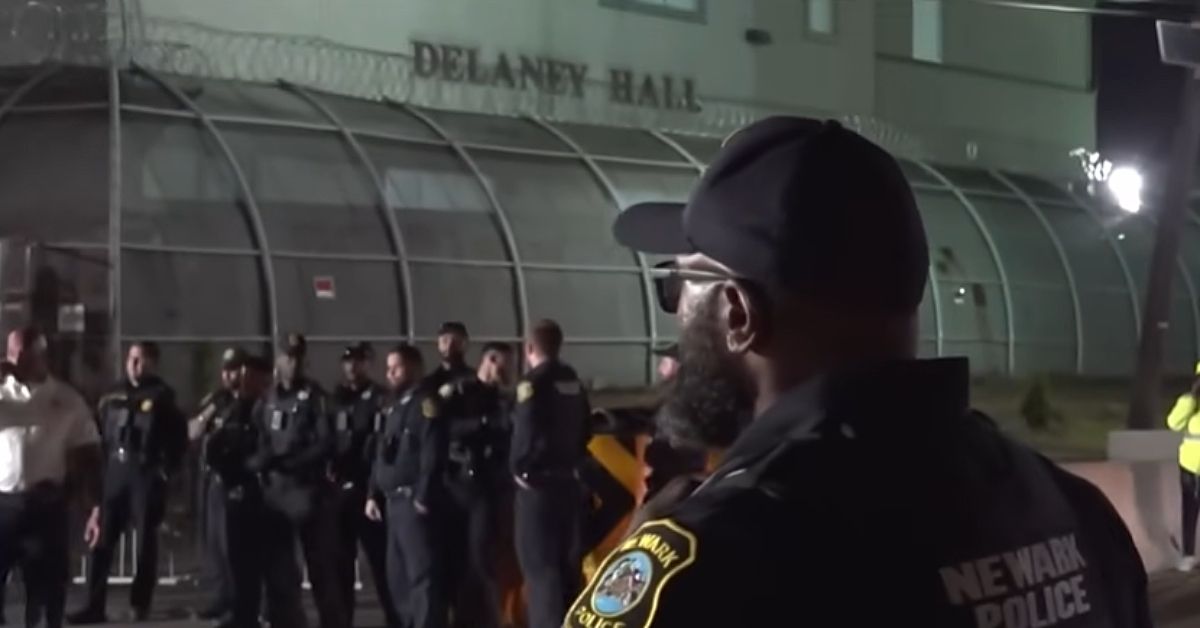
What unfolded outside the Delaney Hall ICE detention facility in Newark wasn’t just another “spontaneous protest,” if you believe a growing body of investigative reporting—it was something far more organized, far more coordinated, and far more intentional.
According to reporting tied to a Fox News Digital investigation, the June 3 flare-up began with a simple online trigger: an Instagram blast declaring, “CURFEW IS OVER. BACK TO DELANEY,” which rapidly ricocheted through activist ecosystems already circling the facility.
From there, the digital trail allegedly leads straight into encrypted Signal chats—private group threads where users with anonymous handles reportedly coordinated logistics, transportation, and protest gear like respirators, protective pads, goggles, and decontamination wipes. In other words: not your average “show up and chant” crowd.
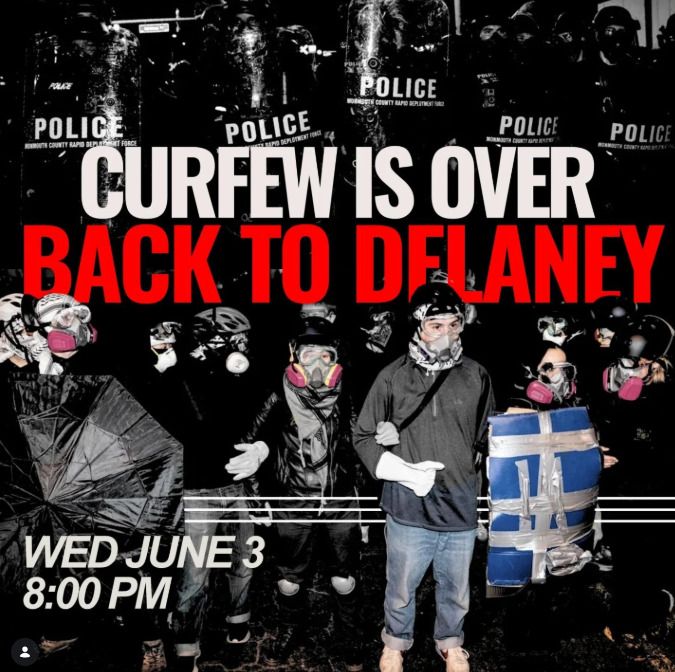
(Screengrab: Instagram)
At the center of the political storm is the Delaney Hall detention facility—run in connection with federal immigration enforcement and operated by contractor GEO Group—now turned into a magnet for escalating confrontation and national attention.
What critics call “grassroots activism,” others describe as something closer to an organized pressure network. The reporting points to roughly 100 aligned organizations, including heavyweight advocacy groups like the ACLU, and the Democratic Socialists of America—collectively backed, according to the analysis, by hundreds of millions in annual funding.
Supporters insist these are legitimate civil society operations exercising First Amendment rights. Critics, however, say the scale, funding, and coordination look less like organic protest and more like a parallel political infrastructure capable of rapid mobilization whenever immigration enforcement becomes a flashpoint.
Adding fuel to the controversy are claims about internal messaging documents—allegedly instructing activists on how to frame the narrative, including describing the facility with inflammatory terms and urging coordinated language shifts around detainees and arrests. The intent, opponents argue, is not just protest—but message discipline on a mass scale.
DELANEY HALL 100: Fox News Digital investigation reveals network of roughly 100 groups with $825 million in combined annual revenue coordinating Newark ICE protests through encrypted Signal chats, strategic comms documents and military-style supply operations.
The groups —… pic.twitter.com/AlRP0xufVU
— Fox News (@FoxNews) June 4, 2026
Inside the Signal chats, the tone reportedly shifts quickly from political sloganeering to logistics. Messages referencing carpools from New York, requests for “medics,” supply checklists, and real-time location updates paint a picture of a tightly synchronized operation. One user reminds others not to “self-identify” in chats—an instruction critics say shows a sophisticated awareness of operational security.
By mid-afternoon, the discussion allegedly escalated further into protest readiness: requests for “on the ground” updates, medical supplies, and protective equipment that resembles riot-response gear. To supporters, it’s “mutual aid.” To skeptics, it looks like preparation for confrontation.
And confrontation is exactly what unfolded outside Delaney Hall in Newark, a city already at the center of a broader political clash involving local officials, including Mayor Ras Baraka and New Jersey’s statewide leadership, over the facility’s reopening and immigration enforcement policy.
In the background sits a wider ecosystem of advocacy coalitions—ranging from faith groups to legal nonprofits—organized into overlapping structures focused on monitoring detention conditions, legal advocacy, and protest mobilization. One arm tracks detainee stories and media narratives. Another pushes legislative pressure. A third acts as a statewide umbrella coordinating dozens of member organizations.
The result, according to critics quoted in the reporting, is a “David vs. Goliath” dynamic—except Goliath, in this framing, is a sprawling network of nonprofits with budgets rivaling municipal governments and the ability to mobilize quickly across state lines.