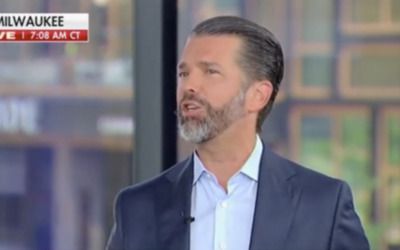
If anyone was wondering whether Trump Derangement Syndrome has finally jumped the shark, former New York Times economist Paul Krugman may have provided the answer.
In a remarkable video posted Sunday, the Nobel Prize-winning economist moved well beyond his usual predictions of impending doom and landed in territory that sounded less like political commentary and more like an ideological cleansing proposal.
Krugman, a longtime Trump critic whose economic forecasts about the president have repeatedly failed to materialize, argued that simply defeating President Donald Trump at the ballot box would not be enough. According to Krugman, America needs something far more sweeping.
“We need to obviously … defang Trump as much as possible and make sure that neither he nor anybody who follows in his footsteps has power after the next two elections,” Krugman said.
“We really need to do a thorough purging of the United States. We need a de-MAGAfication, and I am not going over the top by using a word that is very similar to the denazification that we pursued successfully after World War II in Germany.”
Let that sink in for a moment. A prominent economist and former New York Times columnist is openly comparing tens of millions of American voters to the defeated Nazi regime and suggesting the country needs a form of political re-education to prevent their ideas from returning to power. And Democrats wonder why accusations of elitism keep sticking.
Krugman’s comments came during a six-minute monologue in which he described Trump as “mentally ill” and painted a picture of America descending into catastrophe. Reacting to plans for Trump to headline an event celebrating America’s 250th birthday after entertainers reportedly declined participation, Krugman claimed the nation now faces a nightmare scenario.
By the end, however, his focus had shifted from criticizing Trump to targeting the broader movement behind him. “If we don’t do something beyond just getting rid of Trump, it’s gonna happen again,” he warned.
That statement may reveal the real problem many on the left are struggling to confront. After nearly a decade of portraying Trump as a temporary aberration, they are being forced to acknowledge a reality they find deeply uncomfortable: Trumpism did not create its voters. The voters created Trump.
Millions of Americans didn’t suddenly become conservatives because of one politician. They were already frustrated by open borders, rising crime, cultural radicalism, government overreach, media bias, and an increasingly disconnected political class. Trump simply gave voice to concerns that many establishment figures preferred to ignore. Yet instead of asking why those voters continue supporting the movement, some critics appear increasingly interested in finding ways to marginalize them.
The same political faction that routinely lectures Americans about tolerance, diversity, and inclusion often seems remarkably comfortable labeling political opponents as extremists, threats to democracy, or in this case, the moral equivalent of Nazis.
Krugman’s latest remarks also revive questions about the role overheated rhetoric has played in America’s increasingly toxic political climate. For years, Trump opponents have insisted he represents an existential threat unlike anything in modern history. That language has become so commonplace that some critics now openly discuss “purges” and “de-programming” as if such ideas belong in mainstream political discourse.
Meanwhile, many Americans remember that Krugman’s record on Trump has not exactly inspired confidence. Following Trump’s 2016 victory, Krugman famously predicted severe economic turmoil. Instead, markets surged. During Trump’s first term, unemployment hit historic lows before the pandemic, wages rose, and major stock indexes repeatedly reached record highs.
Last year, Trump blasted Krugman for years of failed predictions, arguing the economist had spent nearly a decade forecasting economic disaster while markets continued climbing.
America certainly has political divisions. It has fierce disagreements. It has cultural battles that show no signs of slowing down. What it does not need is intellectual elites comparing their fellow citizens to Nazis because they vote the wrong way.
The truly disturbing part isn’t that Krugman said it. It’s that in some corners of the political left, comparing half the country to history’s greatest villains has become so routine that many barely notice anymore. At some point, the people constantly warning about authoritarianism may want to consider how calls for ideological purges sound to everyone else.