


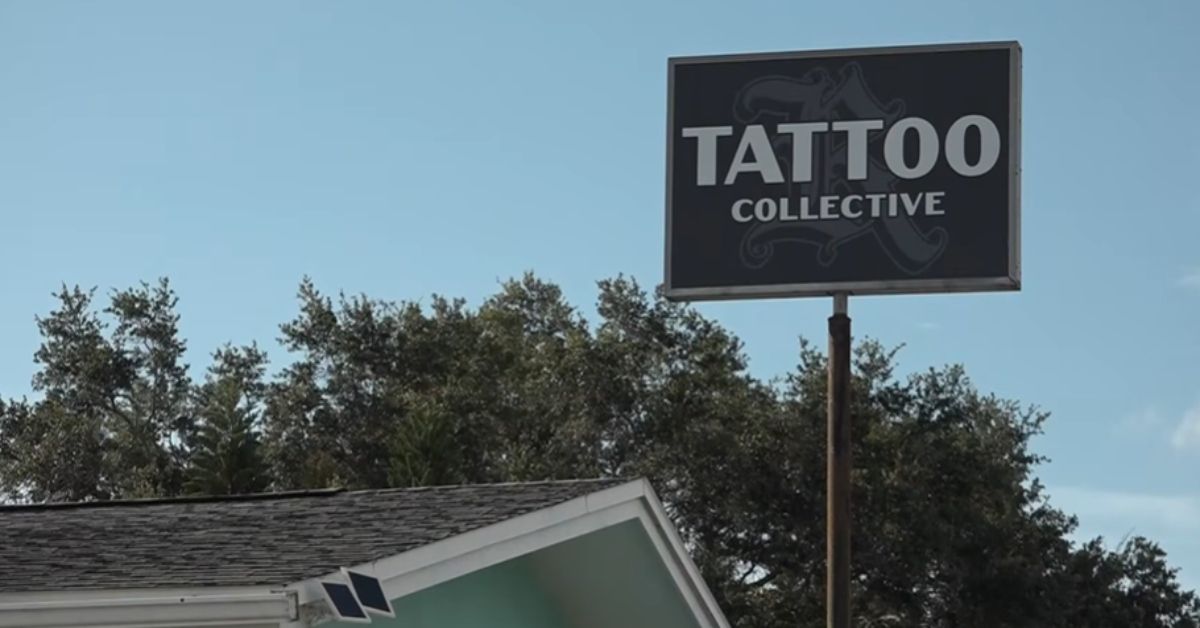
A Florida tattoo shop has found itself at the center of a heated national debate after its owner publicly announced that active-duty military personnel and veterans would not be served, prompting thousands of reactions across social media.
The controversy began when Revival Tattoo Collective in Largo, Florida, posted a lengthy statement defending the owner’s views about the U.S. military and law enforcement.
Among the most controversial statements, the business wrote:
“My opinion is that the military is a bunch of war criminals and law enforcement kills babies and unarmed citizens in the street.”
The post continued by making clear that the policy extended to customers:
“If you are ex military or currently serving just don’t come to the shop. You will be turned away.”
Those remarks quickly spread online, drawing criticism from veterans, active-duty service members and many others who argued the owner was unfairly condemning millions of Americans.
I am beyond disgusted to see the discriminatory treatment of our law-enforcement and first responders from a tattoo shop in Largo. It’s a real shame that people choose to act like this and then hide behind the very people that protect them when stuff hits the fan. pic.twitter.com/zm0N9mQl1a
— Rep. Anna Paulina Luna (@RepLuna) June 25, 2026
Not every response was negative. Some commenters expressed support for the owner’s right to operate the business as he chooses and agreed with his criticism of military recruiting and policing. One supporter argued that the military often recruits economically disadvantaged young people by promising educational opportunities.
The overwhelming public discussion, however, centered on whether it is fair—or productive—to stereotype an entire profession.
The tattoo shop’s website identifies founder Brady Martinson as a tattoo artist and sign painter specializing in script, blackletter and custom typography.
Owner is Brady Martinson. Make him famous. pic.twitter.com/OokavXP5E4
— Erikaaa (@ErikaCA47) June 25, 2026
When asked about the controversy, the business offered a brief response indicating it was not interested in taking additional clients.
“Yeah I’m booked up I can’t take any clients military or civilian. Thanks for your interest on my opinion.”
The tattoo shop owner says he doesn’t want to be judged for expressing his opinion. Fair enough. The First Amendment protects his right to say it.
Then, in the very next breath, he judges every active-duty service member and every veteran as a “war criminal” and refuses to serve them based solely on what they did for a living.
That’s not judging people as individuals—that’s stereotyping an entire group.
Imagine if a business owner announced, “If you were a teacher, don’t come in. If you were a firefighter, don’t come in. If you were a nurse, you’ll be turned away.” We’d all recognize it as absurd.
The military is made up of millions of Americans who volunteered to serve their country. They don’t all think alike, vote alike or serve in the same capacity. Lumping a Navy medic, an Air Force mechanic, a Coast Guard rescue swimmer and a Marine infantryman into one sweeping insult isn’t nuance—it’s prejudice.
The owner has every right to run his business however he wants. Customers have an equal right to decide whether that’s the kind of business they want to support.
One final thought: the next time this shop needs police because someone vandalized the storefront or a veteran-owned business is asked to donate to a local charity, let’s hope everyone suddenly remembers that judging entire groups of people usually isn’t the smartest way to build a community.










As disgusting as it may be. It’s his shop so he should be able to include or exclude whomever he wishes. While not necessarily a good business plan, most conservatives who wish to get ink will simply go somewhere else….
Not worth their time to be outraged
I predict a loss of customer base and going out of business within 5 years. Anyone that stupid doesn’t need to run a successful business.
Don’t judge me by what I say, but I’ll judge you by what you do! This guy should listen to his stupid self. Just maybe, and that is a BIG maybe, he will see what an A$$ he is!
He wants to judge you, but don’t judge him…mmm sounds like a typical Democrat A-hole! Ooops! I just judged a whole party!! Yes, but my statement of judging is based on evidence! F him!!