

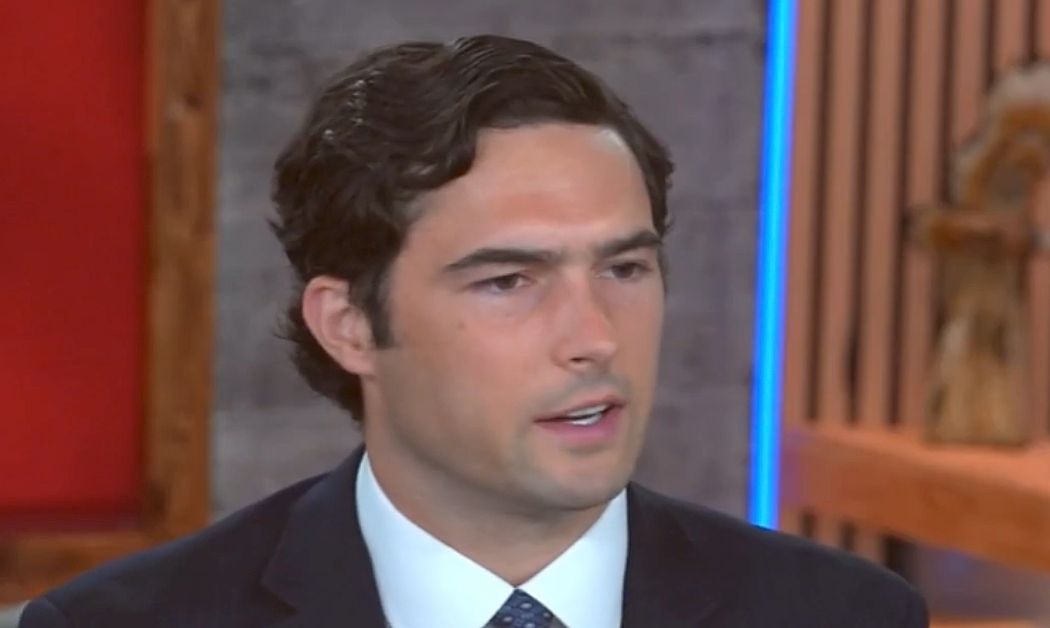
Rep. Brandon Gill says America’s mass-migration experiment has suppressed wages, inflated housing costs and overwhelmed public services—an argument dismissed by liberal outlets as political blame-shifting but supported in important respects by government and Federal Reserve research.
The Texas Republican made the case Wednesday during an appearance on Fox News’ The Will Cain Show, as the latest economic data showed wages once again failing to keep pace with inflation.
Consumer prices rose 3.4% during the 12 months ending in July, according to the latest federal report. Average hourly earnings increased only 3.2%, leaving workers with another decline in purchasing power.
“Wages are not keeping up with inflation. Rents are way too high,” Gill said. “I’m coming out of college with massive student-loan debt. I’m having a hard time getting a job.”
Those problems, Gill argued, are helping the Democratic Socialists of America attract young people by promising government solutions to conditions created by left-wing policies.
When you flood this country with millions of foreigners, you get suppressed wages, skyrocketing rents, fewer jobs, and higher healthcare costs.
That’s what mass migration does to American workers. pic.twitter.com/PX0ukxZ68r
— Congressman Brandon Gill (@RepBrandonGill) August 13, 2026
“The DSA is trying to sell sort of a bill of goods to fix these problems, when in reality, it’s these left-wing ideologies that have created all of these problems in the first place,” he said, “with mass migration being one of the biggest things.”
Gill argued that allowing millions of additional workers into the country inevitably affects Americans competing for jobs and paychecks. “Ask yourself, whenever you flood this country with millions of people—primarily illegal, but also large-scale legal immigration in certain areas—what does that do?” he asked. “That suppresses wages, while at the same time driving up the price of rent and the price of housing, so you’re getting hit on both fronts.”
The Congressional Budget Office reached a more qualified version of that conclusion in its analysis of the 2021-to-2026 immigration surge.
According to the CBO, the surge slightly reduced wage growth through 2026 for existing American workers with no more than 12 years of education. The agency projected that effect would eventually reverse as increased investment, productivity and demand lifted wages over the longer term.
The evidence supporting Gill’s housing argument is stronger. The Dallas Fed researchers found that unauthorized immigration raised both home prices and rents while producing no corresponding short-term increase in housing supply.
Their estimates indicated that the immigration surge increased local home prices by approximately 2.2% and rents by 1.4%. When extrapolated nationally, unauthorized immigration may have accounted for roughly 6.6% of home-price increases and 4.3% of rent increases between early 2021 and early 2024.
The CBO similarly concluded that the immigration surge placed its greatest upward pressure on prices through increased demand for housing. Millions of additional residents require millions of additional places to live. When supply cannot respond quickly, existing tenants and prospective homebuyers pay the difference.
Gill’s central point—that population policy cannot be separated from housing policy—is difficult to dispute.
The congressman also blamed mass migration for longer hospital waits, strained institutions and mounting pressure on public infrastructure.
“Why whenever I go to the doctor’s office or the hospital do I have to wait for three hours?” Gill asked. “Why are we seeing a decline in the economic viability of American social institutions? Why are our roads less safe? All of that is driven by mass migration.”
He later said Americans’ insurance costs are rising because “we have millions of people from all over the third world that have been let into our country, and we’re subsidizing their healthcare.”
Mass migration touches every part of American life.
It suppresses wages.
It drives up rents.
It overwhelms hospitals.
It strains our social institutions.
It makes our roads less safe. pic.twitter.com/0nCtVkArcf— Congressman Brandon Gill (@RepBrandonGill) August 12, 2026
The CBO found that the surge increases state and local costs for education, health care, housing and infrastructure more than it produces in state and local revenue.
At the federal level, the agency estimated that the surge would add approximately $40 billion in Medicaid and Children’s Health Insurance Program spending between 2024 and 2034. It projected another $66 billion in costs associated with premium tax credits.
Will Cain asked Gill whether mass migration first produces economic insecurity and socialism then arrives promising a solution.
“Of course,” Gill responded.
His argument is that young people correctly recognize the symptoms—unaffordable housing, stagnant purchasing power, debt and weak job prospects—but are being sold more government control as the answer.
“Socialism is trying to offer a promise,” Cain said.
Gill agreed, arguing that the same political movement promoting open borders, restrictive housing policies and expanding government dependency then presents itself as the rescuer of people harmed by those policies.
WIRE SOURCES:
- Mediaite: GOP congressman blames high prices and low wages on “mass migration”
- Reuters: U.S. consumer inflation eased to 3.4% in July
- New York Post: Inflation cools slightly while wage growth trails prices
- Congressional Budget Office: Effects of the immigration surge on the federal budget and economy
- Federal Reserve Bank of Dallas: Unauthorized immigration’s effects on labor and housing markets
- Harvard Joint Center for Housing Studies: Immigration and recent housing costs
- Wharton: Immigration and housing rents in American cities











mbvf