BS BULLETIN:
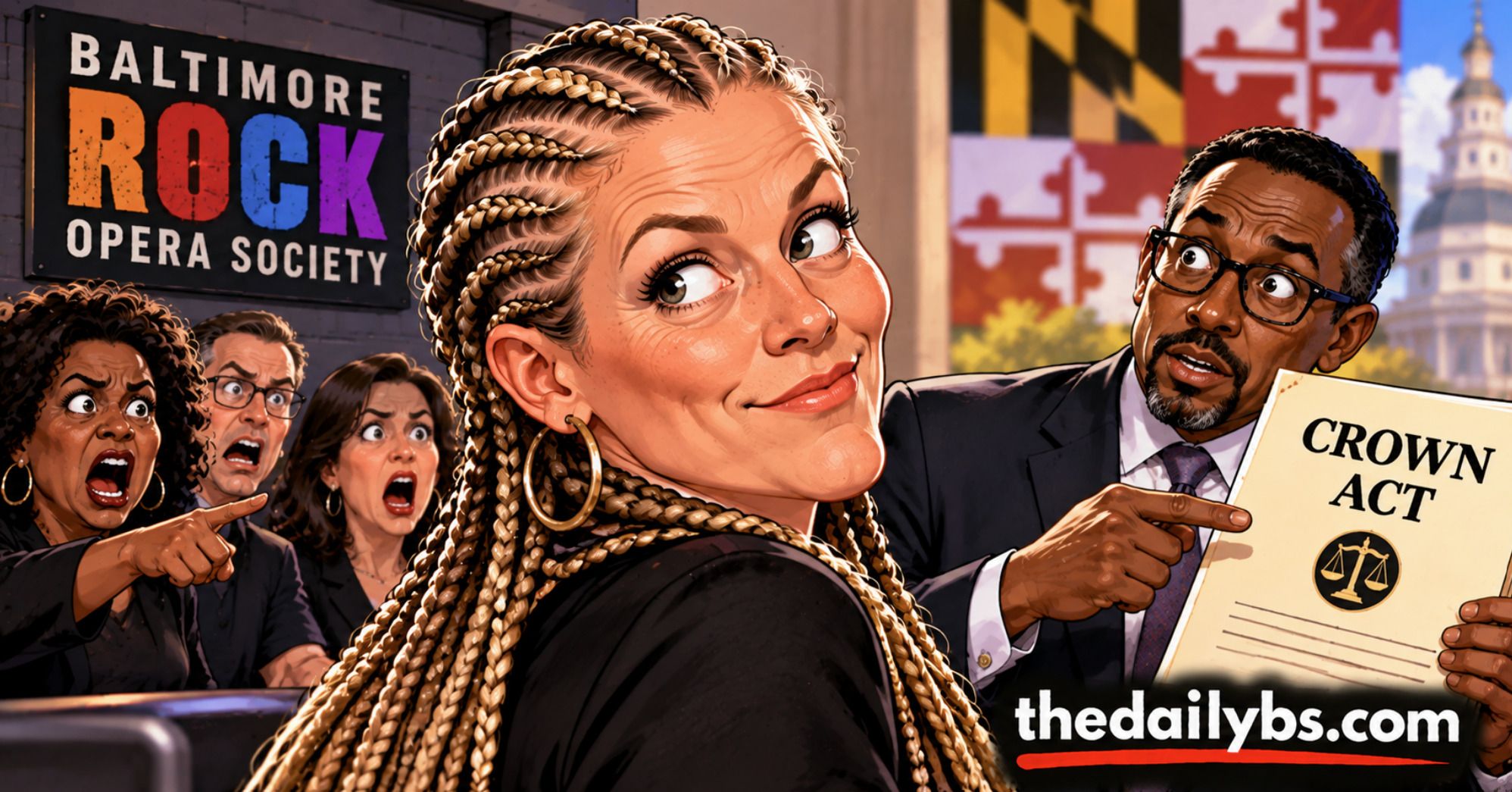
- Kelly Carnes was fired from the Baltimore Rock Opera Society after complaints erupted over the White executive wearing cornrows.
- A Maryland attorney now says the circumstances could support a discrimination claim under the state’s CROWN Act.
- The twist: The law expanded racial-discrimination protections to cover certain hairstyles — including braids.
The Baltimore arts organization that fired its newly hired White executive director after she wore cornrows may have created a rather spectacular legal headache for itself.
Kelly Carnes was dismissed as executive director of the Baltimore Rock Opera Society, or BROS, in September after a video showed her wearing cornrows at an organization event.
Carnes said she had her hair braided as a protective hairstyle while attending Burning Man in Nevada, where participants contend with wind, dust and desert conditions.
But after she returned to Baltimore, complaints surfaced that a White woman wearing cornrows amounted to cultural appropriation.
BROS publicly acknowledged those complaints.
“We have received many heartfelt and concerned messages from members of our community regarding a video circulated on social media showing our new Executive Director, who is White, wearing cornrows at a recent BROS public event,” the organization said.
“We share the weight of these concerns and take this matter seriously.”
The organization subsequently announced plans that included revising its anti-discrimination policy to address cultural representation and dress, requiring anti-racism leadership training and creating a racial-equity working group.
Carnes said the board told her not to attend a town hall called to discuss the controversy.
Days later, she was fired.
According to Carnes, she was told she was simply “not a good fit.”
Now comes the part that could make the whole episode considerably more interesting.
Attorney Jeremy Eldridge told Fox45 Baltimore that Maryland’s CROWN Act could potentially come into play if Carnes challenges her dismissal.
The law, enacted in Maryland in 2020, expanded the definition of race under state anti-discrimination law to include traits associated with race, including hair texture and certain protective hairstyles.
Those protective hairstyles expressly include braids, twists and locks.
And Maryland’s civil-rights protections apply to employment decisions including discipline and termination.
Eldridge says BROS may have complicated its own position by publicly discussing the controversy surrounding Carnes’ hairstyle before firing her.
“Had the Baltimore Rock Opera simply separated from this individual without providing a discriminatory reason; the timeline would be all of the evidence that the fired employee would have,” Eldridge said.
But, he continued, public comments that support the discrimination allegation could themselves potentially become evidence that the employee was wrongfully terminated.
That does not mean Carnes has won a case — or even filed one.
Eldridge stressed that there are competing accounts and that determining whether Maryland law was violated would ultimately depend on what actually motivated Carnes’ dismissal.
Carnes had already said she was exploring the legal implications of her firing. The new development is the more specific argument that the CROWN Act itself could potentially provide an avenue for a challenge.
Meanwhile, the turmoil at BROS apparently isn’t ending with Carnes.
Four of the organization’s six board members, including its chair, are reportedly expected to leave at the end of the year.
MY QUICK TAKE
You could not have scripted this irony better.
The CROWN Act was passed to prevent people from being penalized because hairstyles associated with race were being treated as somehow unacceptable in the workplace.
Now a White woman who says she was fired amid outrage over wearing one of those hairstyles may ask whether the very law created to protect against hair discrimination protects her, too.
That is what happens when institutions stop applying principles universally and start trying to referee who is culturally permitted to wear what.
And BROS may have committed the oldest management blunder in the book: If you’re going to tell everyone publicly that an employee’s hairstyle is a serious racial-equity problem, firing that employee a few days later and saying she was merely “not a good fit” probably isn’t going to make the first explanation disappear.
The lawyers have a phrase for that. I believe it’s called an exhibit.
DBS WIRE SOURCES:
- Fox News — White executive fired after wearing cornrows, triggering legal fight over Maryland’s CROWN Act
- The Baltimore Banner — Baltimore Rock Opera Society leader defends Burning Man cornrows that she says got her fired
- The Baltimore Banner — When it comes to cornrows, where’s the line between appropriation and appreciation?
- New York Post — Baltimore Rock Opera Society boots white boss after she sports cornrows at Burning Man