THE DAILY BS: HOW MUCH CAN YOU HANDLE?
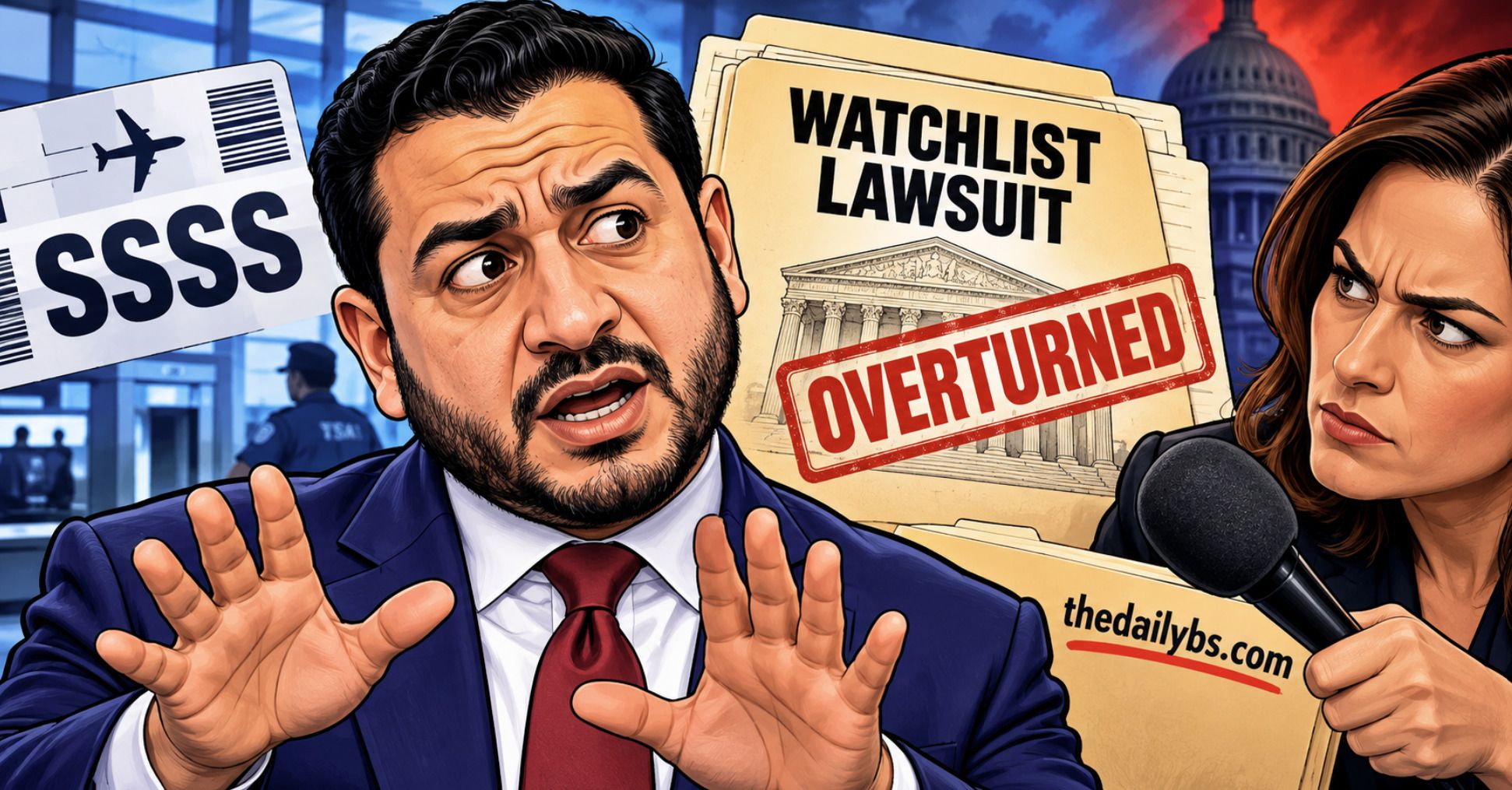
SPARE ME THE BS (I’ve got things to do).
- Michigan Democratic Senate candidate Abdul El-Sayed acknowledged his sister-in-law’s involvement in a federal terrorism watchlist lawsuit, insisting she had done nothing wrong and had sued successfully.
- Court records show the plaintiffs’ 2019 victory was overturned in 2021, while a separate lawsuit seeking damages was dismissed in 2017.
- No court ruling established that the FBI wrongly placed her on the watchlist, and her own 2016 complaint indicated she believed she had already been removed.
LAY IT ON ME (I’ve got time).
Michigan Democratic Senate candidate Abdul El-Sayed has an explanation for his sister-in-law’s reported appearance on the federal terrorism watchlist.
She did nothing wrong, sued the government and won.
There’s just one rather significant problem with that explanation.
The court records don’t establish the vindication El-Sayed is describing.
Confronted by Fox News correspondent Mike Tobin about documents identifying his sister-in-law, Mariam Jukaku, in a federal watchlist lawsuit, El-Sayed acknowledged the connection.
“She did nothing wrong and was captured on that and then sued and got off,” he said.
He then blamed a system he argued treated people as guilty because of their names, pointing criticism toward Republican Senate opponent Mike Rogers.
But what actually happened?
According to the 2016 lawsuit, Jukaku encountered unusual airport security screening in March 2012. She could not check in online, received a boarding pass marked “SSSS” and underwent additional searches and testing.
The complaint alleged that she was not told the factual basis for her supposed watchlist designation and had no meaningful opportunity to challenge it.
That’s an important distinction. The lawsuit challenged the government’s watchlist procedures and the treatment of people who believed they had been flagged. It was not a case in which a judge examined Jukaku’s individual intelligence file and determined the FBI had gotten its facts wrong.
And here comes an especially revealing detail.
By the time the lawsuit was filed in 2016, Jukaku’s own complaint stated that she was believed to be no longer on the federal watchlist.
In other words, the court case wasn’t what first established that she had been removed. Her lawyers were already reporting that belief when they filed it.
Then there’s the legal outcome.
In 2019, a federal district judge ruled in favor of plaintiffs challenging the watchlist system’s constitutional procedures.
But in March 2021, the Fourth Circuit Court of Appeals reversed that decision and directed judgment for the government.
The appellate court concluded that the plaintiffs had not demonstrated the kind of constitutional liberty infringement necessary to support their broad challenge to the system.
A separate lawsuit seeking financial damages had already been dismissed in 2017.
So where is the court ruling declaring Jukaku improperly listed, clearing her of a particular suspicion or ordering her personal removal?
The publicly identified decisions don’t provide one.
That doesn’t mean she committed a crime. Being suspected or flagged by federal authorities is not a criminal conviction, and an “SSSS” boarding-pass designation alone does not conclusively establish inclusion in the FBI-administered Terrorist Screening Database.
But the terrorism watchlist isn’t an ordinary travel inconvenience, either. It’s a national-security screening system intended to identify known or suspected terrorists. Questions about why somebody may have been flagged are legitimate questions.
And federal authorities have not publicly answered the central question in this case.
The FBI told Fox News that government policy is neither to confirm nor deny any individual’s inclusion in the Terrorist Screening Dataset.
That leaves several matters unresolved: whether Jukaku was formally included, what prompted her screening, whether she was subsequently removed and whether federal officials ever concluded an error had occurred.
None of those uncertainties establishes wrongdoing by Jukaku or El-Sayed. But they also don’t support presenting the litigation as proof that the FBI made a mistake and a court vindicated her.
El-Sayed’s explanation arrives as former President Barack Obama prepares to campaign with him in Michigan on October 24, ahead of the November 3 election.
For voters trying to understand the controversy, the distinction is straightforward.
El-Sayed says his sister-in-law sued, won and got off the watchlist.
The documented history shows a lawsuit challenging the system, an initial victory overturned on appeal and a plaintiff who already believed she had been removed before the case was filed.
That’s not the same story.
DBS WIRE SOURCES (I’ve got all day).
- Fox News — Michigan Democrat confirms sister-in-law’s terror watchlist lawsuit
- Federal court filing — 2016 amended complaint, including Mariam Jukaku’s allegations and reported watchlist status
- Fourth Circuit Court of Appeals — Elhady v. Kable, March 30, 2021 decision reversing judgment for plaintiffs
- Federal court filing — Separate 2016 class-action complaint involving the watchlist